
Have you ever been in a situation where the solution to one problem leads to another? That’s exactly what happened when I got my new car.
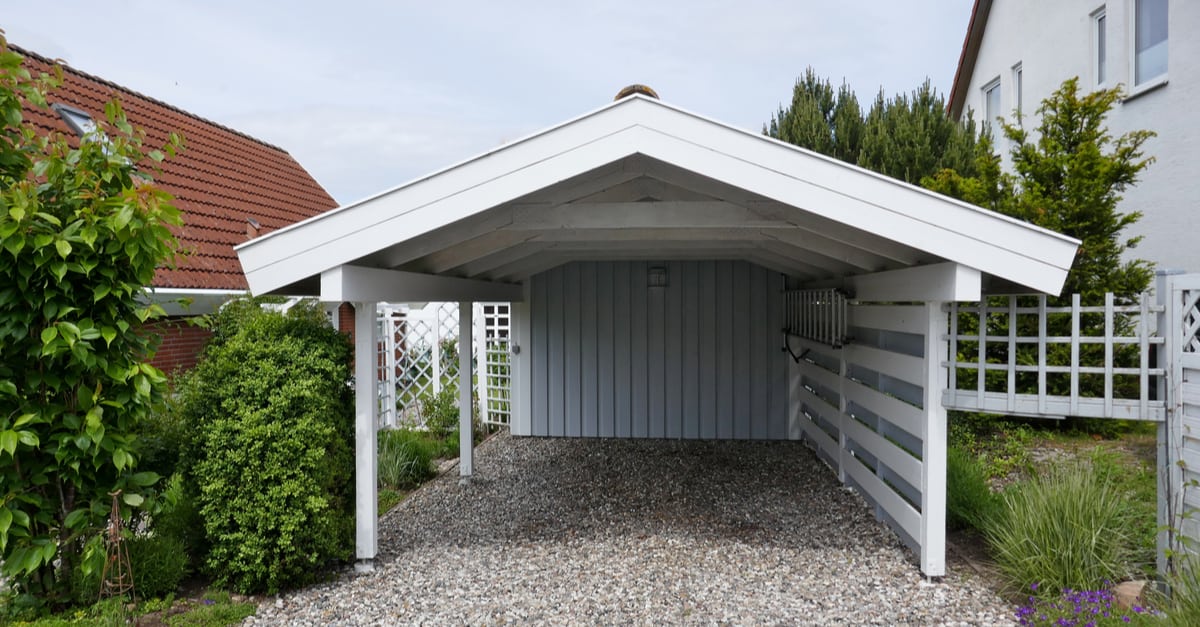
Since there wasn’t enough space in the garage to house the vehicle, my son and husband built a new carport. I thought that this would be enough to house the car and solve the space problems.
Little did I know that it would lead to trouble of another kind. The open carport soon became an inviting playground for the neighborhood kids. They started playing inside, and rather recklessly. I was worried about their safety, as well as the safety of the vehicle.
That’s when my neighbor Mr. Cross, who had helped build the carport, suggested putting up an enclosure around the carport. It seemed like a good idea, and my boys were soon ready to tackle the task. Needless to say, I was there to observe the entire process and help wherever I could.
Howdy, folks! I’m Stacy Smith, and today, I’m here to tell you everything you need to know about how to enclose a carport. Don’t worry, it’s not as difficult as it sounds, and I’ll break it down into easy steps for you to understand.
Let’s get to it then.
The Guide To Enclosing A Carport

Since a carport is nothing but a canopy propped up on posts, you can well understand that enclosing it means putting up walls around it. Seeing as this is construction work, I needed to get the necessary permits.
Once that was taken care of, the boys got to work.
1. Planning The Layout
The very first thing that needs to be done here is drawing up the plans. This is a highly technical aspect of the job and needs professional help. Thankfully, Mr. Cross is a qualified engineer and graciously helped with the drawings.
The plan needs to detail the entire layout of the structure, including the doors and window placements. Also, if you’re building the enclosure near your property line, you need to take care of any setback distances laid down by the local authorities.
2. Preparing The Carport
The next step deals with preparing the carport itself. You can start by cleaning the entire floor area of the structure. Also, in case your carport stands directly on the ground, I recommend pouring a solid concrete slab to act as the base of the structure.
Next, ensure that there is sufficient provision for drainage. Also, the covering of the joists and columns of the carport needs to be removed, along with the soffit. The rest of the canopy can be left untouched unless required.
3. Erecting The Wall Frames
Now comes the actual part where you have to build the walls. Here, you first need to make the wall frames using 2 x 6’s, while maintaining a center-to-center distance of about 16 inches. At the same time, you need to construct a bottom wall plate using pressure-treated wood.
Since the bottom wall plate will be in contact with the ground, you need to consider the problem of soil moisture. I recommend covering it with a polyethylene sheet for extra protection.
Next, the wall framing will need to be fastened to the top of the carport structure, and also the sides of the existing columns. For best results, consider covering them with fiberboard or particleboard.
4. Putting In The Doors And Windows
While erecting the wall frames, don’t forget to leave in openings for the access door and the windows (should you wish to have any). After you’ve erected the walls, attach the door and windows as per the installation instructions for these products.
5. Installing The Main Garage Door
By this point, your carport will have started to resemble a garage, provided you followed the steps correctly. This means that now, you need to install the main garage door. There is a wide range of such doors available, and you should select one based on the required dimensions.
A word of warning here: make sure there’s proper sloping near the threshold of the door. Otherwise, you might have water standing there during the rainy season. It’s best to direct the slope towards the street, where the water can flow into the gutter.
6. Putting In The Insulation
After the garage door has been installed successfully, it’s time to insulate the enclosed carport. This is an essential step as it helps to avoid heat loss. For this purpose, you can use mineral wool batts.
First, put the insulation between the wooden studs, and then add a vapor barrier. Based on the type of interior finish you choose, you can install wood furring strips and place a vinyl siding or drywall. And yes, don’t forget to insulate the canopy, which is now the structure’s ceiling.
7. Doing Up The Exteriors
Finally, you’re ready to work on the exterior of your enclosed carport. I recommend matching the exteriors with that of the house for best aesthetics. You can also add a pergola and decorative moldings to increase the style quotient.
And you’re done! Now you have an entirely enclosed carport that doubles as a second garage.
Final Words
I must say that for my boys, building this second garage has been rather a fun exercise. But if there’s one thing I’ve learned from the whole process, it’s this: enclosing a carport is serious work.
This means unless you’re something of a DIY-er, it’s best that you don’t try to tackle the task yourself. In fact, without the guidance of a professional (in this case, my neighbor), I don’t think my husband and son could have completed the project themselves.
If that’s the case with you, I recommend hiring professionals to get the job done. That way, you don’t have to worry about anything, and the entire process becomes cost-effective and hassle-free.
That’s all for now. Catch you later!