
Nothing enhances the aesthetic appeal of a modern home like a beautiful patio. And if it’s made of stone, then there’s nothing quite like it!
I’ve always wanted a stone patio in my own home but didn’t know whether I should hire professionals or attempt to accomplish the task myself. However, fortune smiled upon me recently when I visited my old friend Christine, who was getting her house renovated.
While looking around, I saw the workmen installing a new stone patio, and I was thrilled to see this! Christine was getting a flagstone patio installed, and I asked the experts about the process. Thankfully, they were helpful enough to walk me through the entire task.
Hi! I’m Stacy Smith, your ever-inquisitive home renovation expert! Today, I’ve decided to teach you exactly how to make a stone patio. The process I’ve outlined can be used with other building materials, such as bricks and pavers as well, so you can select your material of choice.
Well then, let’s put on a hardhat and get to work.
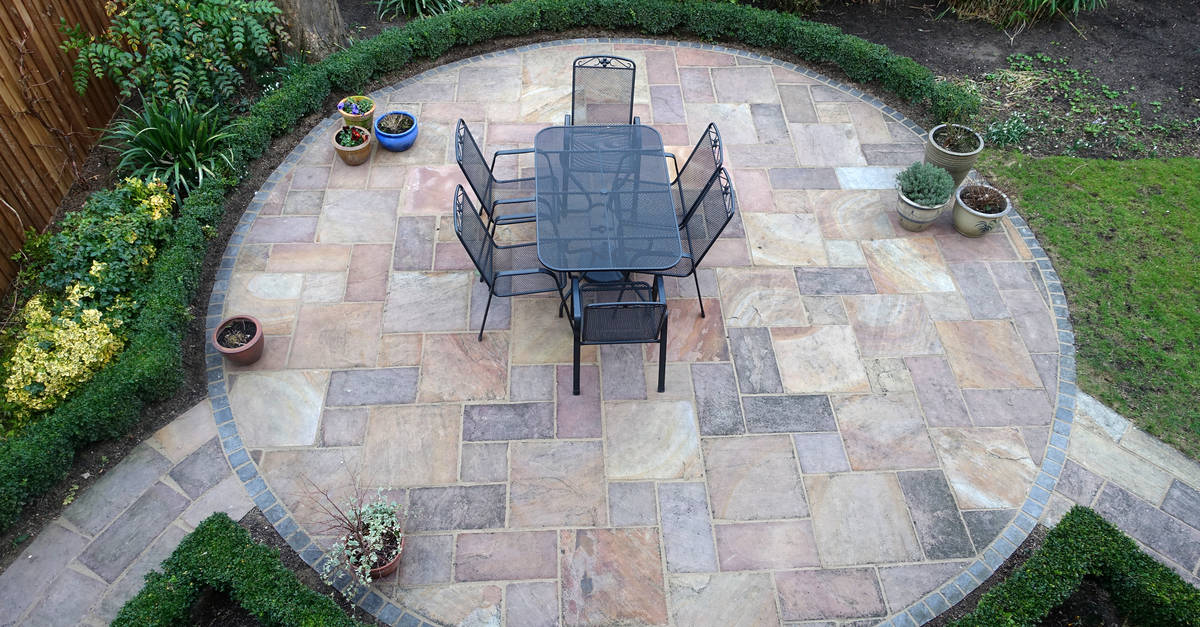
The Process Of Making A Stone Patio
The Things You’ll Need
Creating a stone patio is much like building a Lego model; you need to put together the right pieces in the right places, resulting in a beautiful outcome. So, it’s essential to get your tools in order before starting with the task. Apart from the actual stones (or bricks), the following are some of the things you need to keep handy:
- A few stakes and string
- A sturdy spade
- A wheelbarrow
- Gravel
- Landscaping fabric
- A tamper
- Sand
- A broom
Once you’ve got the above things in order, it’s now time to take a look at the exact steps you’ll need to follow.
Steps To Make A Stone Patio
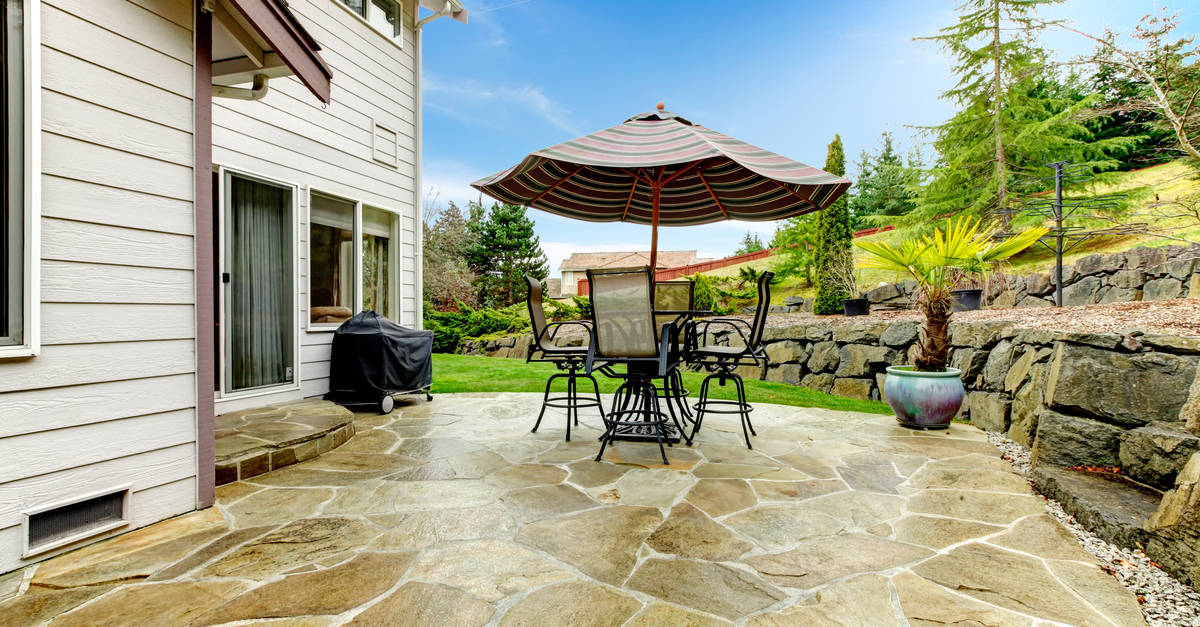
1. Make An Outline
First, using the stakes and string, create an outline for your patio area. This will define the patio’s shape and size; if you’re not really sure about the size, I recommend going larger rather than smaller. Why? Well, it’s tough to make a small patio larger later on, and a sizable patio never hurts.
2. Remove The Existing Sod
Next, use the spade to remove all existing sod and soil from the patio area. Make sure you dig a base that’s at least 5 inches deep for the foundation, along with factoring in the thickness and size of the stones.
Then, using the wheelbarrow, transport the soil you’ve taken out to the compost pile, or use it to level up a low-lying area of your garden. You can also use it to toughen up the foundation area around the patio you’re building.
3. Lay The Patio Base Using Landscaping Fabric
After you’ve completed the above steps, you need to cut the landscaping fabric according to the patio base’s shape and size. Then, line the area you’ve dug using the material. You’ll find many experts skipping this step, but I recommend it as this helps to prevent weeds from growing between the patio stones.
4. Build The Base With Gravel And Sand
On top of the landscaping fabric, add the gravel and spread it evenly to form an area that’s at least 4 inches deep. Ensure you gravel over the entire patio space, and use a tamper to level the gravel; this will help create a firmer base.
After this, add a 1-inch deep layer of sand on top of the gravel layer. It’s best if you use builders sand for this purpose, as this will provide finer grains as opposed to normal sand. This helps to make the foundation more stable.
5. Arrange The Stones
Now, it’s time to lay the actual flagstones, or bricks in case you’re looking for a brick patio. In fact, I’d recommend going for a combination of the two, as this helps to enhance the patio’s aesthetic appeal.
Start by laying the stones from one side of the excavated area, and move on to the other. Make sure to keep on adding sand under the stones as needed to make a level surface. Also, ensure that the stones are kept close together; larger gaps between stones is simply an invitation for weeds to grow.
6. Filling The Cracks
Once all the stones are in place, take care to layer the top of the patio with more builder’s sand. Next, use a broom, preferably a stiff one, to sweep the sand over the stones till the cracks get filled up.
Then, apply a fine mist of water using the garden hose and wet the sand; this will help the sand sink further and fill the intervening spaces between stones. Here, it should be remembered that the process of filling the cracks should be repeated for a week after the patio has been built. This will ensure that the finish for your patio is durable and long-lasting.
7. Put The Final Touches
Finally, once you’re sure that the patio is stable, arrange your furniture on it. In case you find the stones starting to wobble, add more sand and water it to make the base stable. It’s also essential that you clean the patio stones at the start and end of the outdoor season with a pressure washer. This will help in preventing mildew from building up.
Final Words
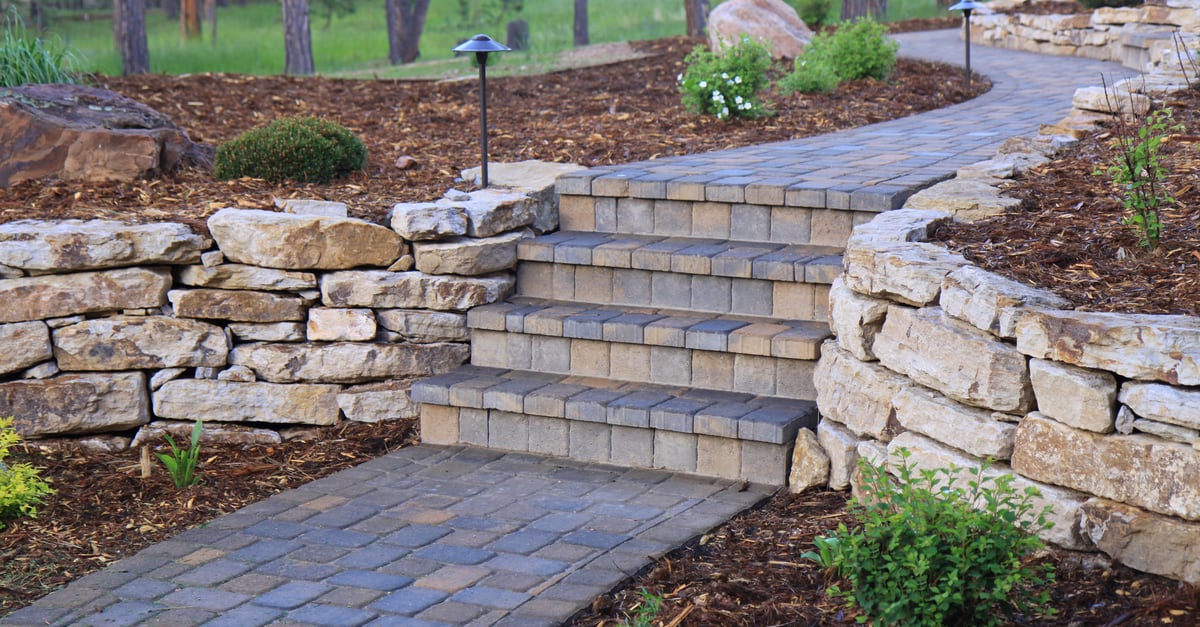
Christine’s stone patio turned out wonderfully, and I have to say that I’m going to get a similar one installed at my place. I’m not yet sure if I’m going to have my boys do it for me or get expert help.
But one thing is for sure - a stone patio contributes significantly towards making your evenings enjoyable. At the same time, it also helps to increase the market valuation of your home. But that, yet again, is a story for another time.
Well, I will sign off now. Till next time!