
Gardening may seem all sunshine and rainbows, but ask any gardener, and they'll tell you how much time and effort goes into it!
My passion for gardening goes all the way back to when I was a young girl and would help my father work in the garden. My father and I would divide the gardening tasks, and my job was to till the soil.
However, the novice that I was, I didn't know the difference between tilling and cultivating. For the longest time, I would merely cultivate the soil when it needed tilling. And as a result, the poor crop growth would ruin all the excitement I had while planting new vegetables in the spring.
I didn't understand what was going wrong until my father corrected me and taught me all that I know today about garden tilling.
For those of you who're new to gardening, cultivating is a process that breaks the crust of the soil to aerate it and ensures better absorption of nutrients and water. Tilling, however, is a much more intensive process that prepares the soil for a new garden bed.
Hey there! I'm Stacy Smith. And today, I'll tell you how to till a garden.
So, without any delay, let's get started.
Tilling A Garden
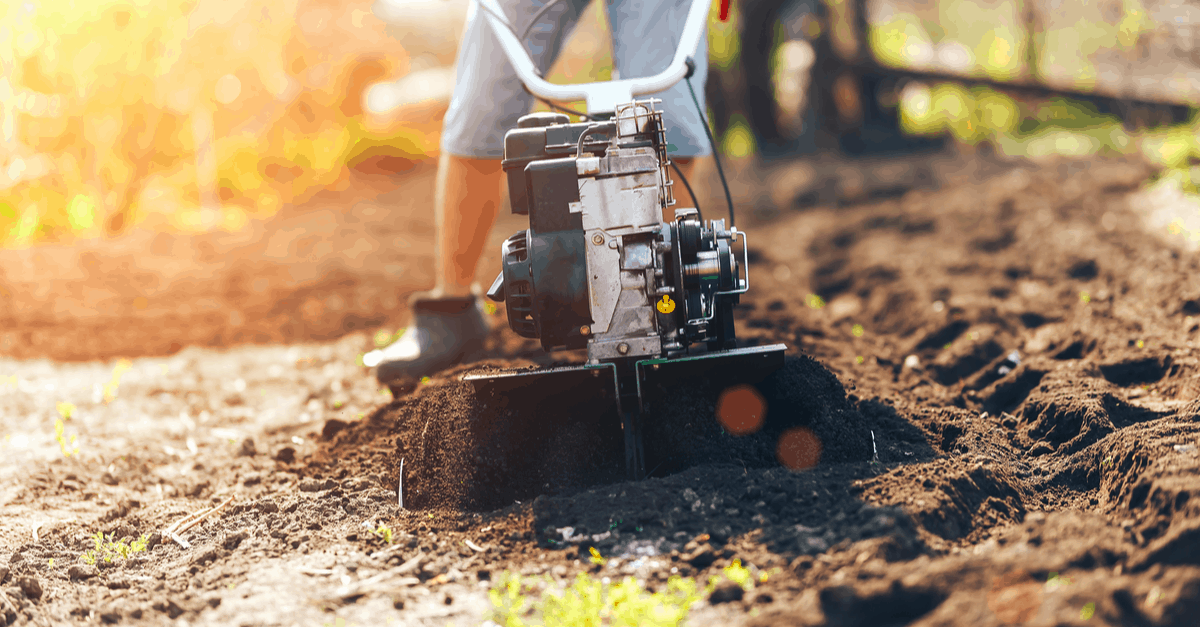
With tilling, you can remove the weeds, aerate the soil, and eliminate debris to prepare the soil for cultivation. Given below is a detailed step-by-step guide on how to till a garden.
1. Map The Area To Be Tilled
The first step in tilling is to determine the path that you'll be working on. I remember my father would place wooden shafts at each corner of the area and then tie them together using twine.
The designated area should meet at right angles and form either a square or a rectangle. I do this for no other reason other than to ensure precision and uniformity. Besides, it also prevents you from redoing areas that are already tilled. I'm sure you know all about the damage that over-tilling can do to the soil, so carefully mark out the areas.
Alternatively, you can sprinkle some limestone powder around the patch.
2. Remove Visible Rocks
Rocks impede the process of tilling and can also damage the tiller tines. So, remove all big chunks of rocks, and then the tiller will effortlessly glide through the soil.
3. Pluck Out Visible Weeds
All gardeners are united over their mutual dislike for weeds. After all, they compete with plants for nutrients and hinder their growth. I've spent hours in the garden plucking weeds from my vegetable plants, and here's a pro-tip: always remove visible weeds before you proceed with tilling.
Without this step, all your hard work will go down the drain...or have weeds growing over them.
There are tillers specifically designed to remove weeds, so if they heavily plague your garden, consider investing in one.
4. Remove Thick Grass
When I first started gardening, I had a small tiller that couldn't slice through thick grass or remove the sod. If you have something similar, it isn't a problem because you can use a spade for the job. Remove as much of the grass, roots, and twigs as possible and leave behind fertile topsoil.
Now, if you've got a robust tiller, use that on the grass and sod. However, I'll recommend immediately removing the grass with a wide-toothed bow rake that'll collect the debris and leave the soil behind.
5. Check If The Soil Is Ready
Before you bring out the tiller and start digging away, check if the soil is dry enough for tilling. To do this, crush a handful of soil. If it crumbles, then it is ready for tilling, and if it forms clumps, you need to wait.
If you till on wet soil, it'll form a hardened mass and completely dry out.
6. Till The Garden
Now that you've removed the weeds and checked the soil, it is finally time to till the garden. Place the tiller at one end of the predetermined territory and proceed slowly, tilling one row at a time until you've covered the entire area. Go over the area once more if the soil needs more tilling.
Furthermore, you must choose a tiller that works well in your garden. For example, if the garden is frequently cultivated and composed of loamy soil, a small tiller with less power can suffice. However, if you're dealing with hard, compacted soil, I'd suggest using a more powerful tiller model.
Stop after you've completed each row to inspect and clean the tiller tines. This is important because lumps of soil and twigs get entangled around the tines and reduce its efficiency. Before cleaning, turn off the device.
7. Clean The Garden
Tilling the garden will uncover boulders, clumps of soil, and debris. Do not let them sit on the surface. Remove them from the area so that the tiller can continue to operate with no obstacles.
Rocks and boulders often bend the tiller tines, especially if the tiller is small, so be careful not to use it over unearthed rocks. Once you remove the rocks from the ground, start tilling again.
8. Make Amendments
You wouldn't have to do a lot of work on soil that is frequently tilled. However, if the soil is compact, you might've to go over it more than once to make sure it is ready for cultivation.
I understand you'll be excited to plant trees on the freshly tilled soil immediately, but wait for three weeks after tilling for the disturbed microorganisms to replenish the soil.
No products found.
Final Words
With that, I’ve come to the end of my guide on garden tilling.
Ever since I started tilling my yard, growing new plants became much easier. I also noticed a significant improvement in the soil quality that helped my lettuce and bonsai thrive.
However, be careful not to over-till the soil because that’ll do more harm than good. Besides, use a tiller that suits your soil’s type and the overall requirements.
Now, it’s time for me to take my dog for a walk. I’ll be back with more useful guides soon.
Till then, let me know if you have any doubts in the comments below. Adios!