
As a hobbyist, flux core welding has proved to be a convenient, versatile, yet cheap welding option for me.
At the same time, it goes hand in hand with spattering, which makes the results look like the work of a novice. In fact, even seasoned welders agree that spattering is an inevitable part of flux core welding.
So, considering its reputation, I was satisfied with my welding job as long as two pieces of metal joined together and remained stuck. That was until my son came over one day and gave me the honest yet bitter truth – that I was terrible at it.
But there was a silver lining – I could get better. According to him, all I needed to do was mess with the heat settings and see what happened. But, of course, there is more to it.
Soon enough, tinkering around with my tools paid off. And now, a few years later, the tiny globs of melted wire don’t spatter around the work surface and dry up to look like a mess.
Hi! My name is Stacy, and here are my tips on how to reduce spatter when flux core welding.
How To Reduce Spatter When Flux Core Welding
1. Wire Feed Speed
One of the most common rookie mistakes made by beginners and experts alike is setting the wire speed too high.
More often than not, the manufacturer provides the settings on the machine in the form of a dial. So, first and foremost, check that this is not cranked up to more than you need.
To be sure, refer to the manual that came with the machine. Alternatively, a few online tools provide the correct wire speed depending on the gas that you are using, the thickness of the wire and the metal, and so on.
Also, keep in mind that amperages and wire feed speeds are proportional, so you may choose to reduce either of the two for the same results. On the other hand, the voltage and amperage are inversely proportional.
That said, an increase in voltage may help you find the sweet spot that effectively reduces spattering.
2. Arc Blow
Known by many names, an arc blow or arc wander refers to the unwanted deflection of the arc due to increased magnetism in the materials you are welding. Sometimes all you need to do is wrap a ground cable around your workpiece or simply reposition it. If that doesn’t do the job, try working from different angles to combat the magnetic force.
That said, spattering can also result from user mistakes, such as incorrect welding techniques. While there is an ongoing debate as to whether pushing or pulling is the correct way to weld, it is universally acknowledged that working at a steep angle is a recipe for spattering. As a rule of thumb, ensure that your work angle does not go beyond 15 degrees.
Nevertheless, my favorite shortcut is to move the welding clamp closer to the area where I will be performing the actual welding. If you do run into problems while shifting the clamp, you may need to get a general-purpose clamp, such as a C-clamp, to hold it in place.
Generally, these first two tips should be enough to minimize spatter to as much as 80 percent. Even if you don’t have excess spatter, I highly recommend that you try them out for the best results.
3. Contaminated Surface
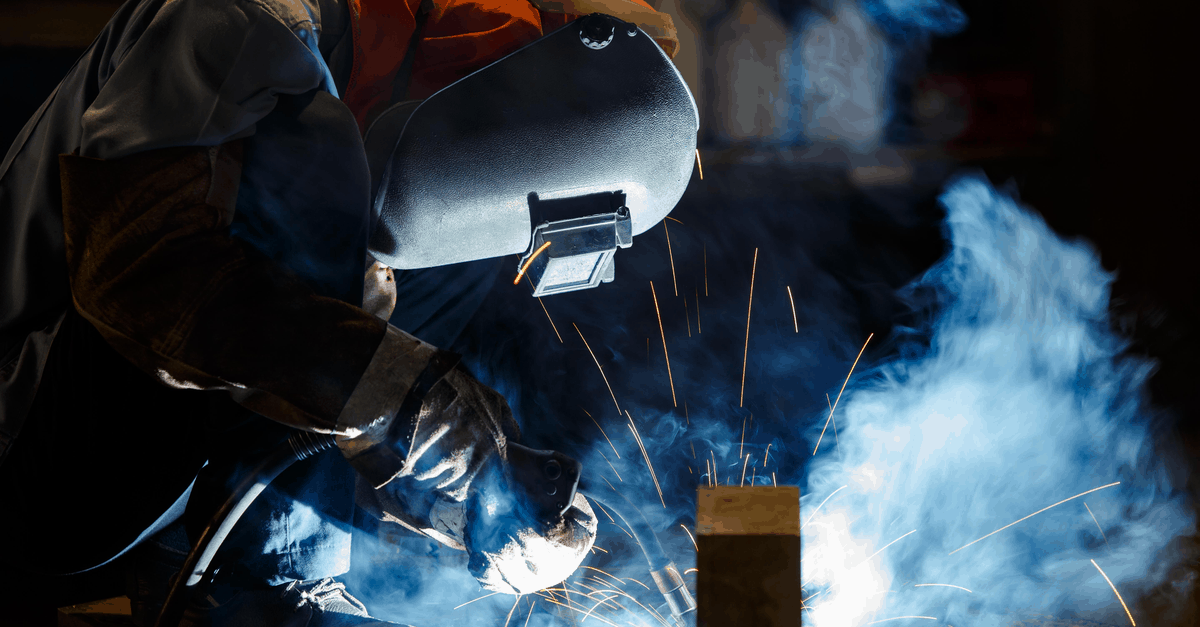
Sometimes, a rusty wire or a dirty gun liner turns out to be the culprit. Similarly, oil, paint, or grease on the surface of your workpiece may lead to excess spattering. That said, check and clean down all your tools and work surface before you begin welding.
4. Incorrect Wire Feeding
Clogged liners, incorrect wire sizes, a small or large contact tip – there are a few wire-related reasons which may lead to erratic wire feeding. To spot this error, check if there are fluctuations in the amperage, which indicates inconstant feeding speed.
5. Low-Quality Tools
The four main components in a weld are the metal being welded, heat source, filler material or consumable, and shielding glass. Although these cases are rarer, low-quality consumables and shielding glasses can be the source of spatter when flux core welding.
At the same time, bear in mind that consumables aren’t just filler materials – they also help stabilize the flame of the electric arc. That said, it is crucial to get your consumables from a reliable seller – preferably one who keeps their own range of consumables and metals that have an equivalent strength.
In other words, the tensile strength of the base metal and the minimum yield of the base metal should match that of the consumable. Also, remember that these “strengths” may vary, depending on wire diameter, copper coating, and so on.
Additional Tip
Spray a coat of anti-spatter before you begin welding as a preventive measure. Although anti-spatter sprays don’t prevent spattering in any way, they ensure that unsightly blobs of melted metal do not stick to the surface.
At the same time, don’t be too generous with the spray, as it may cause other welding defects, such as porosity.
Final Words
Sometimes spattering isn’t taken seriously – which was also the case with me initially. However, I have come to learn that taking the necessary precautions to minimize spatter when flux core welding has indeed made my overall experience so much better.
Of course, it is much more convenient to wipe down the surface and remove the excess than bringing out the grinder and chisel to salvage its appearance. At the same time, not all of us own PPE kits and special equipment to protect ourselves from the molten material flying all over the place.
Needless to say, reducing spatter does not only mean less mess and waste, but your skin is also safe from burns.