
One of the things I love to do is buy tools, even if I don’t need them for any upcoming project.
While shopping brings me immense joy, it also brings me a tremendous amount of clutter. Back in the day, I did not have a proper toolbox to keep all the tools in, so I put it all into a drawer instead. One fine day, I ended up losing a few screws that cost me the entire project.
From that day on, I decided to keep my tools carefully organized (especially the screws and bolts). But then, finding a proper way to organize them was the next task, so I tried them all. From organized drawer racks to segregated tool chests, I did not leave any method for optimum organization.
Finally, it was the tool chest that I fixated on and made organizing it a mini-project. Hi, I’m Stacy! And if you are tired of looking for ways to efficiently manage your tool chest, slow down for a second. I have put together this short guide on how to organize a tool chest in hopes that it will be helpful and informative.
Now, let’s get right to it, shall we?
How To Organize A Tool Chest
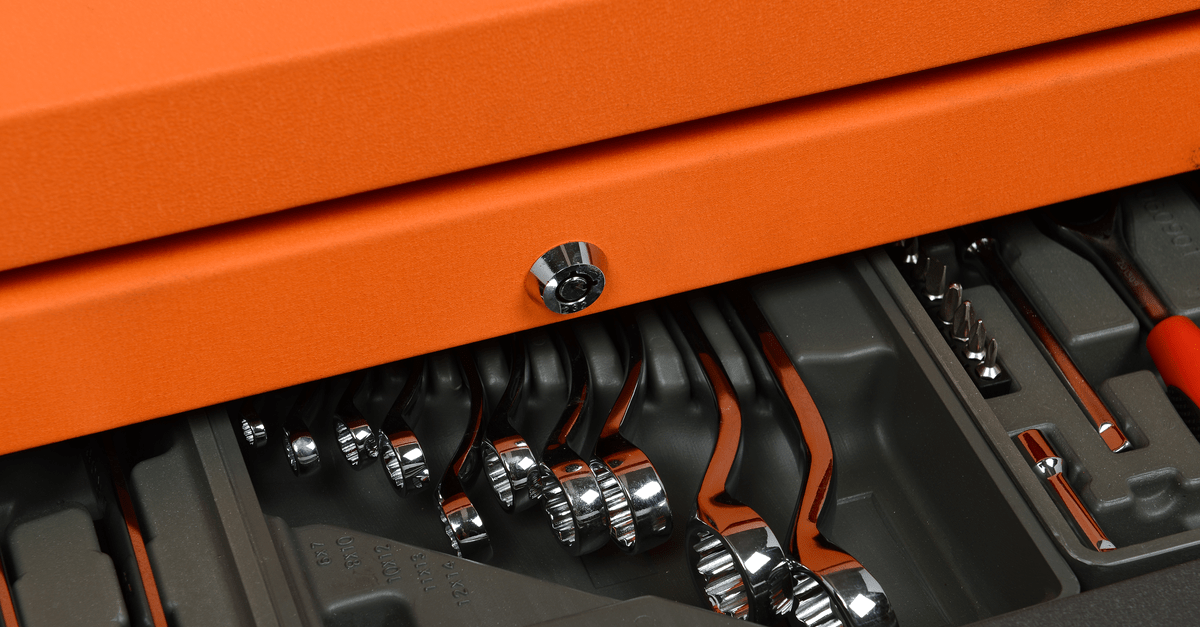
The Need For A Tool Chest
You might wonder why someone even needs a tool chest if they have a drawer or a small toolbox. But if you are someone who works with a ton of tools, it is essential to not only keep them organized but also at arm’s reach.
Having the tools too far away while working on a big project will only lead to you wasting a lot of time. For this purpose, many tool chests come with wheels to be pushed around for easier accessibility.
Organizing a Tool Box

- ✅【Durable】 Tool chest is made of premium steel with powder coating, stable construction, avoids from scratching, denting, and chipping, more durable; classic color. The tool chest with drawers is detachable, can be divided into top tool box and bottom tool cart, with an independent locking system.
- ✅【High-capacity】Rolling tool box is equipped with 8 sliding drawers: 2 large, 3 medium & 3 small, 1 top layer, and 1 bottom cabinet, to store tools of different sizes and meet your needs. Each drawer is designed with a liner, to avoid scratches. Tool chests & cabinets has 8 hooks beside of cabinet, hanging tools.
- ✅【Easy Moving& Storing】 Top box with 2 handles, easy to take and lift, and bottom tool cabinet with hand bars, which help you to move forward. More amazing, the top box can be stored into bottom cabinet, saving your space. Craftsman tool chest can be easily moved and stored because there are 4 universal casters, 4 of them is braked.

- Overall Dimension: 23.5” x 11” x 40” (L x W x H)
- 【2-in-1 Chest with Detachable Tool Box】The tool chest features 5 drawers, two trays. And the whole storage cabinet can be detached into a box and a rolling tool chest, which can be used separately or together according to your requirement. When not in use, the tool box can be stored in lower chest for saving space.
- 【Universal Wheels with Brakes】This tool chest has four flexible universal wheels, and two of them have braking function. A locking bar will prevent the drawers from sliding out and the cabinet door from opening while rolling.
Now, let’s get to the real point. Having a good tool chest is only beneficial if it is organized; otherwise, the clutter will make it worse. Having said that, there aren’t any rules for managing a tool chest, which is why every person has their style of organization.
I tend to sort my tool out a couple of different ways while also keeping in mind the accessibility of the tools. Here are a few tips for everyone looking to organize more efficiently:
1. Organize Based On Requirement
One way you can organize the tools is based on your requirement, shape, and size. For most of my projects, I require a bunch of small tools. So, for me, it makes more sense to have those tools together. Additionally, it can help to have the same types of tools together, such as keeping all the different screwdrivers together.
For shape and size, putting them in either ascending or descending order looks aesthetically pleasing. Moreover, it is easier to remember what tool goes where when it has a specific organizational structure.
2. Balance The Tools
If you have a tool chest on wheels, as I do, it always helps to keep the light tools on the top and the heavy ones on the bottom. This is primarily because it creates an appropriate balance in the tool chest, providing some weight to the structure and making it more stable.
In my case, I keep the power tools on the bottom shelves as it keeps the chest stable while I’m moving it around in the garage. Furthermore, the bottom shelves have more space, so more extensive tools or power tools are an ideal fit.
The only piece of advice I would offer in this case is that you mark the shelves clearly, so you know what is kept where.
3. Factor In Accessibility
If you have a tool chest on wheels, there is not much to do in terms of accessibility. Just make sure the tools are kept safely on their designated shelves so you can find them easily.
On the off chance that the shelf does not have wheels, keep the tools balanced in the racks, so the structure remains stable. The reason weight balancing is crucial is because, in a hurry, there is a chance of the tool chest falling.
4. Small Parts Storage
As mentioned earlier, the biggest issue I had was the screw and bolts going missing from my tool drawers. If this is a concern for you, the ideal solution will be to have a smaller tray for all the small tools. I had some additional space in my tool chest for a few trays so I could store them in the chest.
If that is not possible, you can keep it on a more stable and accessible service.
5. Alternate Storage
I know not everyone can have a tool chest or may need more than one storage space. This is why I always recommended having a wall or an additional drawer for storage. In my case, I keep my frequently used tools in a drawer next to the chest for easier access.
If you intend on keeping a storage wall for wrenches or power tools, I suggest using magnetic hooks or pegs to hang them.
If you plan on using a separate toolbox, then using foam separators and individual tool organizers can be beneficial. These individual organizers are helpful for people who tend to use sockets, bolts, nails, and screws in their projects.
Final Words
On that note, I finally come to the end of my guide on organizing a tool chest. I hope these tips and tricks have been helpful to you.
Before I sign off, I would like to recommend buying some magnetic trays as well. These are especially beneficial for people who have tool chests on wheels. Since it is not possible to have regular trays on wheels, magnetic trays stay in place and reduce the risk of falling off.
In a nutshell, it all comes down to what is suitable for you and what makes the tool chest most accessible during a project.
With that, I shall now sign off and see you soon with more guides. Until next time!