
If you haven’t learned how to grow chives indoors yet, you’re missing out on a fabulous staple for many dishes.
As a famous herb mainly used in French cuisine, it pairs perfectly with many ingredients in your kitchen.
Instead of buying this flavorful herb at your grocer, you’ll find that it’s pretty easy to grow indoors throughout the year.
What Are the Culinary Uses for Chives?
Chives are a fundamental aspect of an assortment of French-inspired dishes.
They are often used as a freshly grated garnish and can also add beautiful contrast to poached eggs.
Chives are also a fabulous addition to sauces or soups looking for a mild onion flavor.
There are two primary types of chives: Chinese chives (most common) and garlic chives.
Garlic chives are unique because they have a more garlic flavor than Chinese chives, which have an onion profile.
If you’re someone who has never enjoyed the overpowering flavor of onion, chives are a great alternative.
Depending on the dish you’re creating, they’re most often seen as the milder option for onion or garlic.
You’ll also find that they work well with oils to create an onion or garlic infusion that’s sure to impress.
With all of the fantastic culinary uses for chives, it’s no wonder why more home chefs are interested in growing them at home.
How To Grow Chives Indoors
Mastering the art of growing and maintaining your own indoor herbs is something every home cook needs to experience.
Fortunately, chives are one of the least fussy herbs you can grow in the house, even as a beginner.
They don’t need special treatment, are a perennial plant, and offer plenty of freshness year-round.
With that said, there are some steps you can take to ensure you’re growing the most flavorful chives possible.
Let’s explore the easy-to-follow process so that you can get started.
What You’ll Need
For starts, you will need to get your hands on the following to prepare your indoor chive garden:
Growing Spot
Before you begin growing, it’s essential to ensure you have the suitable materials for the job.
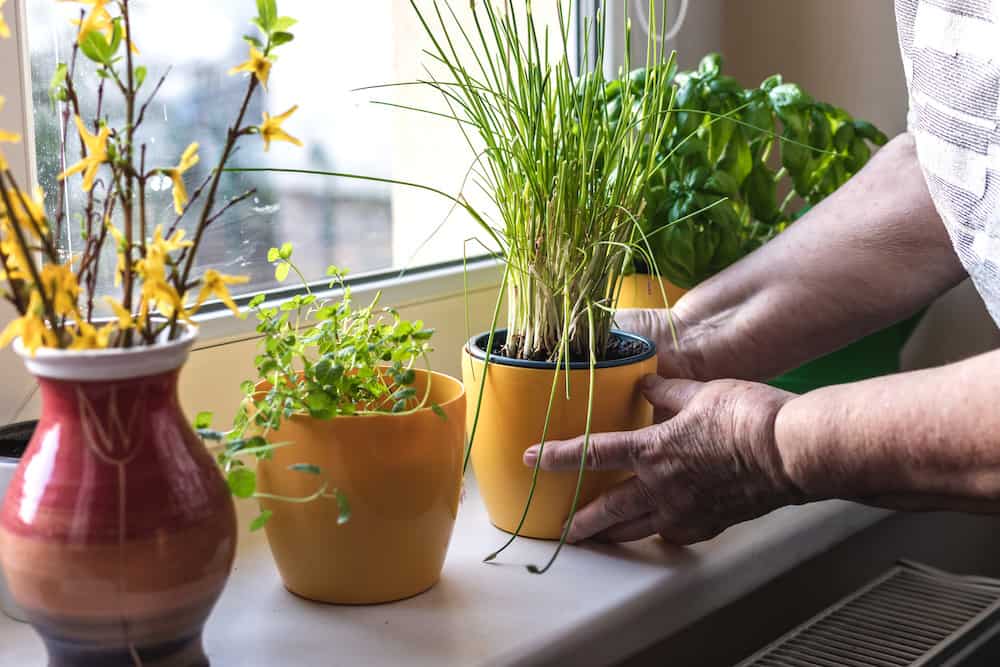
Growing chives requires a south-facing spot, such as a windowsill, that offers full sun.
These savory herbs need at least eight hours of direct sunlight daily, which is why windowsills are preferable.
Pot and Tray
The next step is to choose your growing container and tray to assist with watering overflow.
When growing chives, you’ll want to choose a pot or alternate container that’s at least four inches deep.
Chives aren’t likely to have an extensive root system, so they can manage well in shallower pots than other herbs.
The most important part of planting chives is to ensure they have enough drainage.
If their soil is too soggy, you’ll find the roots are prone to rot, which can destroy your plants in no time.
Using a tray along with your container can help to manage any overflow from excessive watering.
Potting Soil
As with any type of plant, you’ll need to get your hands on a growing medium.
Chives pair well with most varieties of commercial potting soil, but you can also choose to make your own.
Combining organic matter, peat moss, and vermiculite is a great way to get started.
We also recommend adding a time-released fertilizer to ensure the chives are thoroughly nourished while growing.
Time-released fertilizer ensures your plants don’t get too much food, causing their roots to get damaged.
Grow Light
Chives are a year-round plant, and they will require ample light throughout their 12-month growing season.
With that said, if you know your area lacks sunlight during the colder months, a grow light is ideal.
Your plants should have at least five hours of sunlight daily, although eight is optimal.
With a 7.5W grow light, you can easily supplement the light they’d typically get from the sun in the summer.
Also, grow lights help make it easier to manage day and night cycles for your plant.
Seeds
The last thing for the job is, of course, the chive seeds themselves.
When selecting seeds from a hardware store or garden center, ensure they’re from the current year.
Interestingly, chives are known to lose their viability if not planted within the year.
Planting the Chives
Once you have all of your growing tools ready to go, it’s time to begin planting your new herbs.
When working with chives, you’ll want to make sure the seeds are spread evenly across the surface of the potting soil.
You can then use your hands to gently press the seeds into the growing medium, finishing with a thorough watering.
It’s best to continue watering the soil daily to ensure the medium’s surface moisture is adequate.
Once the plants begin germinating, you can then start to thin the plants out to have enough growing space.
Ideally, there should be a single one-inch sprout per three inches in your growing container.
Maintaining Your Chives
Now that the growing cycle has begun after germination, it’s time to care for your chives over the year.
These beginner-friendly herbs can handle occasional dry soil, but you must maintain their moisture as often as possible.
A great rule of thumb is to place your finger one inch deep into the soil to check its dampness.
If the soil is dry, it’s time for watering; if it’s wet, you won’t want the roots to get waterlogged.
You’ll also have to pay close attention to how closely your chives are growing to each other.
If you notice there isn’t much space, it’s best to divide them amongst several containers for better growth.
When it comes to fertilizing, slow-release varieties are your best option to provide optimal nutrition over time.
You’ll begin to notice a positive shift in your plant’s growth by adding fertilizer once every year.
Harvesting the Chives
By now, your chives are likely thriving, and you’re wondering when you can start using them.
Chives are easy to work with, and you can harvest them as soon as you see they’re at least six inches tall.
All you need to do is cut the leaves with scissors, leaving approximately two inches of length above the herb’s base.
Growing Chives Indoors
Creating your own garden is easy when you’re learning how to grow chives indoors.
As one of the least temperamental edible plants you can work with, they’re ideal for beginners.
There’s no doubt that you can save a decent amount of money on garnishes by tackling this project.