
Binomial Name: (Toxicodendron radicans)
Poison Ivy is a broadleaf perennial plant that is placed in the family “Anacardiaceae” and the Genus “Toxicodendron”. This family is also known as the cashew family, and its members include flowering plants bearing stone fruits and produce urushiol, an oily organic substance that is highly irritant. Generally, Poison Ivy grows at the locations like wet woodlands, valleys, fences & hedges, pastures, ornamental covering, and noncropland areas. Usually, it succeeds in growing at elevations below 5000 feet. Rough estimates report that over 1.6 million Americans get affected by urushiol per annum.
Origin and Distribution
Poison Ivy has lineages from Asia and Eastern North America and it grows abundantly throughout much of North America, including New Brunswick, Nova Scotia, Prince Edward Island, Quebec, Ontario, and Manitoba, besides all 50 US states. It also grows in all states in the east of the Rocky Mountains and mountainous Mexico. Poison Ivy is also highly widespread in exurban and suburban locations of Southeastern US, Mid-Atlantic, and New England. Poison Ivy also grows as an understory plant in uninterrupted woodlands, rocks, open fields, and abandoned backyards. Poison Ivy also dominates in urban landscapes and home gardens whereas, its pervasiveness in turfgrass is solemnly due to the planting material brought from the nurseries.
Poison Ivy- Identification
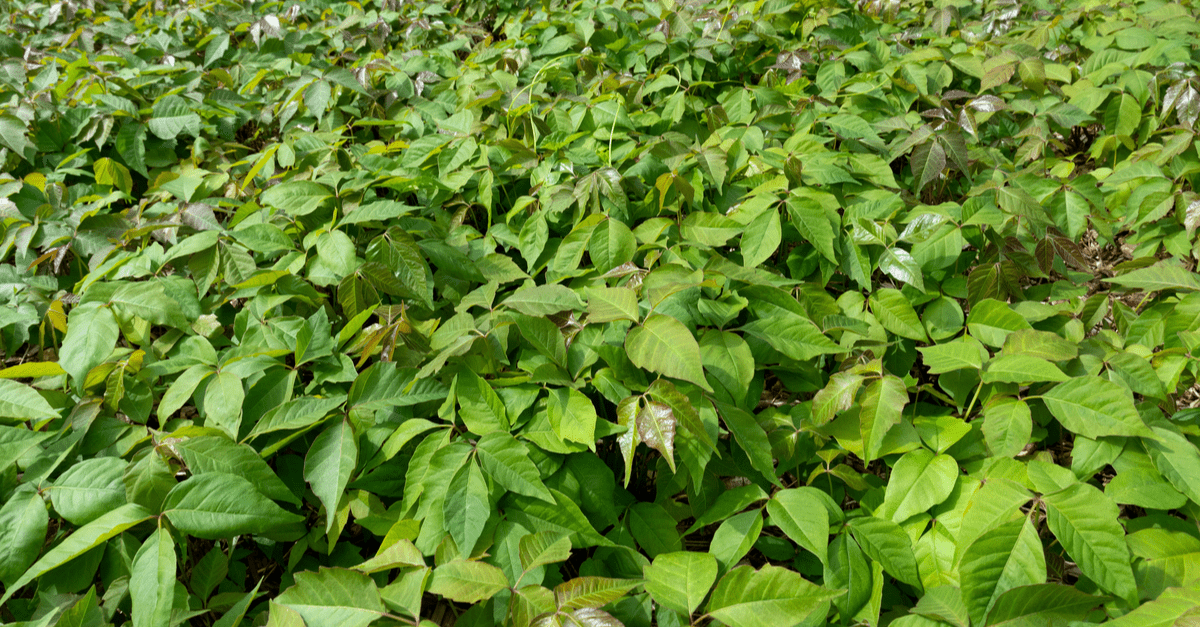
Poison Ivy possesses trifoliate leaves which, are deciduous having three almond-shaped leaflets. Leaves may be light green in young plants, becoming dark green with the age, that become bright red in autumn. The upper surfaces of the mature leaves remain shiny, and the leaflets measure up to 5 inches in length. The leaflets may or may not have teeth on the edges, and Leaflet clusters arrange alternately. Some plants also grow as climbers on the host plant where they attach through aerial rootlets called adventitious roots. The vines that bear adventitious roots can spread from the rhizomes. The flowers may be greenish-white, developing into light yellow berries.
Poison Ivy-Propagation and Lifecycle
Poison Ivy uses both vegetative and sexual reproduction methods to grow and spread. It usually flowers from the late spring to late summer. Since the flowers are located in clusters above the leaves, they form a stone fruit from late summer to late autumn that becomes the source of food for the birds and livestock. The seed remains viable even after passing the digestive tract of different animals that consume them. Poison Ivy starts growth as a shrub and may become a woody vine within a growing season. The seeds that dissipate through birds or mammals grow quickly and soon become a problem for the gardeners and the general public. Underground rhizomes and adventitious roots also help poisons to reproduce rapidly.
Fun Facts About Poison Ivy
Poison Ivy-Prevention and Control
Cultural Control
Poison Ivy needs repeated cutting and digging from the roots to stop growth in the areas like landscapes and garden beds. Similarly, the turfgrasses would need repeated mowing throughout the growing season but, complete elimination may need years. Additionally, prune the host plants that could allow the Poison Ivy to anchor adventitious roots on them. Hand pulling is not suggested since puncturing the stem, or other plant parts may release urushiol that could cause dermatitis.
Chemical Control
Control using Pre-Emergent Herbicide
Roundup Extended Control-Weed & Grass Killer Plus Weed Preventer II
Roundup Extended control contains Glyphosate besides Pelargonic acid and Imazapic. This combination not only controls already existing weeds But, stops the weeds and grasses sprout. This combination is excellent to spray before seeding a lawn whereas, two weeks' interval from spraying to seeding could probably stop growing Poison Ivy and all other weeds. This combination contains Glyphosate, Pelargonic acid, and Imazapic in a ratio of 1, 2, and 0.017%, respectively, in a ready-to-use liquid solution. Additionally, it prevents weed growth for up to 4 months.

- Dual-action formula kills existing weeds and prevents new ones from growing for up to 4 months
- Kills weeds to the root. Guaranteed! (Consumer Guarantee: If for any reason you are not satisfied after using this product, simply send us original proof of purchase and we will refund the purchase price.)
- Use on driveways, sidewalks, and patios; along fences, foundations, curbs, retaining walls and edge of lawns, as well as on decorative rock or gravel areas
if you use a 1.5-gallon premixed concentrate then water dilution is not needed. Only target 400 square feet area whether it is bare land or infected with Poison Ivy.
Control using Post-Emergent Herbicides
Bonide-Poison Ivy Killer
The constituents of Bonide Poison Ivy killer are specialty herbicides that not only kill Poison Ivy but have excellent control over Poison Oak and several other broadleaf weeds. It contains 2,4-D, Mecoprop-p, and Dicamba salts in a ratio of 0.60, 0.14, and 0.07%, respectively. The mode of action is pretty quick, and the ingredients start working overnight. Additionally, this combination can be sprayed on most of the grasses around the year. Minor quantities of the active salts indicate that the product is in a ready-to-use formulation.
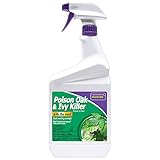
- Control poison ivy and poison oak at home with Poison Oak & Ivy Killer Ready-to-Use Spray from Bonide
- This fast acting product starts working over night, kills unwanted plants down to the root, and is rain proof within 6 hours of application
- When used as directed, this product controls poison oak, poison ivy and a variety of broadleaf weeds without harming wanted lawn grasses
A ready-to-use bottle contains a nozzle that easily disperses the spray droplet on the target plants.
Southern Ag Crossbow Specialty Herbicide
Another specialty herbicide from Southern Ag contains 2,4-D (34.4%) and Triclopyr (16.5%). Both ingredients are broadleaf hunters on garden beds and turfgrasses But, may not suit some cool-season grasses. Otherwise, low dose application would help the gardeners to burn the foliage of the targeted weeds including, Poison Ivy. The name behind manufacturing this product chemistry is Dow Agro Sciences, an authority in specialty selective herbicides around the globe.
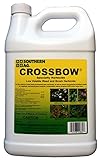
- Southern AG Crossbow Weed & Brush Killer 1gal Used for the control of most kinds of unwanted trees and brush, as well as annual and perennial broadleaf weeds
- Will make up to 96 gallons of spray solution
- Active Ingredients: Garlon, 2,4-D
The product is equally good for applying on Poison Ivy vines that trail on the stems of the host plants or orchards. Care must be taken that the host plant foliage stays free of the spraying mist.
Add 1.25 to 1.35 ounces of liquid concentrate in one gallon of water for spot spraying.
Gordon’s SpeedZone
If you're typically looking for unique chemistry for controlling Poison Ivy in turfgrasses, Gordon’s SpeedZone might be a wise choice for the ingredients like 2,4-D, Mecoprop-p, Dicamba, and Carfentralzone that exist in the ratios of 28.57, 5.88, 1.71, and 0.62%, respectively. While making the product mixture with water, it needs agitating the solution. Fill the spray with water to 1/3rd level, add the recommended dose of concentrate, shake, and add the rest of the water. Continuously shake the spray solution until the sprayer is empty.
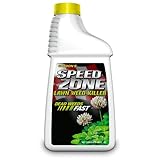
- Visible results in hours - Reseed in just two weeks
- Covers from 14,000 to 18,000 square feet - perfect for large property owners
- Rapid and effective weed control for common and troublesome weed species in turfgrass
Add 1.25 to 1.50 ounces of concentrate in 1 gallon of water and cover 1000 square feet of turfgrasses.
Learn How to control and get rid of other weeds in our complete Yard Weeding Guide.