
The mere idea of horse manure may send an icky sensation to our eyes and noses. But you'll find some gardeners using it; in fact, it has been used for decades as a fertilizer.
So you may be asking yourself, “Is horse manure good for gardens?” or “How did it become a staple to some gardeners?” Before we get those grossed-out reactions, allow us to prove why you should add composting horse manure as a sustainable garden routine.
What Is Horse Manure?
What we are talking about is horse feces. Saying horse manure just lessens the eww factor to it.
Horse manure is usually accessible and supplied in the countryside since horses mainly reside in this environment. A horse expels fifty pounds of manure each day, generating approximately eight tons for the entire year. That does not include the almost ten gallons of urine a single horse produces every day.
As a natural waste, horse manure is known as one of the organic fertilizers you can get at an affordable price. If you live in an area full of barns, you can even get it for free.
The Nutritional Components
Horse manure contains organic matter that quickly enriches the quality of your soil. By using composted horse manure, it kickstarts the growth of your plants. This also gives your plants a greater chance to grow quicker, healthier, and richer in nutrients.
This kind of compost carries nutrients such as nitrogen, potassium, and phosphorus. These components are ideal for producing lettuce, corn, garlic, or potatoes.
This compost also generates the right amount of heat, which plays an essential role for most plants to grow fully. If you have a lawn, having this compost is also perfect. It improves the quality of your grass and maintains a beautiful green layer.
It is important to know that horse manure is alkaline. Alkaline product is infamous for obstructing the growth of your plant roots. Meaning, adding fresh manure to soil may be harmful to your plants.
Careful patience is a must when utilizing horse manure compost. The compost should be well-matured first before you toss it in your garden.
Is Horse Manure Good for Gardens?
Horses are herbivores, which means that they excrete manure that is less harmful than the feces of carnivorous animals. Thus, horse manure is the best and safest option among animal excretions.
What makes it the safest is that even though it is nitrogen-rich, it’s not too much for your soil to suffer. In fact, horse manure contains undigested plant matter, which deems it less toxic.
It is also an organic fertilizer, so you don’t have to worry about chemicals that may injure your garden.
With the proper combination of manure and beddings, the compost destroys infestations, such as weed seeds, worm eggs, and fly larvae. It can also eliminate other pathogens that may cause plant diseases. It could be good news that horse manure smells less stingy and less powerful than other manure from other animals.
Aside from the benefits it provides your garden, it also positively impacts our environment by conserving our natural resources. With horse manure, you’ll heavily avoid the usage of chemical-induced materials.
Chemical fertilizers require the consumption of natural gas, which is a non-renewable natural resource. Therefore, we help nature by diminishing the use of natural gas by composting horse manure.
How Do You Compost Horse Manure?
Although composting horse manure takes loads of patience, this method is not different from usual gardening practices. Rest assured, it will pay you back big time.
It will definitely improve your gardening experience and produce better results for your plants.
What You Need
What’s good about this method is you don’t need any tractors or heavy machinery.
To start, you will need to form the fresh manure with at least five feet up to seven feet maximum in length. The pile must also be at least three feet to four feet high.
You can have your piles right on the ground. However, you have an option to place them inside a container or an enclosure.
Ensure there’s allowance between each pile to make an airway to help achieve a more stabilized output. If you’re not using enclosed bins, using a cover like a tarp is necessary to get the heat it needs while retaining moisture.
Even better, the coverings prevent your piles from getting too much water when unexpected rain pours.
Providing the right amount of heat kills parasites and weeds that may yield on your compost. When done, you should be able to have multiple small piles ready to mature.
What You Need to Do
You want to have it as is until the decomposition process is done. Some gardeners add organic matter to make a more nutrition-heavy compost, but it is not required.
Either way, add enough water daily to keep them moist and ensure your piles decompose properly. You have to watch out and avoid dipping them with too much water as it ruins the process.
With frequent turning a day, you’re giving your manure a good chance to mature more quickly.
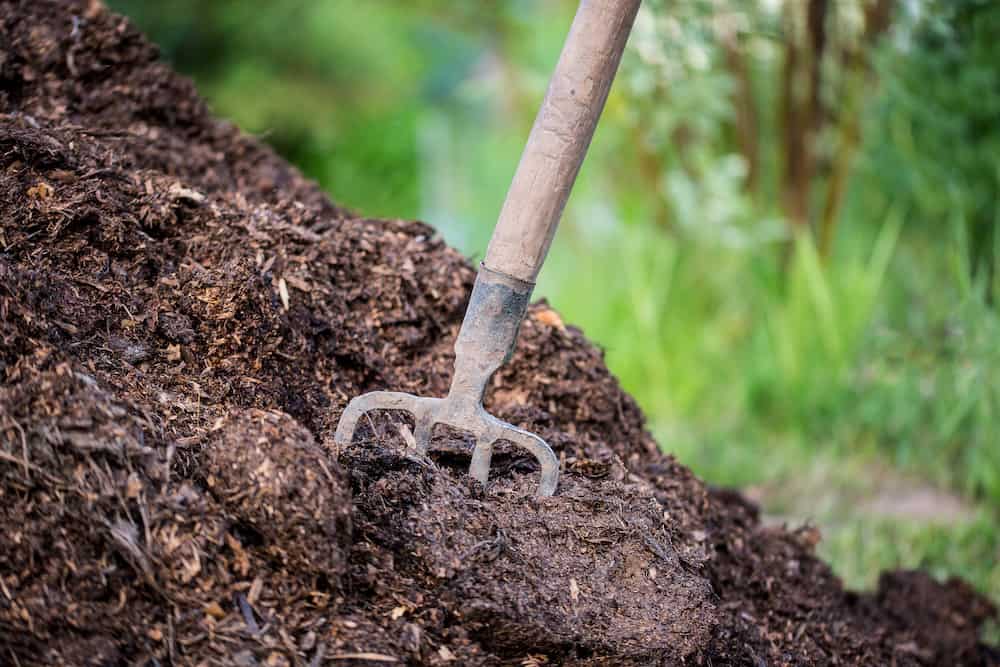
If done appropriately, your piles should mature between sixty to ninety days. You’ll know your piles are ready to be tossed when it’s more soil-like or loamy in texture.
That means you should see crumbling and a darker color close to your usual potting mixture. Also, the manure smell should be more earth-like and significantly weaker than fresh feces.
How to Use Matured Horse Manure
After the long wait for your horse manure to decompose properly, it’s time to see its effect on your garden and on you as a gardener. Below are three of the most effective ways to use it.
For Wider Use
When your piles have matured, it’s easy to spread them on your lawn. Using a shovel, you can toss the compost directly into the soil.
Spread it evenly to your liking using the blade's tip. If available, you may also utilize a tractor or a bigger lawnmower for a more even and easier distribution.
For Specific Plants
The compost you produced works well as mulch for your trees, vegetables, or flowers. It gives your plant a proper amount of moisture and better survival during warm weather.
With this, you can effortlessly spread them onto your garden or pots using your gloved hand. It is advisable to place the compost three to four inches away if you plan to use it on trees or shrubs.
For potted plants, mix your horse manure compost to the required soil depending on your plant variant. It automatically boosts your soil, which allocates more nutrients to your plant.
As a Source of Extra Income
Once you’ve mastered the composting method, you’ll get to produce tons of mixtures; sometimes way more than what you’ll need. This can surely become advantageous as gardeners widely utilize horse manure compost.
You can become an organic fertilizer supplier to your neighbors or gardener friends. Whether you sell or give it as a bonus, it is always your choice.
It’s a Yes!
Indeed, the answer to our question, “Is horse manure good for gardens?”, is a big yes.
Since it provides positive long-term effects on your plants, it gives you the assurance that your garden will thrive better and be healthier. Also, you can be a big help to the gardening community by supplying them with compost. Lastly, it’s one of the eco-friendliest and organic fertilizers you can use.
Just make sure you compost it properly to get the most out of it and keep the unpleasant smell at bay.