
A leaf miner may be from the various sorts of insects whose larval stages live within the tissues of the leaves, eat them while digging a curling mine into the tissues, and leave a slimy trail on the surface of the leaves. The majority of the leaf miners are from the Lepidoptera, Diptera, and Symphyta orders. Otherwise, the larva of some beetles may also reveal such a type of conduct. This behavior protects them from the several predators and plants' defenses, unlike the insect pests that feed on the exposed foliage of the plants. This tunneling pattern could remain similar if the larvae of moths, flies, beetles, or a wasp mine in the leaf tissue and continue feeding on the soft sap, eventually retarding the growth of the affected plants. There are more than 300 species of insects that are placed in the leaf miner’s category. But, 5 to 6 of them are serious garden pests' including Citrus leaf miner, Tomato leaf miner, and Chickpea leaf miner. Usually, leaf miners damage is more widespread during the first two years of growth. On heavy infestation, heavy leaves defoliation occurs that leads to the death of plants.
Origin and Distribution
Different species of leaf miners also have diversified origins. If Citrus leaf miners were originated from the Asian continent and reached Southern California via Mexico, then the Tomato leaf miner originated from the Andes region of South America. However, the spread become more prevalent during 2000 and later in most of the US. The leaf miners which, remain a threat for fruits, vegetables, and farm crops are now widely present throughout all states of the US.
Leaf Miners- Identification
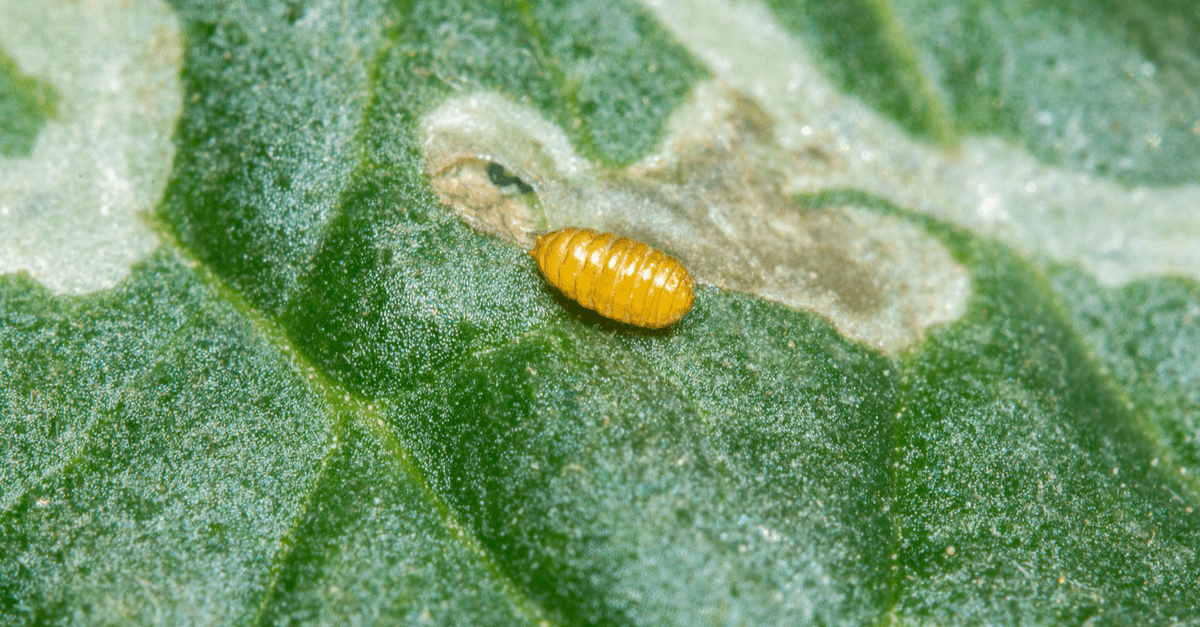
Leaf miners are pretty tiny creatures that remain less than 1 cm in length. Usually, a larva exists within the leaf tissue that can't be seen unless cultured. However, their damages reflect a twisting, swelling tunnel on the surfaces of the leaf. More careful observations could reveal spotted feces trail on the surface of the leaf. This visual identification remains similar for all types of leaf miners in the larval stages. Later, a larva emerges from the mine and travels towards the margins of the leaf, and wraps the leaf around its body to pupate. Wrapped leaves drop from the plant either with an adult inside or a pupa.
Leaf Miners Lifecycle
Leaf miners observe 4-stages in their life; egg, larva, pupa, and adult. Some leaf miners pupate within the mines in the leaf tissue and then emerge from the leaf. While some other species depart from the leaf during the larval stage to pupate on the surfaces of the leaf. If a leaf has become weak, larva could drop wrapped in it on the surfaces of the soil to pupate in plant debris. Some clever larvae cut a disc from the leaf and drop it into the soil, wrapped in that disc. Egg-laying either starts in the litter, plant debris or twigs and sometimes on the surfaces of the leaves where they hatch and start boring mines again. The entire lifecycle may take between 4 to 7 weeks. However, it's also temperature and humidity-dependent.
Symptoms and Types of Damage
Mines developed by these tiny creatures disrupt the flow of nutrients to the healthy parts of the leaves that become weak and turn yellow due to the non-availability of essential nutrients, water, and compromised photosynthesis. Leaf withering starts, and it dies, eventually causing considerable loss of production.
Where do they come from?
Egg-hatching triggers when the temperature rises in spring. Generally, the temperature variation between 70 to 85°F and more than 60% humidity is the weapon when eggs turn into a larva that starts digging mines in the leaves of citrus, tomatoes, and chickpea. However, Citrus leaf miners eggs could hatch even at lower temperatures since they're host-specific. If a plant continues growth during the lower temperatures mentioned, mining activity could continue.
How to Prevent Leaf Miners?
It is important to know that all species of leaf miners damage the foliage of the host plants in a similar fashion, and their management and control strategy also remains the same. However, there may be variations in the frequency of damages due to varying growth stages and environments.
How to Control Leaf Miners?
Biological Control
BioLogic Scanmask Steinernema Feltiae-Beneficial Nematodes
BioLogic Scanmask is beneficial nematodes from the species of parasites Steinernema feltiae. They were originally cultured in the US and typically offer (42.5%) nematodes that are shipped with 17% moisture in an iced container that maintains their liveliness and quality when they reach their destination. When they're released in the garden, Steinernama feltiae enters into the body of leaf miners and releases a bacterium that kills them. They are equally effective against whiteflies, aphids, and fungus gnats.

- NATURAL PEST CONTROL: Kills over 230 different pests. Safe for people, pets, plants and beneficials!
- TOP QUALITY NEMATODES PRODUCED IN THE U.S.A: Shipped in an insulated box with ice to ensure quality
- KILL FLEAS, FUNGUS GNATS, GRUBS AND MORE: Contains Sf nematodes which kill a wide range of pests
A pack containing 5 million nematodes is enough for applying on 200 square feet of garden space. The application requires watering just before and soon after spraying on the foliage of the plants.
Diglyphus Isaea - Parasitic Wasps
The mode of action of the parasitic wasps is to retard the egg-laying ability of the larva when they're inside a tunnel and actively damaging plants. The larvae of parasitic wasps sting the larvae of leaf miners and induce paralysis that eventually leads to their death. The leaf miners are unable to move and die of starvation. The adults of Diglyphus Isaea also feed on the adults of leaf miners of various species. Diglyphus Isaea is highly effective against Chrysanthemum and Tomato leaf miners in a garden.
No products found.
The best time to release them in an outdoor garden is in mid-spring. Whereas they can be released in a greenhouse during early spring. A usual release rate is one wasp per 10 square feet, and this practice can be repeated for 4-consecutive weeks.
Organic Control
Citrus Leaf Miners Traps
Citrus Leaf Miners Trap contains a pheromone that only attracts the moths of Phyllocnistis citrella which, tunnel citrus leaves when the plants are young. It's typically an organic remedy that doesn't need spraying other insecticides on your citrus plants. This pheromone lure is formulated for enhanced efficacy, field stability, and shelflife of up to 2-3 months for a citrus field. The same types of lures are in the use of entomologists in the United States, the Department of Agriculture, and CDFA to monitor and catch moths of Phyllocnistis citrella for research purposes.
No products found.
The application of the citrus Leaf Miners traps is also easy. Just hang pheromone containers within the foliage of the citrus plants.
Sticky Thrips Leaf Miners Traps
The home gardeners depend on organic controls since the growing purpose is to achieve residue-free vegetables, fruits, and microgreens whereas, sticky traps help them grow what they call organic produce. These traps only hang in a garden that attracts several flying insect pests. These could be leaf miners, aphids, whiteflies, and moths of borers or chewing pests that get attracted to these traps. Deploying them in a garden is also easy.

- Long-lasting, weather-proof traps attracts all kinds of flying insects and pests
- Can be attached directly to the plant without damage
- Protect your plants from flying menaces
These traps could hang in an edible garden throughout the growing season to keep pests' infestations in control.
Chemical Control
Pyrethrins Garden Insect Spray
It contains 1% Pyrethrins and 10% Piperonyl Butoxide which, is generally considered safe when applied to an outdoor garden. However, its residual effects and toxicity level are still under debate that's the reason not listed by OMRI. Anyhow, the product is biodegradable and disintegrates after receiving rain and sunlight as it derives from a botanical source. Generally, it is considered safe for outdoor gardens on all edible plants. Pyrethrins are equally effective against all stages of Leaf miners and several other pests that damage edible plants.
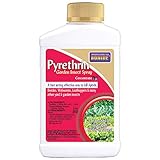
- Pyrethrin Garden Insect Spray Concentrate from Bonide is a fast and effective way to kill aphids, beetles, webworms, leafhoppers and many other common garden insects
- Designed for use on asparagus, beans, broccoli, peppers, spinach, tomatoes, dogwoods, azaleas, begonias, roses, geraniums, plus ornamental trees and shrubs
- The active ingredient, pyrethrin, naturally occurs in chrysanthemum flowers and is considered to be one of the best biodegradable insecticides; pyrethrin kills and controls insects by targeting their nervous systems
Add 1.5 ounces of the product in one gallon of water and target the plants' foliage infested by leaf miners of any type.
Compare-N-Save Insect Control
Compare-N-Save Insect control is 7.9% Bifenthrin, which is a highly toxic pyrethroid and holds a longer residual period. Usually, the Pyrethroids are effective at a very minor dose that can kill many resistant pests. However, they are very effective against chewing, biting, and sucking pests that harm fruits and vegetable crops including, tomato and citrus leaf miners.

- For use indoors and outdoors
- Can be tank mixed with other pesticides, including insect growth regulators
- Controls indoor pests including fleas, cockroaches and ants
8-ounces of product concentrate can make 44 gallons of solution that can be sprayed over an area of 44000 square feet.
Check out our other guides on common garden bugs.