
Scientific Name: (Aphidoidea)
Aphids belong to the superfamily Aphidoidea under the Order Hemiptera. These soft-body insects are small with a cylindrical mouth that they use to pierce undersides of the leaves, tender shoots, floral bodies, and stems of the plants to suck sap. The garden plants may have one or more aphid species that feed on them when the conditions are conducive for their growth and development. Differentiating the entire aphid species is quite hard. But, the management, prevention, and control remain similar for all aphids. Aphids infestation is more common on the undersides of the leaves and the terminal growth where they often exist in colonies. Healthy plants rarely get aphid infestations. Heavy infestations may lead to leaf yellowing due to excessive removal of fluids from the tissues of the plants that may wither and die, eventually.
Origin and Distribution
It assumes that the Aphids originated about 280 million years ago. However, Canada possesses fossilized Aphids which, are considered about 78 million years old. Aphids can also travel long distances and fly up to 600 meters high. Out of more than 5000 aphid species, almost 1500 of these are of North American origin. Aphids are widely-distributed in the US temperate regions from the southern Plains to the lower midwest and eastward to the central East Coast, where they infest several crops and garden plants.
Aphids- Identification
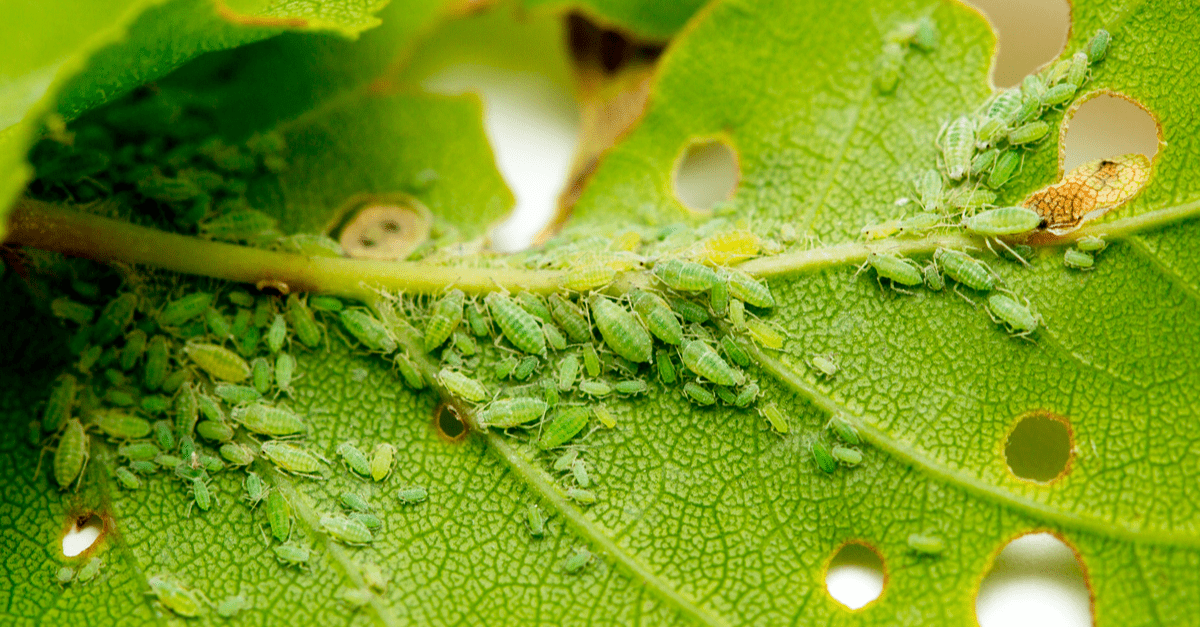
Aphids are true bugs that vary from 1 to 10 mm in length with multiple shades that entirely depend on the types of climate that host them. Usually, they are pale-green & black whereas, the most commonly found aphid is green that infests garden and house plants. They possess two whip-like antennae at the tip of the head opposing a pair of cornicles. A pair of compound eyes and mouthparts contain stylets enclosed in rostrum used for piercing the plant tissues. The legs are thin and long with jointed and clawed tarsi and pair of cornicles. The majority of the aphids remain wingless but, some species may have wings during growth and reproduction stages.
Aphids- Lifecycle
Aphids overwinter as eggs on plant debris and stubbles and become active after the hatching takes place at the beginning of spring, which produces more nymphs. Aphids may have 7- generations in a cooler climate that may go up to 20 in hot tropical or temperate zones. Most of them reproduce asexually throughout the year and may have several generations in a calendar year. The nymph often shed their skins four times to become an adult. Usually, aphids don't have a pupal stage whereas, some aphid species reproduce sexually, which lay eggs in the fall to keep their generations going. Aphid's reproduction is also pretty fast, and newly borne nymph hardly takes 8-days to reach full maturity to reproduce again to about 80 offspring within the week.
Symptoms and Types of Damages
These tiny creatures live on the undersides of the leaves, tender shoots, and flowers of the plants and suck sap leaving honeydew which becomes excellent growing media for fungi establishment causing, different sorts of mildews, and wilts. Stunted plant growth is the result that leads to the death of the plants. Eventually, these pests move to other shoots and leaves of the neighboring healthy plants and infest them. Aphid infestation is more common on weak plants having stunted growth which, are often deficient in Phosphorus & Potash. Aphid infestation is more frequent when the day is hot and the nights are relatively cold. Aphids pierce their stylus to the greener parts of the plants to suck the sap. Aphids feed on the plant Phloem, rich in minerals and sugars, which carry these nutrients to other plant parts and break this nutrient supply. The result is more honeydew deposition on plant surfaces providing excellent growth media to the fungus & bacteria.
Where do the Aphids come from?
The aphids hatch from the eggs deposited on plant debris and crevices in the fall. Temperature variation between 65-80°F promotes the hatching process, and, similarly, they become more vulnerable at the same temperature range. The prevalent damages appear when they curl the leaves, and their infestations become greater than economic threshold levels. They could distort growth, and the curled leaves shelter them from the insecticidal sprays.
How to Prevent Aphids?
Besides following the preventive measures if, aphid’s infestation goes beyond your control, here are the most authentic ways to keep their population suppressed using the biological, organic, and chemical methodologies;
Aphids Control
Biological Control
Clark & Co Organic 1500 Live Ladybugs
Ladybugs are the predatory insects that feed on most of the crawling, sucking, and chewing pests that remain a menace for the small gardeners. Ladybugs also feed on aphids, thrips, mealybugs, and whiteflies, quite extensively. Moreover, live bugs can be stored for 3-weeks if the storage temperature remains between 40 to 60°F. Convergent lady beetles start immediate reproduction once they're released in the garden, provided good moisture and the feeding source is available. Releasing them when the aphids are doing active damage can potentially help.
No products found.
One pack of Ladybugs contains 1500 Live beetles that could effectively cover 1000 square feet of the garden area.
Green Lacewing 1000 Eggs
Green Lacewing is also an exceptional predatory insect that can eat up to 600 larval aphids during its lifecycle. Chrysoperla rufilabris are also called red-lipped green lacewings which, feed on the aphids when the conditions are hot and humid. Otherwise, a dry climate may hinder their growth and development. Release them only once you see the Lacewing moving inside the pack. Green Lacewing is also friendly with other predatory insects and can be released in the garden in combination with Ladybug and Praying Mantis. 1000 Green Lacewings are enough for 500 square feet when released in the greenhouse, and they could be up to 2500 square feet when released in the garden.
No products found.
The eggs can hatch in around 5-days, and this remains the best time to release them in the garden.
Organic Control
Hydrox-70% Isopropyl, Rubbing alcohol
Rubbing Alcohol spray is very effective against all aphid species, whiteflies, red spider mites, and scale insects, and leaves no harmful effects on the vegetables and fruits since rubbing alcohol derives from plant sources. Do apply a test dose before making a solution for the garden. The best practice is to test the solution on a few leaves of the plant and wait for the next 24 hours to monitor any stress.
No products found.
Mix one part of rubbing alcohol with 3-parts of water and make it a sprayable solution for pest control.
Safer- Diatomaceous Earth
Diatomaceous Earth remains a highly effective pest control strategy when you're looking for safer organic control. It is 100% pure which, is derived from naturally occurring siliceous rocks and crumbled into a desirable size that varies from 3 microns to less than 1 mm. It kills aphids both on body contact and ingestion that causes them to dehydrate. Usually, the death occurs within 24 hours of ingestion. There are no residual effects on the edibles, humans, and the environment.
No products found.
The gardeners can sprinkle the product on the foliage of the plants, or spread it over the soil depending on their need.
Chemical Control
Bug B Gon-Systemic Insect Killer
Bug-B-Gon contains 0.5% Acetamiprid, which is a systemic insecticide and can be used on roses, ornamentals, and long maturing edibles, including vegetables and fruits. It kills on direct contact and, also penetrates the plant tissues where biting results in the death of aphids and other sucking pests. It's equally effective against aphids, whiteflies, scale insects, and dusky bugs. It certainly possesses some residual effects on edibles, so read the label carefully before spraying on your lovely plants.
No products found.
Add 3-teaspoons of the concentrate in one gallon of water for spraying on the foliage of the plants.
Check out our other guides on common garden bugs.