
Scientific Name: (Trichoplusia ni)
The cabbage caterpillar, also called cabbage looper belongs to the family Noctuidae and Genus Trichoplusia and comes under the Class Insecta. The most preferred hosts include the plants from the Cruciferae family. The Cruciferous vegetables are among the economically valuable crops, while Cabbage Caterpillars can damage cabbages besides Bok choy, Brussels sprouts, and mustard considerably. Its name looper also comes from its loop-making crawling pattern and is a distinctive feature for identifying them. The cabbage looper is a highly deceptive and dispersive pest that sometimes can be found at high altitudes besides its abundance near coastal areas. The researchers claim, the moth of an individual Cabbage caterpillar could fly up to 7-hours (max) continuously about 5 kilometers whereas, the overall distance may range up to 196 kilometers.
Origin and Distribution
The cabbage caterpillars are the native American species that distribute throughout North America. However, Hawaii recorded its first occurrence on cauliflower in 1939. These caterpillars are found in most crucifers' growing areas throughout the world, and their occurrences extend through most of the US during the summer months, and they overwinter in the southernmost states of the US only. The cabbage caterpillars are slightly unpredictable pes, and their infestation may hike during one year, and then become infrequent for the next two or three years. This is likely due to a naturally occurring virus Nuclear Polyhedrosis which kills them. The caterpillars that fell prey to this virus become dark in color whereas, their body contents spill on the foliage.
Cabbage Caterpillar- Identification

Cabbage caterpillar eggs are hemispherical that remain stick to the foliage. The eggs may be in clusters of 6 or 7 in yellow or green. The larvae are dim white initially that become light green after feeding. Larvae have three pairs of legs and crawl by curving their back to form a loop. The mature larvae are green with a distinctive white marking on both sides of the body. The legs and head are usually light green or brown. The body remains narrower at the anterior and broadens at the posterior end. A mature larva measures between 3 to 4 cm. The forewings of the moths are stippled gray-brown; hind wings remain light brown. They are more active at dusk and may appear on cloudy days.
Cabbage Caterpillar- Life Cycle
The eggs hatch between two to ten days depending on the surrounding temperature, whereas the hatching is quicker at 89.6°F. The average number of instars is five. Larval development takes place in 20 days at 89.6°F. Pupation occurs on the undersides of the leaves, plant debris, or in the mud where it forms a thin, white, and fragile cocoon. The duration of the pupal stage is between 4 to 13 days which is again temperature-dependent. The adult stage averages 11 days when a female lays between 300 to 600 eggs in plant debris, organic matter, or undersides of the leaves. There may be overlapping generations in a crop, and the total number of generations may go up to 7 per year.
Symptoms and Types of Damages
During the first three instars, Cabbage Caterpillars feed on the lower side of the leaf, whereas 4th and 5th instar feeding allows them to chew big holes in the leaves, While damaging Cabbage, they feed on the wrapped leaves besides boring into the developing head. Since the caterpillars are voracious eaters, they feed three times more than their body weight. Heavy feeding results in the deposition of sticky wet secretions on the surfaces of the leaves. Besides damaging the cabbages, they also bore into some fruits, when present on orchards and commercial crops including, beans, cotton, and various vegetable crops.
Where Do the Cabbage Caterpillars come from?
The preferred hosts of Cabbage Caterpillars are crucifers where they could pass the entire reproductive stages of their lifecycle. Whenever you grow any member from the cruciferous or mustard family, look them around like it's their chosen host. Besides growing crucifers, if the temperatures become adaptable for their growth, that is more alarming. The Cabbage Caterpillars speed up their reproduction when the temperature falls between 80.6 to 89.6°F. The eggs hatching becomes possible in two to three days only and, complete larval development takes hardly 17 days when exposed to these temperatures in the presence of a suitable host like crucifers in your garden beds.
How to Prevent Cabbage Caterpillars?
Besides following the preventive measures if, Cabbage Caterpillars infestation goes beyond your control, here are the most authentic ways to keep their population suppressed using the biological, organic, and chemical methodologies;
Cabbage Caterpillars- Control
Biological Control
Southern Ag- Thuricide BT
Thuricide BT contains 98.35% viable spores of Bacillus thuringiensis-Kurstaki strain, and every milligram of concentrate consists of about 6 million active spores with active toxins. Bacillus thuringiensis is a soil-dwelling, gram-positive bacterium that produces crystal proteins that bind with the mid-gut of Cabbage caterpillars and rupture them. It also parasitizes the moths of several other pest species that harm crops. Bacillus thuringiensis is the same organism in GMO crops such as BT cotton, and BT corn that contains the cry protein called Bt delta-endotoxin. Thuricide is OMRI listed, a product that can be used on a variety of edible plants, including vegetables, fruits, nuts, and flowers.

- Size: 16 OZ
- Thuricide BT Caterpillar Control concentrate is used by organic gardeners and is made from bacteria that is toxic to listed pests.
- Safe to use on all plants, vegetables and edible crops.
Add 4-teaspoons of the product concentrate per gallon of water thoroughly to cover the foliage of the plants.
Orcon TR-C3SQ Live Trichogramma, 3 Squares/12,000 Count
These are the live Trichogramma wasps that lay their eggs within the eggs of the targeted pests. They feed on the embryo and emerge as adult wasps turning the host egg black. They are highly effective against cabbage caterpillars and moths. Trichogramma wasps live around a week or 10-days, and their several overlapping generations exist at the same time that takes the complete hold of the field. It keeps the cabbage looper population in control when applied to the first appearance of the caterpillar or the moths. Besides controlling cabbage worms, they also target bollworms of many species.

- Attacks Over 200 Kinds Of Moths and Caterpillars
- Commonly Used for Tomato Horn Worms, Codling Moth, Boring Insects, and More
- Most Popular Beneficial Insect Worldwide
Each square contains about 4000 live Trichogramma wasps, and a total of 12000 in 3-squares. 3-5 five live wasps can be applied per square foot of the infected area.
Organic Control
Bonide - Neem Oil Concentrate
This concentrate contains 70% of clarified hydrophobic extract of neem oil. Neem oil contains Azadirachtin which is a multi-purpose product that serves as an insecticide, fungicide, and acaricide together. Its application could save your precious plants from many physiological disorders, bacterial diseases, and mites besides controlling cabbage caterpillars of all stages. Azadirachtin also suppresses different growth stages and delays molting when insects shed their chitin to advance in the next instar. It is OMRI listed and safe for applying on all stuff that is growing organically in your garden.

- MULTI-PURPOSE BUG KILLER - Bonide Neem Oil is a perfect pest control solution for any garden dealing with mites, flies, mildew, and more. .
- NEEDS TO BE MIXED - This product arrives as a concentrate that needs to be mixed before application.
- KILLS ALL STAGES OF INSECTS - Bonide's 3-in-1 Neem Oil is great because it kills the egg, larvae, and adult stages of insects while also preventing the fungal attack of plant tissues.
Mix one ounce of the product concentrate per gallon of water and target cabbage caterpillars on all edible stuff.
Fertilome- Spinosad
A combination of Spinosad A and D kill cabbage worms very effectively during the early instars. Spinosad applications at the initial stages could help prevent Cabbage Caterpillars infestation throughout the crucifers growing period. It contains 0.5% Spinosad as an active ingredient that kills all types of cabbage worms instantly when ingested. Fertilome is OMRI listed that can be used on all edible stuff indoors and outdoors. Also, it applies to plants up to the day of harvest.
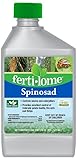
Add 2 ounces of Fertilome per gallon of water and throughout apply on the foliage of the plants affected by Cabbage Caterpillars.
Chemical Control
Garden Safe- Garden Insect Killer
Garden Insect Killer contains 0.02% of Pyrethrins, and 0.2% of Piperonyl Butoxide is a ready-to-use formulation. Pyrethrin is a botanical insecticide that affects the target pests by fluctuating sodium ions in the nerves that causes restlessness. The other ingredient Piperonyl Butoxide is from an inorganic source and used for sticking the active ingredient on the foliage of the plants. The best application time remains mid to late spring when the temperature starts rising.
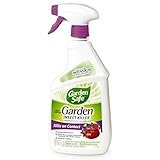
- CONTAINS BOTANICAL INSECTICIDES: Spray on roses, vegetables, houseplants, ornamentals, trees, shrubs and flowers right up to the day of harvest.
- KILLS ON CONTACT: Kills aphids, tomato hornworms, green fruitworms and other listed insects.
- PROTECTS YOUR WHOLE GARDEN: Use both indoors and outdoors.
It's ready to use product and doesn't need mixing with water.
Check out our other guides on common garden bugs.