
Scientific Name: (Forficula auricularia)
Earwigs are in the insect order Dermaptera, comprising almost 2000 species, whereas the most destructive species is the common earwig or European earwig, which belongs to the family Forficulidae. The common earwigs survive a variety of habitats that make them a common household pest in North America. European earwigs are nocturnal pests and live in dark and cool places during the day. At night, they feed on plant materials besides preying on spiders, aphids, and eggs that were laid in bark crevices and surfaces of the leaves. Earwigs can do considerable damage to fruits, flowers, and vegetables, including cauliflower, cabbage, chard, celery, potato, and cucumbers, and maize in commercial crops. They are also associated with releasing filthy odor while aggregating near urban dwellings.
Origin and Distribution
The common earwig has lineages in Europe and Eurasia. Whereas some researchers keep linking their nativity with North America, as well. They are copiously present throughout the US and western Asia. Most probably, they were introduced from Europe in 1907 into most of North America while spreading more robustly in the southwestern and southern regions of the US. The shreds of evidence also prove that spine-tailed earwig is the only inborn species of the north of US that extends its range to Ontario wetlands in Canada. Some other North American species include the families of Forticulidae, Spinogiphoridae, Labiduridae, and Anisolabidiae. The common earwigs are more frequent in the US temperate climates, and their infestation increase when there is a minimum fluctuation between the day and night temperature.
Earwig- Identification
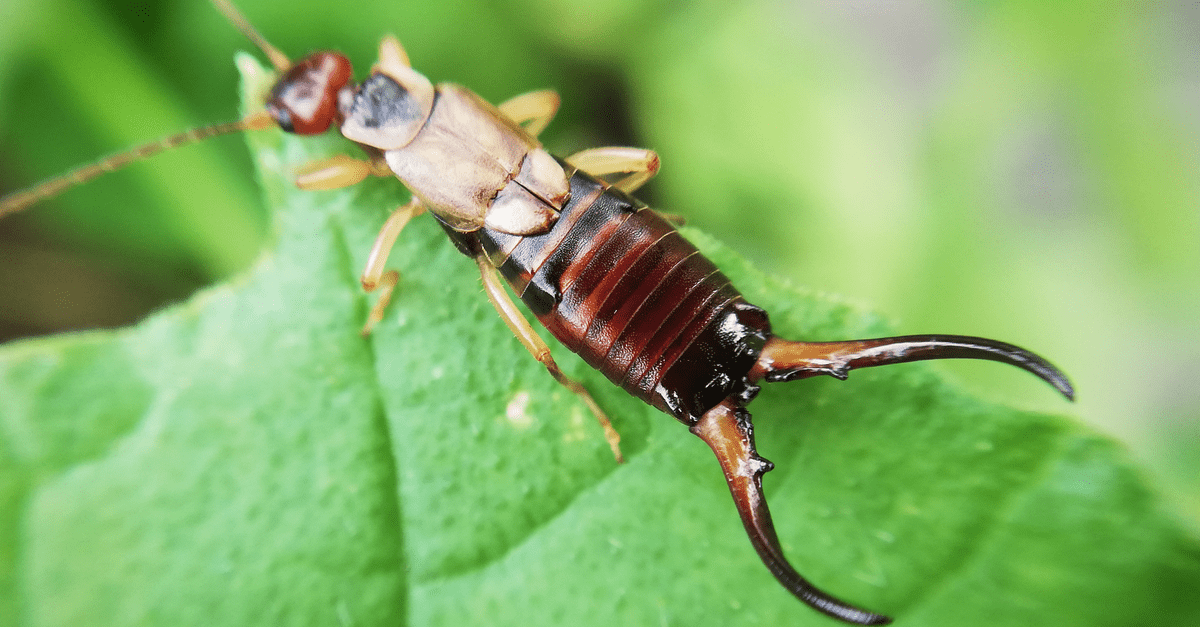
An adult common earwig is flattened, elongated, and often brown with the shielded dorsal look and could measure up to 15mm in length. Most of them have two wings besides some species are wingless. A pair of cerci look like forceps and are often used for chewing, mating, biting, and saving them from predators. The antenna is segmented between 11 to 14 divisions.
Adult males may exhibit many color ranges, different head and body sizes, and cercus width and length in the same habitat. The males may have forceful forceps and broadened mandibles, while female forceps remain straighter and nearly 3 mm long less forceful compared to the male. Females have a leathery front wing that measures about 2mm long. The adults can lose one arc of cerci, can reproduce it when maturing.
Earwig- Lifecycle
A male earwig perceives a female mate from the pheromone. Male and female align ventral abdomens, and a male slips her cerci under the female while keeping their faces in the opposite direction. They may remain in the same position for several hours. Mating usually occurs where both partners can hang to some surface. Mating peaks towards the summer-ending months, and single mating enables a female to lay a clutch of fertilized eggs. Often nymphs resemble the adults with the difference of color only. A nymph passes through four Instars to become an adult. After the first molting, a nymph leaves the hatching site and completes stages on the surfaces of the plant materials. An adult female overwinters in the soil about 5 mm deep and lays the first clutch of about 50 eggs. Female spends the time with eggs until hatched. Nymphs emerge in the spring and mature in about 30 days. Another clutch of fertilized eggs is expected in a hot and humid climate that raises the 2nd generation in a year.
Symptoms and Types of Damages
The common earwigs feed on tender shoots, plant materials, living and dead insects, including many pest species. Also, they feed voraciously on aphids and some other soft-bodied insects contributing to biological insect control. However, they can be damaging soft fruit skin besides attacking vegetable and fruit nurseries. The entire plant stems or foliage may be missing once attacked by earwigs. Also, they chew the mature fruit tree leaves around the edges. They leave a slimy trail on soft skin fruits when infestations are higher and pinch the holes in soft fruit skin. In fall, they move indoors, becoming a nuisance for the home dwellers.
Where Do the Earwigs Come from?
After an adult female overwinters in the soil and lays the first clutch of about 50 eggs, she spends the time with the eggs until they're hatched and pass the first Instar molting. 1st Instars nymphs typically emerge in the spring when they're 30 days old. This is the first time gardeners notice their damage to the plant surfaces.
How to Prevent Earwigs?
If you follow these preventive measures, earwigs can't harm your precious plants or indoor environment. Additionally, biological controls are not suggested against earwigs since they’re beneficial insects in some instances. If necessary, stick to these organic controls to manage their infestation;
Earwigs- Control
Natural Control
HARRIS- Diatomaceous Earth Crawling Insect Killer
Diatomaceous Earth is 100% Silicon Dioxide that derives from the freshwater diatomite which, is naturally occurring rock and crumbled into fine powdery form to paralyze many crawling insects. DE can be applied in the gardens beds and indoors if the infestations are feared in the fall. DE injures the earwigs' exoskeleton that dehydrates them within 24 hours after application. The mode of action of DE remains typically physical without fearing any harmful residue.
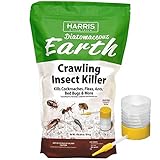
- POWERFUL CRAWLING INSECT KILLER : Effectively kills a wide range of crawling insects including ants, bed bugs, cockroaches, fleas, earwigs, silverfish, and spiders. A natural solution for indoor and outdoor pest control without harsh chemicals.
- 100% DIATOMACEOUS EARTH WITH NO ADDITIVES : Made from pure freshwater diatomaceous earth, this product is safe for use around kids and animals, when used as directed. A trusted choice for eco-conscious households.
- KILLS INSECTS MECHANICALLY, NOT CHEMICALLY : Works by dehydrating insects on contact through physical abrasion. Insects walk through the powder and the fine particles damage their exoskeleton, leading to rapid dehydration and death.
Spread DE around the garden beds and on the foliage of the plants. For indoors, fill the gaps, crevices, and entry points with DE to block earwigs’ entry points.
BioCare - Sticky Traps
These are pesticide-free, non-toxic, adhesive traps that wouldn't allow any crawling insect to cross its sticky surfaces. The sticky traps are effective against the majority of chewing, sucking, and stinging insects, including earwigs, aphids, sawflies, mites, and silverfish, and thrips. Additionally, they’re not harmful to the pets and the environment, and disposing of them is pretty easy.
The sticky traps can be used indoors and outdoors around the tree stems, vegetable beds, and could hang easily near the foliage of the plants. The insects that move over the adhesive surface will potentially stick with material posted on the paper board. Replace them with the new one if adhering capability reduces and dispose of them off in a common bin.
- Easy-to-assemble sticky traps kill almost any type of predator spider or crawling insect, including hobo spiders, wolf spiders, and brown recluse spiders--will not catch web spiders
- Non-toxic; safe to use around food, children, and pets
- Compostable; easy to dispose of without touching the trapped spiders
Organic Control
Monterey- Sluggo Plus
Sluggo Plus contains 0.97% Iron phosphate with 0.07% Spinosad. It is among the top bait for controlling snails and slugs besides earwigs. For seedling prevention, spread the granules around the nursery plot and the base if it was a fruit tree or a shrub. Avoid applications that form piles instead of scattering the bait forming a protective barrier around the areas where infestation occurs. The product works only if the soil is watered before or immediately after applying the bait. Avoid overwatering, just keep the soil moist.

one pound of Sluggo Plus will cover 1000 square feet of garden area.
Solimo- 70% Isopropyl Alcohol
Isopropyl Alcohol is an isomer of propyl alcohol that not only disinfects but dissolves the lipids that often make insect membranes. Rubbing alcohol is most frequently recommended and applied in organic pest control since it derives from botanical sources. It usually sells in 70% formulation with 30% water as inert matter. Rubbing alcohol not only dissolves the chitin, which insects often retain as a protective covering on their bodies but, it dissolves their eggs. The only effective application method is that the insects and earwigs receive spray mists directly onto them. Otherwise, foliage application will kill only those insects which are not good flyers.
Mix one part of rubbing alcohol with 4-parts of water and use for both spots targeting and spraying on the foliage of the plants. Test the ready mixture on the few leaves of the plants and wait for 24 hours to see any signs of stress.
Chemical Control
Bug B Gon-Systemic Insect Killer
Bug-B-Gon is 0.5% Acetamiprid, a systemic insecticide that can be used to control earwigs and other sucking insects infesting the garden vegetables, ornamentals, flowering plants, and fruits. Avoid Acetamiprid applications on short maturing vegetables for the prolonged residual effects. Acetamiprid kills through ingesting plant materials and on direct body contact. It's equally effective against aphids, whiteflies, scale insects, and dusky bugs. Read the product label carefully about the toxicity levels and mixing proportion.

Generally, Acetamiprid needs mixing 3-teaspoons of the product concentrate per gallon of water for spraying on the foliage of the plants.
Check out our other guides on common garden bugs.