
Scientific Name: (Agrotis ipsilon)
Technically the cutworms are not worms but the moth larvae of different species of the family Noctuidae. However, many species in this family are not cutworms, the caterpillars may have the same habit which is not noctuids. The larvae of the Agrotis ipsion, Agrotis segetum, and Agrotis exclamationis are considered the most widespread cutworms in the US climate. Agrotis ipsion, also called black cutworm, is the most notorious garden pest which feeds on buds, leaves, and stems together. They cut the stems of seedlings near the base of the plant and can chew up the entire structure of the newly sprouted plant. The variegated cutworm (Peridroma saucia) is another extensive defoliator of garden plants and can abolish plant leaves overnight. Cutworms hide under leaf litter and soil during the day and come out at night to feed on plants. The habitat, biology, and damages of different cutworms are almost identical and need similar management practices. Black worms are the most widespread and damaging pests throughout North and South America.
Origin and Distribution
Black cutworm was initially caught and studied in Austria in 1766. It is also assumed that black cutworms were abundant since the researcher pick them to study. Their origin is also unclear, though they’re found in many regions globally and lacking in cold areas and some tropical areas. They're most devastating and prevalent in the northern hemisphere than in the southern. They overwinter in subtropical and warmer regions and, reinvade annually in temperate regions. The researchers find a northward movement trend in the spring and southwards in autumn. They can disperse within an area of 1000 kilometers in two to four days with the assistance of northward-flowing winds, and similar dislodging helps them in moving south and southwest in autumn. They may be present in garden and agricultural crops throughout the southern US and spring through autumn in the northern US.
Black Cutworm (Agrotis ipsilon) – Identification

Black cutworm eggs are bright yellow and become darker near hatching. The body of the larvae is uniformly light grey to black without any markings. Their head is light brown with black coronal stripes whereas, in early instars, they bear brown stripes instead of coronal. The skin bears distinctive coarse granules surrounding smaller granules. The spiracles remain black, and the posterior dorsal tubercle is also heavily black-pigmented. A fully mature larva could measure about 2 inches long. Pupae remain dark brown that could measure about 1 inch long and become black at completing pupation. The adults have long and narrow forewings with black dashes. Their wingspread could go over 2 inches. The most distinctive character is that cutworm larvae curl to a tight 'C' shape when touched.
Black Cutworm- Lifecycle
A female black cutworm lays eggs singly or clustery in low-lying areas on plant debris. Often the preference is given to damp areas in no-till soil where larvae could survive easily. Preferable egg-laying sites are the undersides of the leaves, leaf petiole, and lower stems. Hatching occurs in 4 to 6 days, and the larvae move deep into the soil to spend the daytime. There may be six or seven instars which depend on the temperature and availability of food. The larvae pupate in soil for 30 to 35 days at the depth of 5 to 10 cm. The pupal stage could continue for the next two weeks. There are several generations per year with the spring generation being the most devastating of all due to the abundance of young, and defenseless seedlings.
Symptoms and Types of Damages
Black cutworms remain most devastating from third to seventh instars when they become phototoxic and feed chiefly on the seedlings at night. The larvae burrow about 5 cm deep in the garden soil. Larvae cut the seedlings, small plants, and sprouts near the stems and drag them into underground soil chambers where they feed on them for the entire day. They can prolong their chambers further to a depth of 10 cm if sufficient moisture and food remain intact. Otherwise, they could climb on the plants if it rains or waterlogging occurs around the chambers.
Where Does the Cutworm Come from?
Since cutworm pupae overwinter in the soil and emerge in the spring. they lay eggs on the surfaces of the plants and hatch when conditions are suitable for larvae development. Obvious damage comes from the initial instars of larvae that feed at night. It is quite hard to find them in the garden at daytimes and can easily be located at night near the base of the stems or soil chambers.
How to Prevent Cutworm?
Besides following all preventions and cultural control practices if cutworm damages remain prevalent on the garden plants, here are the most proven ways to suppress their population using the biological, organic, and chemical methodologies;
Cutworm- Control
Biological Control
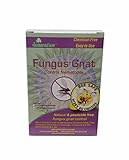
Nema Globe-Nematodes, 20 Million Count
Entomopathogenic Nematodes are one of the best biological control that effectively invades cutworms besides caterpillars of many cutworm species that damage garden plants at night. These are naturally occurring insect-parasitic nematodes, Steinernema feltiae, and their Alginate formulations cause the maximum mortality in black cutworms. However, they need rehydration before applying on black cutworms. Entomopathogenic nematodes are also effective against day-feeding worms on the foliage of the garden plants. They are released in an infective juvenile status while they locate cutworms in the soil and reside on their bodies. The second generation of these nematodes probably multiply within the body of their host and provide prolonged control. Nematodes application is required in the spring when cutworms emerge after overwintering and prepare to lay eggs on the plant surfaces.
- No refrigeration required
- Ideal preventative treatment for tropical plants which are brought indoors after the outdoor gardening season is over, bee and beneficial safe
- We do not ship this product to the state of HI due to State regulations
50-million nematodes can be applied in 1000 square feet of the garden area infested with cutworms.
Monterey-Bacillus Thuringiensis
Monterey Bt contains 98.35% active strains of Kurstaki subspecies of Bacillus Thuringiensis, a milligram of the product consisting of over 6 million viable spores. The Kurstaki is the chief biological strain of Bt but, it remains more effective against the cutworms during the first and second instars larvae, and its efficacy reduces afterward. It is mandatory to apply Bt from the early to mid-spring for the operative control of Black cutworms. Bt introduces toxins in the stomach of black cutworms which, they can't tolerate and die after infection. Monterey-Bt is often a top choice of gardeners looking for cutworms' biological control. Bt- Kurstaki also remains effective against all foliage and soil-dwelling pests that feed on the plant materials. Moreover, Monterey-Bt is OMRI listed and qualifies all standards of organic gardening.

- INSECT KILLER - Designed for use on caterpillars and worm type insects, such as cabbage looper, bagworm, gypsy moth, fall cankerworm, elm spanworm, and more. Has no effect on birds, earthworms, or beneficial insects such as honeybees or ladybugs.
- FOLIAGE PROTECTOR - Designed for use on a variety of plants, including broccoli, celery, cabbage, turnip greens, mustard greens, cauliflower, melons, lettuce, tomatoes, shade trees, ornamentals, and many more.
- FOR ORGANIC GARDENING - OMRI Listed for Organic Gardening. Organic Material Review Institute reviews products to ensure a product complies with all organic standards under the USDA’s National Organic Program (NOP).
One teaspoon per gallon of water is required for foliage spraying and 2 to 3 teaspoons for soil drenching.
Organic Control
DEsect Diatomaceous Earth
Diatomaceous earth (DE) was first introduced in the pest control industry in 1960. DE is amorphous silicon dioxide that contains a very high level of crystalline silicon dioxide. DE is not a poisonous substance but, it kills the insects by drying out the fats and oils from their skeleton. When prepared for controlling insects, DE sharp edges become abrasive that triggers insect-killing coming into its contact. DE remains effective longer if kept undisturbed and dry. Applying DE around the stems of the garden plants could stop black cutworms from approaching and cutting them at night. DE applied as banding around the garden beds can also help.
![DEsect Diatomaceous Earth Insecticide for Home & Garden, Kills Ants, Roaches, Aphids & Many Others, 2 lbs. (1 gal) [EPA Reg. No. 7655-1, Est. No. 91070-UT-001]](https://m.media-amazon.com/images/I/412mm4Mc73L._SL160_.jpg)
DEsect Diatomaceous Earth is OMRI listed and applies in organic gardening.
Bonide - Ready to Use Neem Oil
Neem oil is derived from the seeds of the Neem tree, and its cold-pressed versions are more effective for use in pest control. This ready-to-use product contains 0.9% Clarified Hydrophobic Extract of Neem oil which, serves several pest control functions together. Its antifeedant, fungicide, insecticide, acaricide, and IGR all together. The gardeners can apply it freely on organic produce irrespective of the insect pests that invade their garden plants. Neem Oil is also for applying against black cutworm and other stem damaging caterpillars and their larvae.
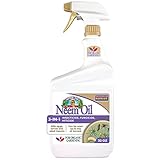
- MULTI-PURPOSE BUG KILLER - Bonide Neem Oil is a perfect pest control solution for any garden dealing with mites, flies, mildew, and more. This product is a three-in-one fungicide, miticide, and insecticide.
- READY TO USE - This product is conveniently ready to use when it arrives. The spray nozzle makes this product easy to deploy and can even be used up to the day of harvest.
- KILLS ALL STAGES OF INSECTS - Bonide's 3-in-1 Neem Oil is great because it kills the egg, larvae, and adult stages of insects while also preventing the fungal attack of plant tissues.
This product arrives in a ready-to-use formulation and is for spot treatment of stem damaging larvae of cutworms.
Chemical Control
MGK- Crossfire Concentrate
Crossfire concentrate contains 4% of Clothianidin, 0.10% Metofluthrin, and 10% Piperonyl Butoxide which is an excellent mixture for most pyrethroid resistance strains of cutworms. The foliar applications are not recommended nor allowed in an edible garden. However, product drenching is possible if your relevant authorities allow it for use in your area. It kills both eggs and resistant cutworms but possesses prolonged toxicity and considerable residual effects.

- PATENTED FORMULA: CrossFire bed bug spray kills pyrethroid-resistant bed bug strains at all life stages, including eggs. With its two active ingredients and a synergist, get effective bed bug control.
- QUICK KNOCKDOWN AND KILL: Begins working within minutes of exposure. This professional product is backed by multiple active ingredients.
- NON-STAINING: For indoor use in residential, institutional and commercial facilities, this bed bugs killer treatment is approved for direct application onto mattresses.
Add 13 ounces of concentrate in one gallon of water and apply as soil drench if cutworm damage is out of control.
Check out our other guides on common garden bugs.