
I love watching bluebirds hovering around my yard, in the dwelling space I’ve created for them.
These deep-blue feathered creatures are quite vulnerable to attacks by more aggressive birds, so creating a safe and comfortable environment for them is quite important.
However, last month, I noticed a couple of brown-feathered birds picking up twigs from the yard and stuffing it in the bluebird houses. Sure enough, these were house wrens, building their nest in the bluebird shelters. While I would happily welcome a new family of birds, wrens aren’t exactly sociable - attacking and decimating the bluebird eggs to create their footing.
Now, this is a common occurrence among avian species - the more powerful ones drive the mellow creatures out of their dwellings and even kill them. However, this doesn’t mean you can’t do anything to protect the bluebird nests around you.
There are several tried-and-tested techniques to deter house wrens and provide ample living space to bluebirds, and I’ve compiled them in this guide for you.
Hi there! I’m Stacy. And today, I’ll tell you all about how to keep wrens out of bluebird houses.
So, without any further delay, let’s begin.
Effective Ways Of Keeping Wrens Out
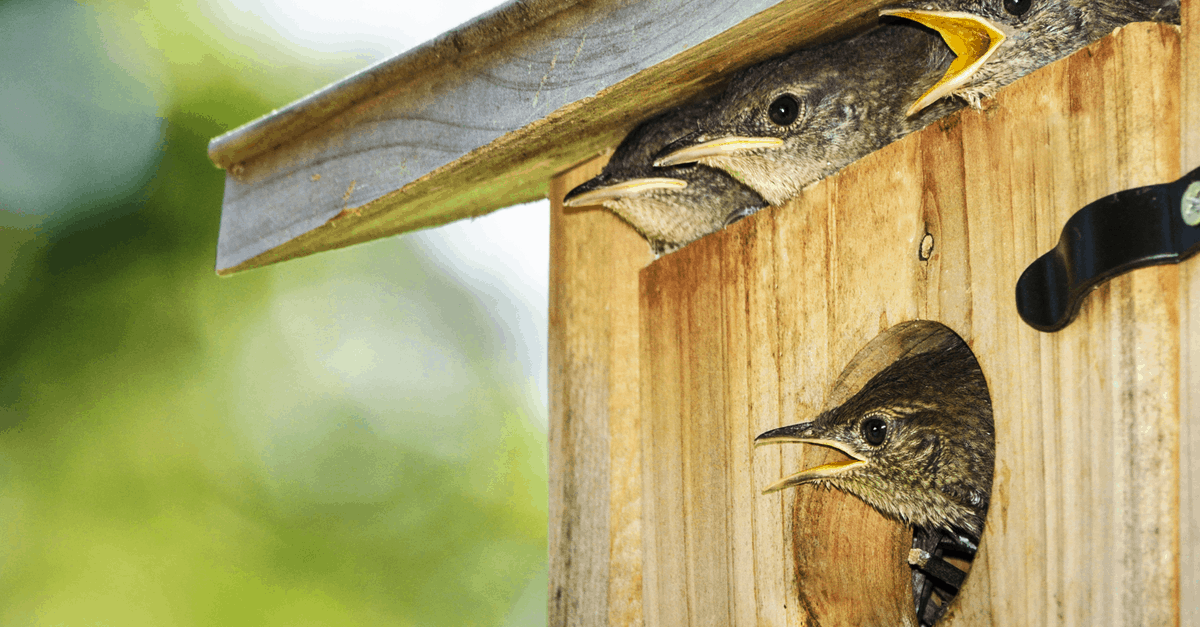
Although there are many ways of keeping wrens out of bluebird houses, I’ve listed some of the most effective techniques in this guide. Let’s take a look!
1. Don’t Place Bluebird Houses In Wooded Areas
House wrens prefer dwelling in areas that have a lot of brambles, thickets, and trees. In addition, they like shrubberies and tree branches. So, placing a bluebird house away from the natural habitat of wrens will decrease their chances of invasion.
In any case, bluebirds are attracted to dwellings in open areas, like meadows or farms. So, mount the bluebird houses 50 to 250 feet away from heavily wooded areas and shrubberies.
You can also place them at a 12 feet height, away from shrubberies, so that they aren’t an attraction for house wrens.
Removing bluebird nests from the natural habitat of house wrens is an effective way of deterring these notorious creatures. However, the population of wrens is increasing, and there is not enough land to accommodate all these cavity nesters. Therefore, sometimes, wrens can look for accommodation far away from their ideal habitat.
2. Clear Out Dummy Nests
House wrens build several dummy nests in multiple birdhouses. They do this to mark their territory, get rid of competitors, and find a suitable nesting site.
They keep piling different bird boxes with loose twigs, and once they find a suitable nesting site, these dummy nests are abandoned. You can identify an active house wren nest by looking for feather and fiber linings, along with nest cups.
You must leave an active nest untouched, as per the Migratory Bird Treaty Act. So, make sure that the nest you’re clearing out is inactive.
An abundance of twigs and the absence of a nest cup are surefire signs of a dummy nest. You can remove the branchlets and make the nest habitable for other creatures, including bluebirds.
Remember to remove the nesting material far away from the area so that house wrens cannot start rebuilding with it.
In an attempt to make the nests reusable, male wrens will keep piling it up with sticks. You can continue to remove the twigs daily, forcing the wrens to rebuild their nests elsewhere and leave your bluebird houses alone.
3. Remove Ornamental Boxes
Many homeowners mount decorative bird boxes that have triangular roofs and perches.
These houses are often well painted and have small entryways, making them perfect for wrens. As a result, you’ll attract many of them to your yard every year, which will lead to an increase in their local population.
House wrens are territorial, and once they get hold of a few dwellings, they’ll try to take over all the other bird boxes in the area. This will prove detrimental for bluebirds, who’ll be driven out of their nesting space by these aggressive creatures.
So, consider removing those ornamental boxes from the yard. Alternatively, you can plug the entrance holes using a rubber drain stopper, thus rendering them useless to wrens, who’ll move away to look for a more hospitable climate.
4. Use Wren Guards
Using wren guards is one of the best ways to keep these hostile avian creatures away from your bluebird houses. A piece of wood is put over the bluebird boxes, extending from the roof to the entryway. This is done to obscure the view of the entrance.
Since wrens perch on the roof and inspect the house before entering it, the clever placement of this wooden structure will ensure that they don’t see any nesting site in place and fly right past it.
Installing wren guards is slightly tricky, and different bird species react to it differently. It does not generally bother bluebirds. However, there are two essential things you need to remember.
First, wren guards should be installed once bluebirds have established their nest and laid an egg. Otherwise, the chances of them getting spooked and abandoning the nest are high. Second, remember to remove the wren guard when it is time for the nestlings to fledge. Once there are no eggs to protect, you wouldn’t have to conceal the house, anyway.
Removing the wren guard makes the house visible to bluebirds, and they can reuse it for another brood.

- Package Information: the package information includes 2 pieces of bluebird house predator guard with 12 screws, the quantity will meet your using needs, and you can put them in different places
- Reasonable Size: each bird house predator guard has reasonable size in 8.9 x 8.9 x 2 cm/ 3.5 x 3.5 x 0.8 inches, convenient to use; Please confirm size details before your purchasing
- Reliable Metal and Wood: our predator guards for bird houses are made from quality metal and wood material that sturdy and reliable, not easy to break or fade, which can serve you for a long time

- 2" x 2" Square Opening is 1" Diameter
- Made from Copper.
- Fits on Any Bird House
Conclusion
With that, I come to the end of this guide. I hope you can now successfully protect your bluebird dwellings by keeping house wrens away.
I prevented them from laying eggs in the bird boxes outside my house by frequently removing their dummy nests.
Even though wrens can get disruptive, you cannot harm them. So, it is best to make alternative arrangements for bluebirds. Now, it is time for me to bid farewell, but I’ll be back soon with more such guides.
Until next time, take care!