
Isn’t cooking therapeutic?
Besides gardening, I love cooking. From fried chicken, Dutch baby pancakes, Spanish tortilla, bibimbap, pan pizza to lasagna and panini, cast iron skillets are my go-to cookware for all my cooking needs.
Not only is their depth perfect for frying anything and everything, but the iron holds heat very well, which makes it terrific for non-stick cooking. Just a few days ago, while baking pancakes, I accidentally dropped my cast iron skillet on the hard kitchen floor.
To my utter dismay, the cast iron pan cracked from the inside. Although I knew cast iron welding could mend cast iron, I wanted to fix it quickly at home. I called my father because I had always seen him mending cast iron railings and bathtubs at home.
Then and there, my father gave me some tricks to mend my cast iron skillet. Following his tips and tricks, my cast iron skillet was mended in almost no time. Howdy! I’m Stacy Smith, and today I’ve curated a guide on how to mend cast iron.
So, without any further ado, let’s dive right in!
How To Mend Cast Iron
Did you accidentally break the cast-iron channels in your garage and are looking for ways to fix it? Although fixing cast iron isn’t easy, it's definitely not an impossible task. From engines to kitchen stoves, cast iron is a versatile material used widely in homes and industries.
As it is brittle, it can break or crack quite easily. As such, anything can lead to cracks in cast iron. It can be temperature changes, shocks by dropping on hard concrete floors, or thermal gradients.
While welding techniques can mend cast iron, they can also cause further damage. So, I’d advise you not to go for welding.
You must be wondering, if not welding, then what will mend your cracked cast iron channels, railings, bathtubs, or skillets. Today, I’ve got some DIY techniques for you to mend your cast iron materials and surfaces at home without any hassle.
Let’s take a look at the two techniques you can use to mend cast iron.
1. Mending Cast Iron Through The Use Of Epoxy Putty
Have you ever heard of epoxy putty mending cast iron? I didn’t know about this until my father introduced me to this trick. Epoxy putty works like a charm to fix the cracks and fractures on the cast iron.
First off, you will have to buy some epoxy putty from the local store. I usually get Quick Steel or JB-Weld because these two epoxies act as glue and adhere excellently to cast iron surfaces. Plus, their strong adhesion seals your crack excellently.
Next, you need to sandpaper the cast iron surface that you have to repair. I would recommend you go for 80-grit sandpaper to remove any paint, impurities, or rust from the cracked surface. Moreover, you must carefully sand the surface to avoid widening the crack. I suggest avoiding sanding in circular movements; instead, sand the cracked surface in back and forth motions.
After cleaning the surface with a wet rag, squeeze out some epoxy on a flat surface and mix it with a putty knife. After that, spread the epoxy putty over the cracked surface. But, remember to scrape off the excess epoxy putty from the surface immediately after applying. Let it dry for 24 hours before putting it to use.
Finally, you will have to paint the fractured cast iron to ensure the epoxy putty matches the rest of the surface. Plus, this will further enhance the durability of the cast iron. To be honest, this is my favorite technique for mending cast iron because it is the easiest.

- J-B Weld Steelstik: A Hand Mixable Two Part Epoxy Putty Stick That Is Steel Reinforced & Non-Rusting To Quickly Repair Or Rebuild Anything Made Of Metal! J-B Weld Steelstik Is Certified By The Nsf And Is Safe For Contact With Potable Water
- Cure And Set Time: After Kneading The Two Part Formula Together By Hand, Steelstik Takes 5 Minutes To Set And Cures In 1 Hour. J-B Weld Steelstik Set And Cure Color Is Dark Grey
- Product Features And Strength: J-B Weld Steelstik Has Lap Shear Strength Of 900 Psi, Can Withstand Continuous Temperatures Up To 350F (176C ) And Intermittent Temperatures Of 450F (232C), And Is Chemical Resistant Against Petroleum, Hydraulic Fluids And Other Chemicals When Fully Cured. Steelstik Can Be Molded, Shaped, Sanded, Drilled And Tapped
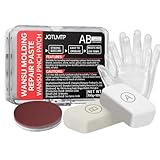
- This metal filling putty is designed for repairing pipe and pool leaks, as well as holes, cracks, damages and uneven surfaces on various materials. It can be used for repairing, filling and bonding metal, plastic, stone, wood, tile, ceramic, acrylic, glass, sculpture and more.
- Made of epoxy resin, curing agent, filler and other high-quality raw materials, this white high-strength epoxy putty features high hardness and strong adhesion, which can improve the hardness and wear resistance of the coating. Easy to shape, it will not shrink or crack after forming, suitable for sculpture shaping and various plumber repair needs.
- No complex tools required. Simply cut the AB pool putty into pieces at a 1:1 ratio with a scraper and knead fully until the putty stick turns grayish white. Apply it to the area to be repaired before the putty cures (within 30 minutes), and the putty will be fully cured in 24 hours. Note: Do not use the epoxy putty underwater.
2. Cold Brazing Method To Mend Cast Iron
Another technique my father taught me to fix cracks on cast iron was the cold brazing technique. Of course, you cannot use epoxy putty to mend heavy automotive parts, that’s when the cold brazing method comes into the picture.
This technique mends the cast iron pieces excellently without using heat. But, I suggest you use safety glasses and protective gear while using this technique to prevent injury.
First off, you will have to select a filler rod to fill or join the cracks of the cast iron. After that, it’s always a good idea to prep the surface before beginning the process of fixing the cast iron. So, I’ll suggest you not skip the sanding process.
Next, it’s essential to clean up the impurities and dust from the surface so that they don’t disrupt the mending process. After that, heat the surface enough to make sure the filler material melts into it smoothly and efficiently.
Also, holding the brazing torch adjacent to the surface is important because it will maintain the temperature. As such, the filler rod will melt and mend the cracks of the cast iron surface. Thus, your broken surface is mended.
Although the color of the filler material is different from that of the cast iron, I suggest painting it to match the color of the surface, only if it bothers you.
Final Words
Whether heavy automotive spare parts or kitchen skillets, mending cast iron isn’t impossible. Having said that, I’ve come to the end of my informative guide on how to mend cast iron.
Hopefully, you enjoyed reading it as much as I enjoyed writing it. Speaking of my experience, both methods are best if you’re looking to mend cast iron quickly without damaging it. You can fix porch railings, bathtubs, automotive parts, or anything that you want.
Of course, you can try other methods and techniques to mend cast iron. The two-part epoxy putty method is by far my favorite technique to mend cast iron because of how quickly and easily it fixes your surface.
Having said that, I shall take your leave. Let me know how you mend cast iron in the comments below. Stay tuned for more such interesting reads.
Till then, take care, folks!