
Lawn maintenance tools indeed make everyday clean-up more convenient. But, sudden malfunctions can cause just as much trouble.
For instance, a leaf blower is a simple tool that replaces the time and effort raking, mulching, and piling usually take. I find myself reaching out for it more often during the fall for obvious reasons. Hence, it took a toll on my yard care routine when my leaf blower suddenly stopped functioning.
What confused me more was the fact that it had worked perfectly fine the day before. Had there been a gradual decrease in its performance, it would have been easier for me to find the root cause of the problem.
So, I started my research on the Internet and even asked around the neighborhood for any tips. Thankfully, Patrick, who lives across the block, suggested that I check the ignition coil. He even told me how to go about the testing process.
Hi! I’m Stacy Smith, and today I’ve curated this guide on how to test ignition coil on leaf blower if it suddenly gives up on you.
With that said, let’s get started…
A Brief Guide On Leaf Blowers
What Is A Leaf Blower?
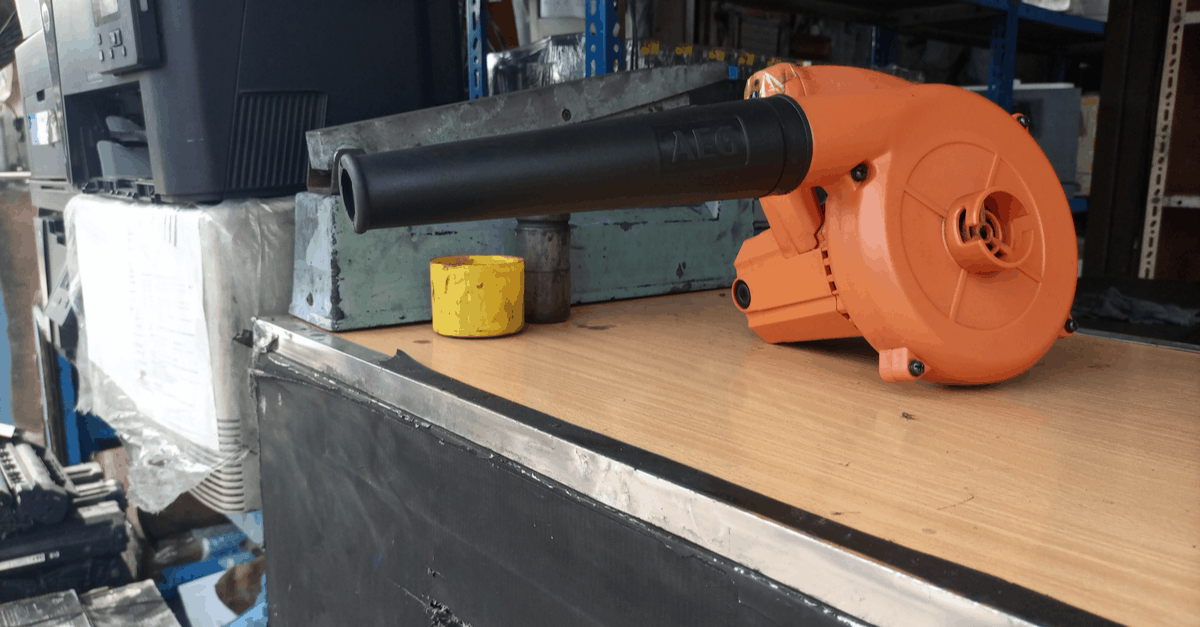
A leaf blower (or simply, blower) is a device equipped with a nozzle that “blows” air to remove fallen leaves, grass clippings, and more from the yard. Usually powered by gasoline or electric motors, these powerful units are either handheld or backpack mounted. If you own a huge lawn, a backpack unit will ensure more comfortable use for longer periods.
Are Leaf Blowers Safe?
If you need a short answer- no! Leaf blowers are not safe for use, especially if you have children around. Moreover, the amount of noise and air pollution this equipment produces is no joke! However, with proper safety precautions, like wearing glasses, noise-canceling headphones, and more, you can use a leaf blower in a safe and responsible way.
What Is An Ignition Coil?
The ignition coil links the spark plug with the flywheel, all of which are located in the engine of a leaf blower. You can remove the cover of the motor and find the ignition coil easily. Its function is to generate electricity to power the engine while you use a leaf blower.
Moreover, the ignition coil consists of an insulated wire attached to the metal armature, which links the spark plug and the spinning flywheel. No wonder, despite there being many parts to cause issues in a blower, the ignition coil is the culprit most of the time.
How To Test Ignition Coil On Leaf Blower
Step 1- Remove The Cover
Grab a screwdriver and loosen the cover of the motor. While removing the various parts, ensure that you label them or click a picture for later reference. Especially if you’re a beginner, you must remember how to reconnect the parts later on. After opening the motor, get rid of the cowling, i.e., the casing.
Step 2- Disassemble The Components
Now, it is time to remove the spark plug carefully, ensuring you do not damage the wires. Detach the cable and the wire, or get rid of the entire plug completely. The latter is considered to be a safer option.
Step 3- Test The Coil
Finally, you can test the ignition coil. But, remember to be precise and cautious while doing so. Hold the insulated portion of the wire removed in the previous step and place it against the metal chassis. Simultaneously, crack the engine and check for electric sparks.
If a spark is produced every time the cord touches the chassis, the ignition coil functions well. If not, it’s time for a replacement.

- [OE Number]: 531147161
- [Fits Models]: Fit for Hus Backpack Blower 150BT(2022-present), 150BT-Mark II, 345BT
- [Function]: Helps to improve combustion efficiency and strengthen electrical performance. Increase ignition energy intensity for easy starting

- Hign Quality & Hign Performance - TOP Quality Ignition Coil,made of high quality material for higher stablity and reliability, meet or exceed OEM standards.
- Reference OE Part Number- Replace the ignition coil OEM number:545108101, 5451 08 101 5451-08-101,585836101 Ignition Coil Module. Replace Homelite Ryobi 300953003 300953001 984883001 984882001.
- Fit These Vehicles - fit for Husqvarna Handheld Blower series 125B 125BVX 125BX. See the detail fitment in the product description below.
How To Conduct The Test Safely
Despite being rather straightforward, the previous method is quite dangerous as it involves live wires. So, here’s another foolproof way of checking the ignition coil without causing electrical hazards.
Step 1- Do Your Research
Safety comes with awareness, so it is best to know all the instructions and precautions before getting started. Every leaf blower is different with its unique set of instructions which are especially important while dissembling its parts.
Step 2- Detach The Parts
With the help of a screwdriver, remove the outer casing gently and keep it aside. Once that’s done, the ignition coil and flywheel should be easy to locate. If your model has a covering or shield, you might have to remove the extra layer altogether.
Step 3- Pull Out The Ignition Coil
Like the previous method, remove the wire that is linked to the spark plug. Loosen the screws and bolts around the ignition coil and remove it from its chamber. If your model has the ignition coil attached to the ground wire, loosen the wire and disconnect it at a point such that it is connected to the metal chassis.
Step 4- Test With A Suitable Meter
Use a functioning ohmmeter and a multimeter to conduct the test. For this, you’ll have to hook the black part of the ohmmeter on the ignition coil and the red portion of the multimeter on the spark plug.
Now lay the ignition coil flat on a table and reset the ohmmeter to 20k ohms. This reading may vary with the model of your leaf blower and the type of ohmmeter you use. Connect the positive lead of the multimeter to the spark plug and the negative lead to the metal armature of the ignition coil. Scratch both the connecting points and check for any movement in the ohmmeter.
Step 5- Note The Readings
Now, according to your readings, you can tell whether the ignition coil is functioning or not. For instance, a reading of “one” implies no connection, meaning the coil is busted. However, a “zero” reading indicates a well-functioning coil.
Conclusion
That’s all for today, folks!
I suggested two methods, the latter being a safer option for beginners, hoping that you will find this guide helpful while repairing a malfunctioning leaf blower.
However, when it comes to operating, repairing, or cleaning such equipment, I always recommend following full safety precautions. Ensure that you’re wearing well-fitting clothes with no accessories that can cause accidents. With that said, I’ll be signing off now. Watch out for more such informative reads.
Until then, take care!