
Introduction

When painting furniture in your home, you may find the process to be deceptively complex. Not only do you have to contend with different types and colors of paint but many surfaces need to be primed or finished, to lock the paint in and ensure it doesn’t run or fade. This becomes a bigger concern when you’re painting in the kitchen, which is often subject to more heat and moisture than other rooms in the household.
Fortunately, we have a step-by-step guide for painting kitchen cabinets right here. Many of the steps detailed below can be translated to other furniture too, so you can learn a lot about home improvement and redecoration.
- What You Will Need To Paint Your Kitchen Cabinets
- Getting Started Painting Your Kitchen Cabinets
- Tips For Painting Your Kitchen Cabinets
Across those three sections, you’ll know what to bring when painting, how to do it, and other handy tips to get the best results. We’ve also referenced other materials that have more information about painting and other handiwork, for those who want to read deeper into this subject.
Table of contents
What You Will Need To Paint Your Kitchen Cabinets

Before you get started, it helps to have everything beforehand. You don’t want to be halfway through the steps outlined later in this guide just to find out you don’t have everything. If that happens, you might even ruin the paint job because it’ll dry up without necessary surface priming or sealing.
Here are nine things you should keep in mind before you even start painting your kitchen cabinets.
Oil Or Latex?
First, you need to decide what kind of paint you’re going to use. For most kitchens, the choice will be between oil or latex paint. In some situations, acrylic paint can be used in place of latex paint but it is more expensive.
Latex paint is water-based and known for its glossy, matte finish and its lack of toxicity and odor. It’s fast-drying, drying in an hour or two, so it’s perfect for fast painting jobs in a busy kitchen. Because it’s thinner, it’s also generally easier to use and manage, and it doesn’t even need to be primed before being applied to your cabinet surfaces.
Latex paint will stain more easily, so this should be considered before choosing it for your cabinets. That said, it does have some flexibility that other paints don’t. It won’t crack over time and it will warp with the furniture beneath, so expanding wood won’t cause cracks or blemishes either. If your kitchen has a bold color style, you should note that fluorescent colors are typically only available as latex paint.
So, how does oil-based paint differ? It helps to have experience with painting before using oil paint because it’s thicker, harder to work with, and can be toxic. It’ll also need to have a primer so that the oil doesn’t eat away at the surface material of your kitchen cabinets and it can take weeks to fully dry.
Oil paint can crack with time, especially since it’s not as flexible as latex and can develop chips, and those problems will only get worse if you mess up the process somehow. You can spend a lot of money on oil paint too, so you don’t want that to happen. Oil paint has a reputation for both smooth and textured paint jobs and can support colors no other paint types can, such as Prussian blue, which helps in creating a rustic décor.
Brush Or Spray Paint?
When you’re painting a kitchen cabinet, you don’t need to break out the finest artisan paintbrushes. You need to decide if you’re going to go the old-fashioned route and use paintbrushes or if you’re going to use spray paint instead. Like your choice of paint, each comes with its own advantages and disadvantages.
| Paintbrushes | Spray Paint | ||
| Pros | Cons | Pros | Cons |
| More control | Takes much longer | Very fast application | Preparation needed |
| Even coverage | Multiple coats needed | Only need one coat | Uses more paint |
| Great surface adhesion | Leaves brush marks | No brush marks | Poor surface adhesion |
| Can be calming | Hard to paint tight areas | Can reach tight areas | Can’t paint in the wind |
Generally, the paintbrush will take longer overall but allows you to have more control over the final product. Spray painting, on the other hand, is very fast but requires some prep beforehand, but it requires good conditions and you have less control over the finished piece.
Regular Or Faux Finish?
Lastly, you need to decide if your paint will be finished off with a regular finish or a faux finish. Regular paint finishes typically come under three different categories:
- Flat or matte
- Eggshell or satin
- Semi-gloss or high-gloss
The main factor across those three categories is how much gloss it has, which changes how light plays across the surface. There are enough shiny appliances and metal fixtures in your kitchen anyway, so flat/matte or eggshell/satin finishes are more popular for kitchens. You don’t want to be overwhelmed by shining surfaces, after all. That said, it’s entirely up to you and your established decoration style in your kitchen.
As for faux paint finish, this is where the paint is styled in such a way that it looks like a material surface. If you’ve ever seen painted walls made to look like wood grain, marble tiles, or brickwork, then you’ve seen faux finishes. Using a faux finish is much faster and cheaper than having actual material surfaces built into your kitchen. Naturally, getting these finishes takes extra time, skill, and effort.
Paint
With those considerations covered, you should now know what you want from your paint. This will help in choosing the right color for your kitchen. Make sure you get the right paint for you and your cabinets. Some of you will prefer to get a decent paint that’s quick and easy to apply while others will want to take a slower, more deliberate approach with painting your cabinets.
If the cabinets are front and center in the room, or otherwise designed to catch people’s attention, you may want to spend more time on them with higher-quality, slowly applied paint. You can then use quick, easy paint to get the rest of the room out of the way.
If you have the budget, nothing is stopping you from getting two different paint styles, such as latex and oil paint, or gloss styles. You can apply both to different parts of the cabinet to get the desired results.
Degreasing Detergent
Degreasing detergent is a valuable tool in the arsenal of anybody who paints and redecorates their own home. You should clean off your kitchen cabinets before you paint over them, especially if you’ve owned the cabinets for some time. The walls and cabinets inside kitchens tend to become slick with grease over time, which isn’t surprising seeing as the kitchen is where we cook our food. That grease can form a layer between the surface and the paint, preventing the paint from properly adhering to the cabinets.
Your cabinets should be cleaned thoroughly and then dried before you start painting. You should also prepare the surface by giving it light sanding. 100 to 250-grit sandpaper is ideal and make sure you don’t overdo it before wiping away any debris.
Masking Tape
You’ll need to have masking tape that’s sticky enough to create a seal from liquids but not too sticky that it peels the surface off your kitchen cabinets/walls. You’ll see what we do with this tape later but you may have seen this being used before, to establish clear boundaries that ensure a straight paint job. You’ll never get a straight edge by eyeballing it, so make sure you keep some of this tape handy.
Screwdriver
Everybody should have a screwdriver in the home, especially when many cabinets need to be deconstructed so you can paint them properly. Screws are used to hold most cabinet models together so, if that’s the case with yours, you’ll need something to take them apart. Make sure the screwdriver is compatible with the screws or at least has a replaceable head so you can make it compatible.
Ruler
Like with masking tape, you don’t want to decide on distances by eyeballing it. Even if you’re a pretty good judge of measurements, it’s safest to bring a ruler with you to your redecoration project. You can use this to measure out any length, something that can be invaluable when painting. It’s also very important if you need to cut or adjust the cabinet parts in any way.
Brushes
Finally, you need to have paintbrushes or another means of applying the paint to your chosen surface. While spray paint is fairly one-note in how it works and the results it gets you, your chosen brush will affect the finish of your paint job. Brushes made with natural bristles are better for oil paint while synthetic brushes can work with all water-based paints.
You’ll want to get larger, rectangular paintbrushes too that make the process much faster. You don’t want to use a tiny, pen-like paintbrush to paint an entire cabinet, after all. Good paintbrushes that last you a while and clean off easily will cost you more money, so remember that you get what you pay for.
Getting Started Painting Your Kitchen Cabinets

Now that you know which equipment you need and how to figure that out, you can get started. Make sure that you have everything, so you can get the painting done in one fluid session without needing to make trips. It also keeps the job consistent in terms of its coat thickness and the direction of the brush finish.
Here are the nine steps that you must follow to turn your boring old kitchen cabinets into something new, colorful, and exciting.
Clear Up The Kitchen And Set Up A Workstation
Paint is messy and has the tendency to get everywhere, so try to avoid getting paint where it’ll look unsightly and cause decoration issues.
You need to prepare the kitchen for the painting it’s about to receive. Try this by moving tables, other furniture, and other moveable items out of the room. If they’re not even in the same room, you won’t accidentally get paint on them from drippage or accidentally flicking the brush. Take freestanding appliances off of their counters, along with anything else that may get paint on them.
Once removable items are cleared, you can clean the kitchen in the way you typically would. Remember to use the degreasing detergent to remove grease from the walls and cabinets, paying special attention to the surfaces you’re going to paint.
Start By Emptying The Cabinets
While you’re emptying the kitchen and cleaning things up, you should open up the cabinets and take everything out. If you leave things inside the cabinets, you run the risk of getting paint onto the items inside. Find a box or some other means of storage and fill it with the contents of your kitchen cabinets, then move them to another room.
Remove The Doors, Drawers, & Shelves
Get your screwdriver or drill and use it to deconstruct the cabinets as much as you can. Remove the doors, drawers and their handles, and shelves where you need to. By removing these parts, it’s much easier to reposition them, clean them more thoroughly, and then paint them all over.
You can further deconstruct the cabinets by going at the hinges with your chosen screwdriver. When deconstructing things like cabinets, it’s important that you label each part so that you know how to reconstruct them. Post-it notes work well for tagging the doors, shelves, and drawers. Put some tape over the numbers, so you don’t paint over them.
Protect The Floors
You’re almost ready to actually start priming and painting but first, you need to put masking tape around the floor and walls. The tape stops dripping paint from touching surfaces where they don’t belong, they get caught on the tape and you can then pull the tape away to create a straight edge.
Prepare The Boxes
After removing enough of the cabinets, you’re left with the cabinet boxes. Open the windows of your kitchen (and a door, if there’s one leading outside) so that the room is properly ventilated. Even if you’re using odorless, non-toxic paint, it’s a good idea to keep the room ventilated.
You should also wear gloves and a mask, if possible. A mask may not be necessary if you’re using non-toxic paint but it’s a good idea to keep any paint off your skin. Wear old clothes that you don’t mind getting dirty with paint, too.
Prime The Cabinets First
Once everything has been prepared, you can start priming. Some surfaces won’t need to be primed, especially if you’re using easygoing paint like latex, so check your paint tin to see if a primer is recommended. You should use a stain-blocking primer if you think the cabinets could get stained in the future. If primer isn’t used, you run the risk of creating cracks and knots beneath the topcoat. Once these get worse, they can bleed through the topcoat and ruin the look of your cabinet.
Start at the top of the cabinet and paint across the grain, assuming it’s made from wood. It’s important that you tip-off, which means you brush in the direction of the grain to finish the priming off. You only need a single stroke when you tip-off, to get rid of brushstrokes that formed when you were priming with the grain.
Cover the cabinet as much as possible with the primer, painting the stiles and rails if necessary.
Sand, Caulk, & Fill
When the primer has dried up, you can start sanding the surfaces. You may also decide to use caulk to seal any seams or connective points that have worn down over the years and decreased the structural integrity of the cabinets.
To sand, you can use anywhere from 100 to 220-grit paper as long as you get a smooth surface free from surface imperfections and unsightly blemishes. Use a vacuum to suck up any dust or debris from sanding out the cabinets, so they won’t interfere with the painting process.
Paint The Cabinets
Now we can finally get around to actually painting the cabinets. They should be ready right now if you’ve followed the steps above, along with other chores that your cabinets demand before you break out the paint. Assuming you have the same color paint, you’ll typically need to apply two coats instead of one. Some spray painters can do it in one but we’re assuming you’re using a brush, the most popular way of painting.
A dark finish can be harder to pull off and might even require three coats to subdue the lighter colors beneath. Thoroughly clean then brush between each coat or bring multiple and swap between them. Like with the primer, you want to tip-off so that your brush strokes are hidden from view. Some prefer the rustic and lived-in look of textured paint jobs, so tipping off isn’t a necessity.
Once the box is done, you can turn your attention to the detached doors, drawers, and shelves. The process is remarkably similar for prepping and painting these other parts of the cabinet. After they have been primed, start painting and create the desired look that you had in mind. Have something handy, like a cloth, to wipe any paint that risks running onto your clothes or other kitchen objects.
Wait for the parts to dry. As we covered at the start of this guide, this can take an hour or a week depending on the nature of the paint you used. You can dry paint faster by leaving it somewhere outside and well-ventilated. Doors and other cabinet fixtures have screw holes that you can use to mount the door outside temporarily while its faces dry. You can even paint a cabinet door while it’s hanging in your backyard.
Put Back All The Pieces
Now that all of the pieces have been primed and painted, you need to put them back together again. This will be easier or harder depending on your memory or how many labels you added to the cabinet when we told you to!
Shelves are easy enough; they typically slot or clip into cabinets with no regard for compatibility. Doors and drawers, however, won’t be interchangeable if you’ve disassembled and painted multiple cabinets. Remove the tape over the numbers you marked on each cabinet door and use them to match it to the right cabinet and reassemble it. Do the same with the drawers, too.
Congratulations, your cabinets should now be finished. Hopefully, the results are to your liking! If not, you still learned something along the way and maybe you know what you’d do differently next time.
Tips For Painting The Kitchen Cabinets

Even with a step-by-step guide, sometimes it can be hard to follow if your cabinet isn’t like the average model. That’s why we have several important tips that you can factor into your cabinet painting process to make things much easier for you.
With these tips, you can disassemble, prime, paint, and reassemble your kitchen cabinets with ease. The results will look much better when you know what you’re doing, so keep these tips in mind each step of the way.
Label Doors
To label doors and the fronts of drawers, just make a crude diagram of your kitchen and give each door/drawer a number. Once that is done, you’ll want to remove the doors and drawers along with their hinges, so you can paint them in their entirety. You then use the hinge cavity to number the doors/drawers and then cover them with tape. This makes your doors labeled and stops you from painting over them later.
Label the hinges and stick them somewhere where they won’t get lost. It’s a good idea to label hinges with letters corresponding to the doors they came from, like 1A and 1B, for example. You can also label handles that you may have removed from the doors to make painting easier.
It may sound like a hassle to do all of this before you even get to painting but, if your cabinet pieces aren’t compatible with each other, then you’ll thank us later. Nobody wants to spend all evening painting their cabinets only to find out you can’t reinstall them.
Support Doors On Standoffs While Painting Them
Painting doors and other parts of the cabinet can be tricky. Doors in particular are long and thin, and so you can barely hold onto them without touching both sides. When one of those sides is painted and you’re trying to paint the other, this can be a problem. That’s why you should look into ways to hang or position the doors for ease of access.
If you haven’t started yet, you can get special products called painter’s pyramids that are designed to hold workpieces above your working surfaces, making cleanup that much easier. Otherwise, you can easily make standoffs by grabbing some scrap and creating some yourself.
Double-Check For Defects After Priming
After you’ve primed and sanded your cabinet, you should stop and take a good look at it. Using a bright light, try and find any blemishes on the surface. The reason we do this after priming is because they become more prominent. These can interfere with your paint job and look unruly if you just paint over them. It’s a good idea to fill them beforehand.
You can buy spackling compounds or wood fillers that are ideal for covering these marks on your door. Spackling dries hard, making it a viable option for repairing dents and other issues on the surface of your cabinet. You’ll then have to reprime any areas that you have spackled so that it’s protected again from the coats of paint you’re about to add.
Allow At Least Five To Seven Days To Build Up The Paint In Thin Layers
This is an essential tip for those readers who work with oil paint. Oil paint takes longer to dry, as we’ve covered, and so adding layers can be a time-consuming process. The best way to ensure quality while also getting the job done is to start off with thin layers. The thickest layers will be your last, for now, you start with thin layers and build them up over the week.
With each coat, it can take 24 hours for them to dry properly. Two coats will be two days, if not a little more, so the full process can easily take five to seven days if you’re trying to achieve a deep, solid color with oil paint.
The thinner your paint layers are, the quicker they’ll dry. This is because oil paint doesn’t technically dry at all, it oxidizes. Since it doesn’t evaporate like water-based paints, it helps if the entire layer is exposed to air so it can dry faster through oxidation. By heaping thick layers of oil paint onto your cabinet, you could be making those waiting times even worse for yourself!
Give Paint A Minimum Of Four Hours Drying Time For Primer
Assuming you’ve used latex primer, you should at least wait four hours before applying paint. Yes, quick-dry primers exist that can start drying within an hour, but those can still be wet somewhere and mess up your plan. To be safe, you should wait four hours.
With oil-based primer, you’re going to wait for about 24 hours. After that, paint can be added and it will take some time for that paint to dry out, especially if the paint is oil-based too.
How long it takes primers to dry depends on a few things:
- The individual primer brand/product
- The type of primer
- The cabinet surface
- Room temperature
- Room humidity
As always, you can get much-needed information by checking the label of your primer too. While we can give you advice about how things usually go, only you know what gear you’re using and other specifics that may change how you operate. With that in mind, you should always check the labels of primers and paints to see what the manufacturers recommend.
Expect To Apply At Least Two Coats Of Color, More If You Are Going For A Solid Finish
We’ve said above that you should expect to put two coats of color onto your kitchen cabinets. In truth, that’s the bare minimum. After two coats of color, most paints will look solid enough to pass in the home, but nothing is stopping you from adding even more. To get the richest, most solid finish, you should throw a few more layers into the mix.
The more you add, the more solid the paint goes until it reaches the deepest color it could possibly become. With too many layers, you’re just spending more of your hard-earned cash without getting any reasonable change in color. Putting too many coats on can also affect the flexibility of the paint, making issues like cracking and chipping more likely.
Summary
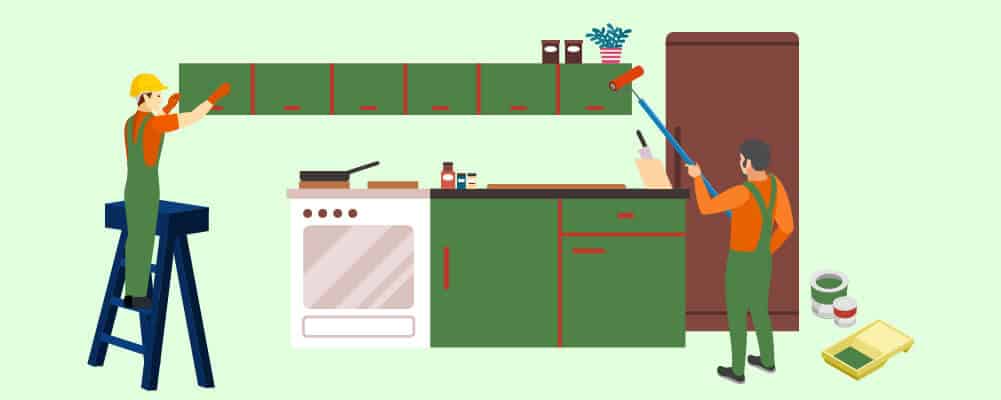
With those tips covered, we come to the end of our guide on painting kitchen cabinets. Step by step, we have detailed everything you need to know about painting cabinets and other pieces of furniture.
As you no doubt noticed, it takes a lot of preparation to start painting in the kitchen. The kitchen is one of the more difficult rooms in the home to paint, due to the grease and moisture that the room is exposed to, so if you can manage painting kitchen cabinets then you should be able to manage other projects!
Since we’ve tackled the process in steps, you can treat this guide like a checklist. Use it to choose and gather the equipment you need before you start, then come back and follow the steps when you need them. Our tips can also be the difference between a successful or failed project too, so don’t forget about those!