
Building and maintaining the home of your dreams is no joke!
Just the number of things to take care of while finalizing the land can make you exhausted. Sure, there are professional services to help you out, but that doesn’t mean you should remain aloof from all the technicalities. And honestly, taking a closer look at all the aspects renders a personal touch to the whole process.
One particular issue that drew my attention while my husband and I were building both his and my dream home was landscaping. But by landscaping, I don’t only mean the physical attributes of slope and drainage. During my research, I found out how chemical processes play a crucial role in the quality of land and water of a residence.
So, as my family geared up to mark the 10th anniversary of this home, I thought of commemorating it by sharing my knowledge of a less-known problem in landscaping. Hi! I’m Stacy Smith, and today, I have curated this guide on “what is acid rock drainage.”
Let's start then!
What Is Acid Rock Drainage?
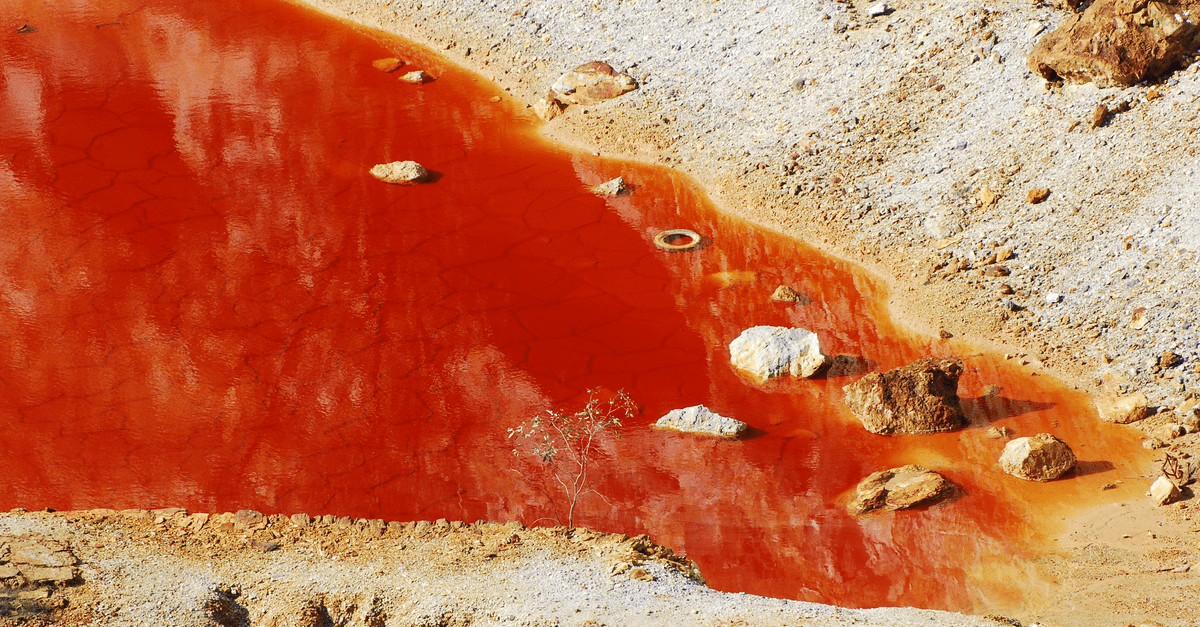
Although the term may come across as a complicated phenomenon or experiment that only occurs in science laboratories, it may well be present in your vicinity.
Acid rock drainage (also known as metal leaching or simply acid drainage) is usually related to mining activities but may also happen during heavy-duty construction projects. In simple terms, it's the process through which the sulfur compounds (mainly the mineral ore pyrite) in rocks react with air and water to form soluble sulfuric acid.
This happens when a huge quantity of rocks are crushed or blasted, thereby creating multiple surfaces. The sulfur compounds then seep into the air and nearby water sources, resulting in sulfuric acid.
But the problem doesn’t stop here as the newly-formed acid can strip the rocks of heavy-metal like iron, nickel, cadmium, chromium, etc., thereby lowering the pH value to make the water acidic.
Long story short, the contaminated water becomes potentially lethal for both plants and animals. Not only that, but the surface runoff may contaminate and pollute the main water lines running into your home.
The high metal concentration in the water and the subsequent low pH value can also cause irreversible damages to your water features (if any) as well as the foundation of the home. In fact, there have been several instances where closed mining sites have continued to contaminate water sources in the nearby areas.
How To Test The Soil For Acid Rock Drainage?
With regards to the change in the pH value, some homeowners may think that conducting a mere pH test will help them identify the problem. However, testing the soil for acid rock drainage isn’t something that can be done the DIY way.
Professionals usually begin by characterizing the acid-generating potential of the rocks, ores, or tailings found near your property. Apart from that, these characterizations determine the acid-neutralizing properties. Naturally, if the acid-generating potential is higher than the neutralizing potential, it will require appropriate treatment, rehabilitation, and preventative measures.
In a nutshell, here are some of the testing procedures you can expect to be conducted. Keep in mind that not all locations may need all of the below-mentioned tests. The number of procedures will largely depend on the severity of the problem.
- Humidity Cell Test
- Static Net Acid Generation Procedure (NAG)
- Modified Acid-Base Accounting (ABA)
- Toxicity Characteristic Leaching Procedure (TCLP)
- Synthetic Precipitation Leaching Procedure
- Mineralogic identification of acid-producing and neutralizing phases
Cleaning And Prevention Of Acid Rock Drainage
A majority of the treatment measures focus on neutralizing the soil, while the preventive steps involve minimizing the contact of the acid-producing minerals with air and water. Additionally, it’s important to get rid of such bacteria and microorganisms that may aggravate acid formation.
To give you a better idea, here’s a list of some of the most common methods that are usually employed to tackle the problem.
1. Reclamation
As the name suggests, reclamation refers to “getting back” the affected or contaminated land. This is generally achieved by adding adequate quantities of alkaline materials like lime to nullify the acid.
Other than that, replacing the existing topsoil with fresh and non-contaminated topsoil is an effective measure to counter the problem. It can be further enhanced by planting a new vegetation cover to firmly bind the soil particles. Likewise, soil removal is another such measure where the contaminated soil is relocated to a location where it can be properly treated.
In case of contaminated material lying under the topsoil, you may choose to modify the slope to reduce the contact between the surface water and the layers below. Various mine sites utilize water diversion methods to prevent water from flowing through the acid-inducing minerals.
2. Direct Treatment
Much like the reclamation procedure, water treatment plants neutralize water by mixing it with lime or other acid-countering minerals. This, in turn, causes the water to release the metal content in the form of precipitation.
Besides, isolating the contaminated soil in artificial wetlands aids the growth of microorganisms that promote an oxygen-free environment to cease the formation of sulfuric acid. The soil can also be treated with bactericides to kill the said microorganisms.
3. Filling In Abandoned Mines And Waste Treatment
Mining companies often cover the abandoned mines with alkaline materials to restrict or eliminate acid rock drainage. Furthermore, flushing the entire area with water will reduce the amount of oxygen required to form the acid.
This is a reason why mining waste is dumped underwater so that it doesn’t remain exposed to oxygen. However, proper treatment is necessary beforehand to keep the water bodies clean.

- EASY TO USE convenient and ideal size for travel. A single bottle is 60-70 days’ supply based on 4 glasses daily. Colorless, odorless, and tasteless drop that can be added to water, coffee, juice and tea to offset acidity without interfering with the taste of your beverage.
- THE SIMPLEST WAY TO MAKE YOUR OWN ALKALINE WATER. Just 3 drops can change purified water to alkaline water. Increase the pH levels of your drinking water to a safe level of pH 9.5- in just 3 drops!
- BOOST YOUR DRINKING WATER WITH ENHANCED ALKALINE MINERALS. Alkaline Booster Drops is formulated with essential key alkaline minerals- potassium, magnesium and calcium. These minerals help replenish mineral reserves and buffer excess acids.

- Already Buying Alkaline Water? There's a Better Way: If you're spending money on cases of bottled alkaline water, you already know the benefits. Alkalife helps you achieve the full pH 10 level many alkaline products strive for but don’t consistently reach. Our patented formula is designed to reliably deliver pH 10 in the tap, filtered, or bottled water you already have. Just three drops, one stir, and you get built in electrolyte and immune support in your daily water.
- 360 Glasses Per Bottle: One 1.25 oz bottle makes 22.5 gallons of alkaline water. That's about 30 cents a day at five glasses. Compare that to what you're spending on other name brand alkaline water bottles. The savings add up fast, and you'll never run out at 10pm on a Sunday again.
- No More Cases, No More Plastic: Stop hauling heavy cases of alkaline water bottles from the store. Stop filling up the recycling bin. One small bottle replaces months of bottled water, fits in your bag, and is TSA-friendly for travel. Better for you, better for the planet, and way more convenient.
Conclusion
That’s all that I have for today’s guide.
Hopefully, I could answer all your questions related to acid rock drainage without sounding too technical. As a last bit of advice, I’d only suggest keeping an eye on the quality of the water and soil in your lawn from time to time.
If you notice any degradation, especially when there’s a large construction happening close by, inform the local authorities to conduct the necessary tests.
With that, I’ll now take your leave. See you another day!