
Have you ever walked past your neighbor’s garden and thought about how they keep it so lush? I know I have!
Growing up, I would look at all the beautiful gardens around me and wonder how they are so green and fresh. And every time, without fail, I would see someone with a hose in their hand. Naturally, I thought watering the garden all the time was the key. But that was far from the truth.
As I grew older and finally had a garden of my own, my first mistake was to overwater it. When it didn’t work, I watered it too little. Shortly after, my best friend Evelyn came over and educated me on the art of watering the garden.
If you are in the same place as I was at one time, wondering “how often should I water my garden,” then don’t fret. Your problems are going to be solved right here.
Hi! I’m Stacy Smith, and today I’ll share Evelyn’s knowledge about watering gardens. With her tips, coupled with some of my own, I’m sure you will have that lush green garden in no time.
So, without further ado, let’s get talking!
How Often Should I Water My Garden
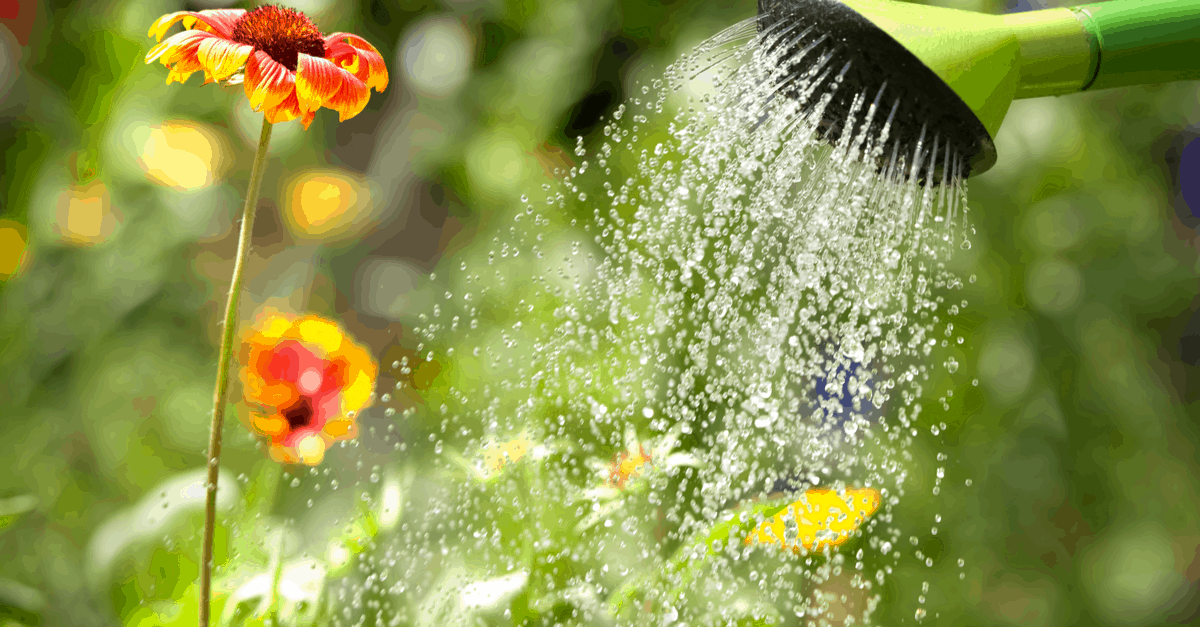
Basic Factors To Keep In Mind
Over the years, I’ve realized that watering plants is not an easy task. Too much water, or even too little of it, both have the potential to spoil a garden. Moreover, if you are new to gardening, finding all the natural indicators that tell you when it’s the best time to water go unnoticed.
While nothing is set in stone, there are a few rules when it comes to watering the garden. However, the best way to know how often you need to water is by keeping in mind the following factors.
1. Soil
You can easily tell if your plants need a drink by checking the soil. Soggy or wet soil usually means there is enough water. Dry soil, on the other hand, means the garden could use a bit of water.
The idea is to maintain the soil at that perfect consistency between dry and soggy. This is because parched soil will harm the garden. So ideally, you should water it before it fully dries up.
Sandy soils don’t retain water as efficiently as clayey soils and will need to be watered more often. Clayey soil can hold a lot of water, so it remains moist for a longer time and does not need frequent watering.
2. Weather
Needless to say, this is an essential factor to consider. If you live in a place that sees heavy rainfall, watering the plants on top of that will do more harm than good. In such scenarios, it is best to water the garden in regular intervals of, say, once every two or three weeks.
However, if you live in a dry area that does not get much rainfall, watering the garden frequently will be crucial. In this case, watering once a week is the best way to go.
3. Plants
It is no secret that different plants need different quantities of water. If you have various plants in the garden, knowing approximately how much water they need is of great help. Usually, vegetables, bedding plants, and perennials need daily watering. Also, as a rule of thumb, larger plants require more water.
Pro Tip: If you are yet to plant anything, I suggest grouping plants with similar watering needs to make it easier. There are tons of charts on watering needs that can help in this regard.
4. Sunlight
Sunlight can cause your plants to dry up. This is mainly in the case of flowering plants where the petals tend to lose color and fall off. Too much sunlight can also cause the plants to droop. It is vital to look out for these signs and water the plants accordingly.
No products found.
How Much Water Is Too Much Water?
It is generally accepted that watering too often with less water does not help the garden. Instead, it might make the plants weaker; this is why deep watering is encouraged. In this, you need to water about 2 to 5 inches of the soil one/two times a week. Using a drip irrigation system for this is ideal.
If it’s just the lawn that needs watering, then an overhead sprinkler will work since most of the water gets evaporated.
When Is The Best Time To Water?
Watering plants in the morning is the most common practice. The morning time is excellent since it gives the soil enough time to soak the required amount of water. And since the weather is cool, the soil is more open to water and allows it to reach the roots.
Another advantage of morning watering is that it helps plants deal with the heat during the day. Moreover, if you have over-watered the plants, there is enough sunlight to evaporate the excess water.
However, if you miss out on watering the plants in the morning, late afternoon is a good time to water them as well. This is usually the best time since it gives the plants enough light to soak in water and dry off before sunset.
Word of Caution
When it comes to watering the plants, timing is crucial.
Plants do not respond well to sudden temperature changes. This is another main reason why watering in the morning, when the weather is cool, is advisable. Watering when the sun is at its peak might shock the plants and do more harm than good.
Alternatively, late afternoon watering can reap similar benefits as morning watering. Just like in the morning, the temperature between three to five in the afternoon is relatively cooler. So watering the plants then will not have an adverse effect.
The only thing to be wary of is that wet plants during the night are more prone to getting fungus that can harm the plants. So make sure that they have enough time to dry off the water from the surface if you opt to water in the afternoon.
Final Words
Watering a garden is not as easy as I thought it was when I was a kid. I realize now that there is a lot to learn and everything I’ve mentioned is just the tip of the iceberg.
I would recommend looking for do’s and don’ts on the internet regarding this subject. After all, you should not only know what to do but also know what to avoid. I shall now take your leave. But, I will be back soon with many more such guides.
See you next time!