
Some plants seem to be intrusive and invasive at first glance. But on looking closely, they stand out as a gardener’s favorites.
Take the case of Fleabane, for instance. I first came across this plant as a child, when I’d be out on camping trips with my dad. In good seasons, I’d be sure to find this plant growing everywhere it could get the chance to bloom. And to be frank, I rather liked it as an easy to get variant of daisies.
But as I grew older, I realized that most people view this plant almost as a weed and pull it out at first glance. So, when I got into gardening, I decided to avoid that notion and research Fleabane as a garden plant. Needless to say, I was successful in my endeavor.
Hi! I’m Stacy Smith, your friendly neighborhood gardening expert. And today, I’m going to lift much of the blame that Fleabane has gathered over the years. After going through my guide, you’ll know all there is to know about it.
So, put your gloves on, and let’s get gardening!
The Complete Guide To Fleabane

What Is Fleabane?
The name Fleabane refers to any plant belonging to the Erigeron genus, family Asteraceae, order Asterales. It has over 400 species of plants that are usually native to the world’s more temperate parts.
As per the latest figures by the USDA Forest Service, there are close to 170 species of Fleabane here in North America. Of these, the most widely found are Erigeron annuus and Erigeron strigosus. Strictly speaking, these are mostly annual plants belonging to the daisy family.
When it gets the right conditions, Fleabane can quickly overgrow any landscape; on the other hand, in the absence of favorable conditions, it might not bloom at all. It usually blossoms starting from the late spring up into fall.
Now, let’s take some time to look at the plant itself, which is common yet beautiful in a subtle manner. Usually, each plant contains about 40-100 small, disk-like florets with diameters of about ¼ to ½ inches.
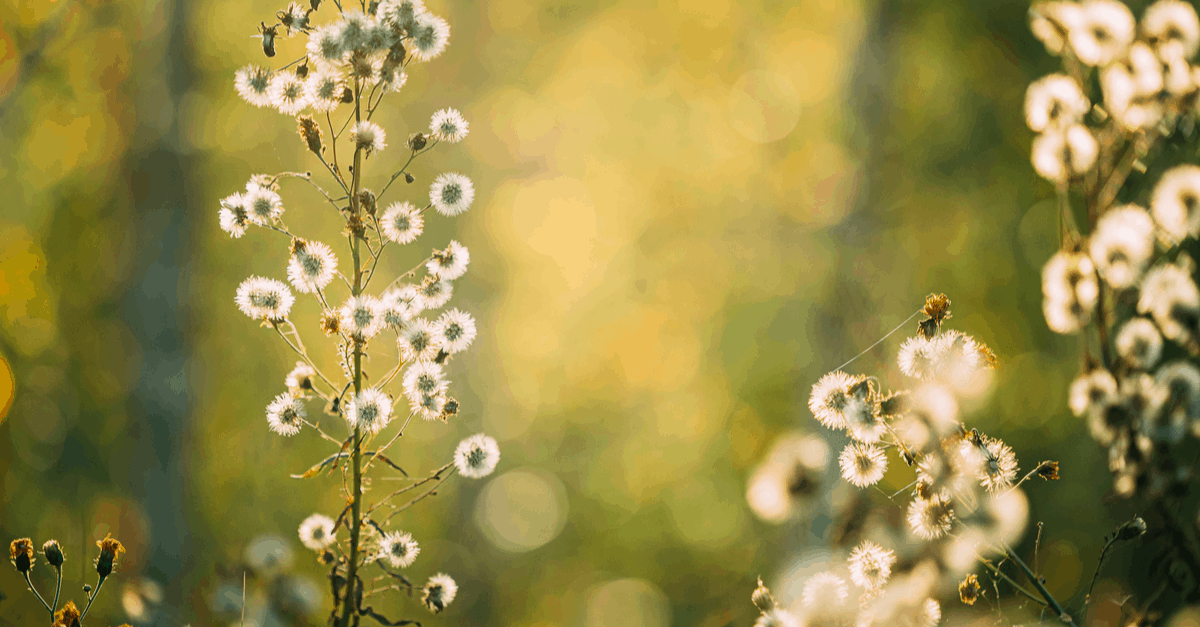
Fleabane flowers usually form a loose cluster at the top of the stems and are made up of a bright yellow central disc, surrounded by whitish-pink, ray-like petals. The plant has alternate leaves, which are of a lanceolate shape and have toothed edges. Also, the central stem is a bit hairy and grows up to 3-½ feet in length.
So, what are the favorable conditions for the growth of Fleabane? Usually, the plant thrives under dry, sunny conditions. However, it prefers the occasional shade and grows well in alkaline soil. Further, the plant is highly resilient and is often the first native species to return to a site of ecological damage.
One of the most significant aspects of Fleabane that is often overlooked is that there are so many varieties of the plant. Ranging from Latin American Fleabane and Daisy Fleabane to Canadian Fleabane and Philadelphia Fleabane, the plant is a versatile one, to say the least.
Advantages Of Growing Fleabane
From what I’ve discussed already, I’m sure you’ve understood that Fleabane seems to be a rather useful plant. Yet, due to its tendency of taking over landscapes, it’s considered an invasive species. However, there are some advantages to growing it as well. The following are just some of the many benefits you stand to gain from the plant.
1. It’s An Edible Plant
Yes! Not many people know this, of course, but Fleabane is an edible plant. The leaves can be sauteed or steamed, which helps to make the hairy texture more palatable. Further, you can even add it to salads to enhance the taste.
2. It Has Medicinal Properties
But why should you eat a common weed? Because Fleabane comes with a lot of medicinal benefits, especially Daisy Fleabane. An extract of its leaves releases caffeic acid, which acts as an antioxidant and stimulant.
Further, Daisy Fleabane is used in traditional North American medicine to treat colds, gastrointestinal problems, and internal hemorrhaging. It also acts as an anti-inflammatory drug that can cure tonsil and throat infections.
3. It Repels Pests (Maybe!)
I guess this is something you’ve surely understood from the name of the plant itself. Fleabane was traditionally used as a natural repellent against pests such as fleas and gnats; that’s how it gets its name.
However, modern science has not found any evidence that Fleabane is a pest repellent. In fact, evidence suggests that the flowers are rather attractive to insects such as bees, which aid in pollination. And you don’t need me to tell you that pollinators are essential for a blooming garden.
4. It Can Be Used To Reverse Ecological Damage
I’ve already mentioned this in passing once before but thought it prudent to repeat myself. Since Fleabane is such a resilient plant, it can be used to reclaim a landscape that has suffered from severe ecological damage. The plant doesn’t need much care and can easily overgrow a field in a short time, thus restoring ecological balance.
5. It’s A Decorative Plant
Finally, it’s pretty! This might seem like an advantage I’m making up, but once you take the time to look at it, Fleabane is a rather pretty plant. The flowers are almost similar to daisies and can lend an aesthetic look to any garden. I sure benefitted from planting it in my garden, and so will you.
How To Grow Fleabane?
Now that you know all about the benefits of this delicate yet resilient plant, you must be planning to grow them in the garden. If that’s the case, then here are the steps that you need to follow to get a luxurious bloom.
While there are many varieties of Fleabane available, today I’m going to focus on the steps to grow Daisy Fleabane, which is perhaps the most common variety. It’s easy to grow, hardy, and can tolerate harsh conditions. The following are the steps that need to be followed.
1. Before Planting
Fleabane needs a judicious combination of light and shade to grow. It would be best to make sure that the plant gets protection from the sun’s direct rays in the afternoon. So, before planting the seeds, you need to select a spot that doesn’t get direct sunlight.
2. Selecting A Source
While Fleabane can be grown from seeds, the easiest method is to grow the plant by division. For this, you need to select a healthy plant growing in the wild and dig it up carefully. To do this, use a spade and dig out a wide circle around the roots of the plant, and take it out.
3. Examine And Divide
Now, you need to examine the root of the plant you’ve just dug out and make sure that they are healthy enough to divide. Then, with great care and precision, divide it into four sections. While doing so, make sure that the roots have enough soil cover to prevent them from drying.
4. Prepare The Ground
Next, you need to dig a hole in the ground for every section you’re going to plant. While making the hole, be certain that you’re digging at least as deep as the root-ball length; otherwise, the fine rootlets might get damaged.
5. Plant The Division
Once that is done, carefully place the plant in its place in the hole. Take care to ensure that the root-ball remains under the hole’s edge. Then, pack the hole with soil to remove any air pockets.
6. Stake It
The fleabane divisions you’ve just planted might need a bit of support to grow, so push a stake into the ground next to the divisions and tie them in a loose knot. This will help the plants grow faster.
7. Water With Care
And you’re done! Now, all you need to do is water the soil, thus making sure that it remains moist. Keep a close watch, and when the roots get established, remove the stake. You’ve now got your own patch of Fleabane to flaunt.
Caring For Fleabane

That’s how easy it is to grow Fleabane in your garden. While you can also choose to grow the plant directly from seeds, I find the division method more straightforward and reliable. Just make sure that you take care of the following five factors.
1. Optimal Light Conditions
As I’ve already mentioned, Fleabane thrives under sunny conditions, but too much sunlight can damage the plant. While it can endure the morning sunlight, the afternoon sun’s direct intensity might damage or stunt its growth.
That’s why I recommend observing your garden and picking a spot that’s just right. It should get the morning sunlight, but there should be ample shade that protects it from damage in the afternoon.
2. Soil Type
Well-drained, loamy soil is the best for growing Daisy Fleabane. However, since the plant is pretty resilient, it can also grow well in heavy, clayey soil. But it’s best not to take a chance and mix the soil with some perlite or sand. You can also add a generous amount of mushroom compost for keeping the daisies well-fed.
3. Careful Watering
The next thing that you need to take care of is watering the plants. Once you plant it, you only need to water it enough to ensure that the soil is moist. Continue this till new leaves come out, which is a sign that the roots have taken hold.
At this point, you need to control your watering frequency; since Fleabane is a drought-resistant plant, it doesn’t need too much watering. All you need to do is water it once a week during the hot summer months. In winter, you can reduce the frequency to once every two weeks.
4. Occasional Pruning
Fleabane tends to form clumps, so you’ll need to take the shears to it at times. This will help control the growth of the plant and also keep it in shape.
Further, always make sure to pluck out the faded flowers, as this encourages more to grow. This way, you can have a continuous bloom throughout the entire season. Also, Fleabane can get rather long, so you need to cut up to about half the length once a year.
5. Diseases And Pests
While legend says that Fleabane repels pests, in practice, the bright flowers attract lots of bugs. Some of these are pollinators and beneficial for the plant’s growth, but others, such as spider mites and aphids, can be somewhat troublesome.
You can choose to drive them away with a hose, but this might lead to fungal infestations. To avoid this, I recommend plucking the insects by hand or using neem oil to eliminate larger infestations.
Another health problem that Fleabane often has to deal with is the yellowing of leaves. This is a direct result of exposure to excess sunlight and can cause the leaves to fall off. Unhealthy leaves could also result from inadequate watering before the roots take hold; so, make sure to water with care.
Final Words
And there you have it! I’ve now shared all of my Fleabane knowledge with you all, and I hope you’ve enjoyed it as much as I did.
Using this guide, I’ve been able to get a healthy bloom of Daisy fleabane in my garden. Not only do they make my garden look better, but I also enjoy taking care of these relatively common flowers.
True, Fleabane is not a match for the exotic flowers that you might choose to grow, but I sure can’t deny the native charm it exudes. On top of that, it also has medicinal properties when used rightly.
But that’s enough about Fleabane for now. I hope I’ve been able to entice you enough to get your own bloom. So, now I’ll leave you to tend to your garden while I take care of mine.
Till next time!