
The Abiu fruit tree is highly recommended to tropical fruit lovers who wish to add a new experience to their gardening activities. It is easy to grow and has abundant yields of fragrant, delicious berries which are usually the size of cherries. Abiu trees produce flowers that have intoxicating scents for bees and can be used as ornamental plants.
The fruit of the abiu tree is eaten fresh, made into juice and wine, or distilled into brandy. It is also used to make jams and chutneys. The fruit looks like black plums covered in red netting when ripened. Each fruit contains 3 to 4 seeds inside it that can be eaten as well.
History Abiu fruit trees are native to the forests of Brazil, but they have been introduced to many countries around the world. They were especially popular in Hawaii and California in the late 19th century, when they brought new fruit varieties to the United States. Today, Abiu fruit trees are grown mainly for their fruit in South America.
How to plant Abiu
All species of the genus Pouteria are propagated by seeds. The best time to plant abiu is seasonally from February-April or September through December. Seasonal weather patterns during these months allow for heavy amounts of rain, more humidity in the air, and warmer temperatures which all help to promote the growth and development of new seedlings.
Seed germination is best achieved in temperatures that range between 17-30 degrees Celsius (62-86F°). The seeds have to be scarified before planting. Scarification of the seeds involves nicking or scratching them with a very fine tool or sandpaper. This process allows for the removal of a water-resistant layer that prevents germination. The seeds are then soaked in water for 24 hours. If you do not have a lot of seeds to plant, they can be germinated directly after soaking them. They need to be planted into well-drained soil that is either sandy or loamy with a pH level of 5-6 and should get regular amounts of sun exposure. The use of wood mulch also facilitates germination and helps the plants grow healthier.
The seeds can be planted in either individual pots or directly into a nursery plot of 5 rows spaced 6 meters apart. For large-scale planting, the best way to plant is by scattering the seed onto soil that has been tilled and covering them with soil at the recommended spacing.
How to grow Abiu
After planting, the seeds need to be kept moist. The water used can either be rainwater or another source of clean and drinkable water such as well water. Abiu trees do not like being constantly soaked in water so how long and how frequently you keep them watered is dependent on how quickly it rains in your area and how much attention your seedlings need. Watering the seedlings can be done with hosepipes or watering cans and how often depends on how much water is required for each individual plant.
For the first 5 years, young Abiu trees require lots of maintenance such as weeding to prevent competition from other plants and applications of organic fertilizer in a ratio of about 10:3:1 (copper sulfate, superphosphate, and urea). After the first five years, the weeding and fertilizing can be reduced to once every year.
The plant grows well in acidic sandy loam soils. They do not grow well on rocks or on highly acidic soils with a pH level that is less than 5.5. The trees grow best in situations where the soil has a higher moisture content such as near streams or bodies of water.
When it comes to abiu trees, they prefer bright light and direct sun. If possible, 12 hours of bright sunlight during the day is best for growth and fruit production.
How to harvest Abiu

Abiu fruit (Myrciaria dubia), very common in Brazil, is a fruit that can reach from 1.5 to 3 kg, with its peel baring small thorns that make it difficult to handle. However, the fruit itself is sweet and tasty when ripe, making harvesting a must for anyone wishing to pick them up.
The fruit is very fragile and needs to be handled with care since it easily breaks. The harvesting process of the fruit does not require the fruit to be handled directly because only one-third of all seedlings will produce the fruit, which means that it's worth planting trees nearby where we can pick them up once they're ripe.
There are a few ways to harvest the fruit:
1 – One way of harvesting abiu is to shake the trees, using blankets or any other material that can be used as protection and also avoid losing its seeds. This method only works on still days.
2 – Another option would be to use a rustic ladder or chairs and have someone climb the tree to pick them, but this is not recommended because it's very dangerous for the person doing that.
3 – The third way of harvesting abiu is how we did it. We gathered all the people in my family together and with a lot of patience we picked up every single ripe apple until there were no more left.
We can also find people in the cities who sell Abiu and other fruits and how they harvest them is to wrap each fruit with a thin plastic bag, putting it on the ground afterward. The fruits are picked up when they're dry, but sometimes you may want to try that way to cut down on how much work picking them up will be.
How to know if Abiu is ripe
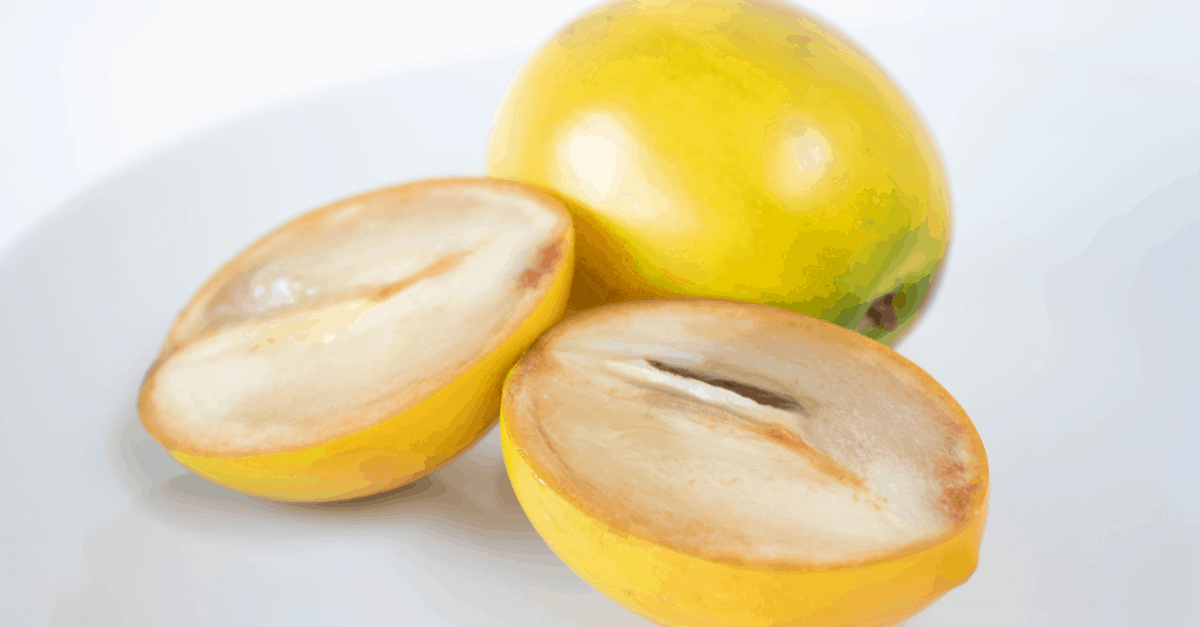
A ripe abiu feels soft when you squeeze it and the skin looks shiny. A ripe abiu is ripe to eat. It has no traces of sourness anymore. This is because the phytochemicals, tannins, which give a sour taste to ripe abiu are no longer present. Tannins are compounds that have anti-nutrient contents and these phytochemicals are responsible for the inedible state of ripe abiu as well as its green color. The sweetness and the flavor of ripe abiu have also improved after it has been ripened.
Until fully ripe, the fruit is permeated with latex and is very gummy. It has an astringent taste until it ripens.
What does Abiu taste like
Abiu is a unique tasting fruit. Some describe abiu as having the flavor of a blend of pineapple and lychee, while others have said abiu tastes like passionfruit. Both comparisons sound about right to me!
How to store Abiu
The fruit can be stored for about 2 months at room temperature without much loss of quality if they are packed in plastic bags and kept in a dark place. It is not advisable to put them directly into the fridge as it might cause condensation, which will encourage sprouting after storage. Abiu fruit has a shelf life of 2–3 days when cut before they even reach their market destinations depending on how fresh they were and how well they are stored.
How to use and cook Abiu

The abiu (soursop fruit) is an exotic, fragrant, and rare fruit originating in the Philippines. Abiu comes from a genus that includes other fruits like sugar apple and cherimoya. As it matures, the abiu develops fleshy pink petals that turn white at maturity. The skin turns green when ripe, giving it the name green abiu even though it is not a type of guava.
The abiu is known for its distinct flavor, high sugar content, and large size. The fruit's flesh can be eaten raw or made into jams and jellies. Its seeds are edible and cook in much the same way you cook squash seeds or pumpkin seeds. Abiu seeds can also be ground into a powder for making bread or other recipes.
Health Benefits of Abiu
Abiu is a native fruit of the abiu family, commonly found in Brazil and Indonesia. abiu has been known as a powerful antioxidant and has an abundance of nutrients that can deliver many health benefits to the body. abiu seeds have also long been used for food coloring and flavoring purposes. It is highly beneficial to consume abiu regularly as it promotes good health and protects from dangerous diseases.
Abiu is extremely rich in vitamin C content, which is the most powerful antioxidant in fruits. It also contains minerals such as manganese, potassium, and calcium that are essential for a healthy body. abiu seeds have high amounts of fiber, dietary fiber, low fat (fat-free) content, and carbohydrates. abiu seeds have also been known to cure many health conditions such as constipation, diarrhea, diabetes, and chronic fever.
It has a high protein content which is considered good for your muscles. abiu contains monounsaturated and polyunsaturated fatty acids that help promote the immune system. abiu is even used in anti-wrinkle face creams, which shows abiu is good for your skin as well. abiu seeds are also a powerful aphrodisiac and an excellent sexual stimulant.

Conclusion
If you haven’t heard of the Abiu tree before, it is worth a look. The abiu can produce as much fruit like mangoes and has many other benefits to offer when planted in your yard or garden. With so many uses for this one plant, it might be time to start looking into planting some at home! Do you grow any? Let us know what you think about growing an abiu by leaving a comment below.