
A common gardening question is, “How long to run soaker hose for vegetable gardens?”
Soaker hoses are fantastic for veggies as a known solution to reduce your environmental imprint and water bills.
Knowing how much water your plants need and how long you should water them can help you yield significantly larger harvests.
What Are Soaker Hoses?
When you first begin researching vegetable gardening, you’ll come across the term “soaker hose.”
It’s slightly similar to a standard garden hose but with a couple of distinct differences.
Soaker hoses are different in that they’re often made from porous materials rather than rubber.
Some soaker hoses may also be made from rubber but have several holes along their length to let water escape.
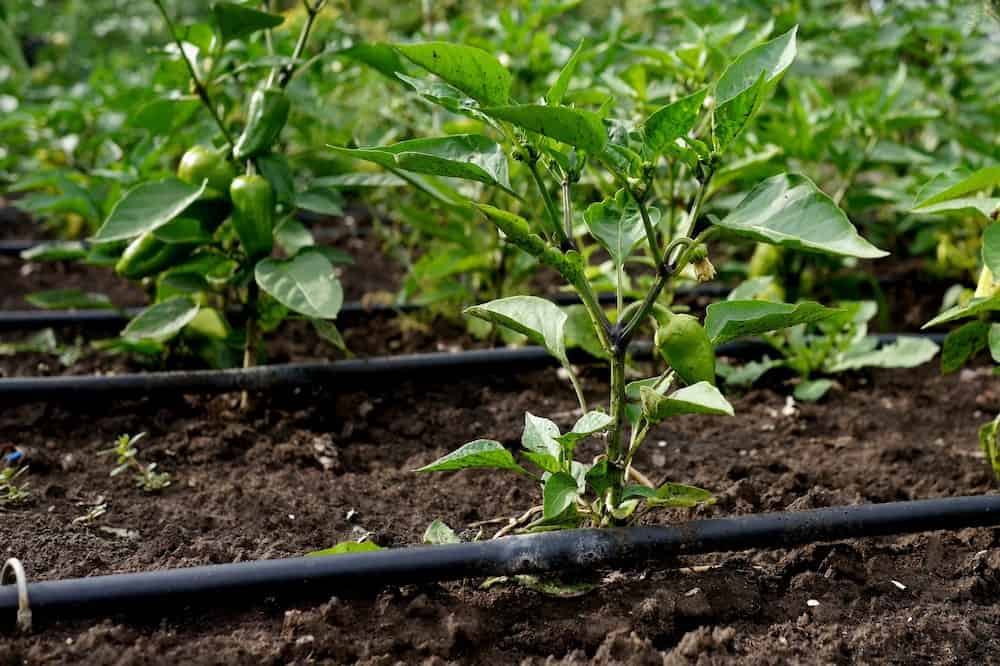
The closest comparison to these types of hoses is drip irrigation systems, which deliver water directly to your plants’ roots.
Their watering method is essential for ensuring water is used more efficiently by plants while minimizing waste.
Although soaker hoses are particularly simple to use for gardens, they require a little bit of trial and error.
As you would expect, optimizing water pressure is the most important to ensure enough water gets dispersed.
Gardeners will often rely on a pressure regulator to ensure their soaking system is perfectly calibrated.
How Long to Run Soaker Hose for Vegetable Garden?
The next step to mastering the art of using a soaker hose is to know how long to run it for.
Your veggies must get more than enough moisture.
However, it’s also essential that you don’t overwater them, reducing their growth potential.
There are two primary ways that gardeners determine how long to run their soaker hoses.
Let’s take a look at both methods.
Watering By Inches
The general rule of thumb when watering your vegetable gardens is to think of the time of year.
If you’re experiencing warmer weather, your plants are likely to need more water than in cooler weather.
Also, the type of soil you use can have a significant bearing on the amount of needed moisture.
In these instances, measuring your watering by inches is a fantastic solution.
On average, vegetable gardens need about one to two inches of water in the summer.
In the spring, you can scale back watering by offering one inch per week.
Our top recommendation is to measure the amount of water output your soaker hose offers per minute.
Simply put an open container in your vegetable garden along with your soaker hose and turn the system on.
Watch the container as it fills to your desired amount (example: one inch of water) and note how long it took.
If it takes 30 minutes for the soaker hose to fill the container to one inch, you know to leave the system on for 30 minutes.
This process makes it significantly easier to establish a watering schedule for optimal vegetable growth.
Watering By Depth
The other option for knowing how long to run your soaker hoses is to determine moisture depth.
Since this method of watering offers water to your vegetables’ roots, water must make it far enough into the soil.
For this technique, you can use a wooden dowel to track moisture.
Stick the wooden dowel into your garden near the plants furthest away from the soaker hose at the root level.
Turn the irrigation system on and wait several minutes before pulling the dowel out and checking its dampness.
Ideally, you’re going to want to aim for eight to 12 inches of moisture depth, depending on soil type.
When the dowel shows signs of moisture at your desired level, you will know the total length of time to leave the system on.
For example, it could take 45 minutes to one hour for the soil to get wet at 12 inches.
Again, use this information to develop a watering schedule to help your plants proliferate.
Soaker Hose Tips for Vegetable Gardens
If it’s your first time adding a soaker hose to your garden, you’ll be glad to know the process is relatively simple.
Let’s review some of the user-friendly tips to help you get started.
Tip #1: Use a Timer
When it comes to gardening, it can be beneficial to have a hand in every step.
Timing your irrigation is a surefire way to ensure your plants get the perfect amount of water.
It takes the guesswork out of watering and helps you save a lot of time and effort.
Timers can easily be connected to your irrigation system and programmed for a specific length of time.
If you’ve tested to determine how long to run your irrigation system, all you have to program is the desired length.
From there, the timer will automatically start watering at your desired intervals.
The most important thing to remember with timers is they will need to be adjusted seasonally.
Remember, your plants require less water in cooler weather than in the middle of the summer.
Tip #2: Find the Perfect Watering Amount
Soaker hoses are mostly user-friendly and easy to manage throughout the year.
With that said, you want to make sure your plants are getting the ideal amount of moisture.
It’s pretty easy to overwater your plants just as it is to underwater them.
A good idea is to make sure you choose a water level that keeps the soil moist rather than soaked.
It’s also essential you ensure the ground isn’t bone dry at the root level.
When you’re getting started, moisture sensors are a fabulous addition to your vegetable gardens.
Moisture sensors are put directly into the soil and determine how wet it is at your desired depth.
They come with a unique display that shows the moisture level, helping you adjust your watering as needed.
Tip #3: Soak Under Mulch
If you intend to add mulch to your vegetable gardens, a top tip is to put the soaker hose down first before the mulch.
This process helps make sure the water is traveling directly into the soil rather than the mulch.
Not only will this maintain adequate soil moisture, but it can also boost the efficiency of your irrigation system.
The mulch on top helps trap in the moisture, protecting it from hot and dry air.
You’ll begin to notice your vegetables will require less watering over time, thanks to the ground cover.
Watering Your Vegetable Gardens With the Right Amount of Water
If you’re asking, “How long to run soaker hose for vegetable gardens?”, the answer depends on your climate, plants, and soil type.
Using the steps we reviewed in this guide, you can find the ideal custom amount of moisture your veggies need.
With proper watering, you can save on your utility bills while maintaining a lush and delicious garden.