
African violets, with their lush leaves and vibrant purple petals, resting on your sunny balcony or window sill is a delightful sight!
Most people associate these plants with beauty, but it evokes a feeling of nostalgia for me. My grandmother was quite fascinated by them and grew at least a dozen on her small porch.
But since they are notorious for being difficult to manage, I steered clear of growing them myself for the longest time. However, a few years ago, I cultivated these plants out of curiosity and boredom. And soon enough, they were blossoming on my window ledge.
Ideal for bright and humid areas, African violets have specific growth requirements, and the right fertilizer for proper nourishment is chief among them.
Hi there! I'm Stacy, and today, I will help you pick the best fertilizer for African violets. So, without further ado, let's begin!
5 Best Fertilizers For African Violets Reviewed
1. Schultz S-1061 Fertilizer
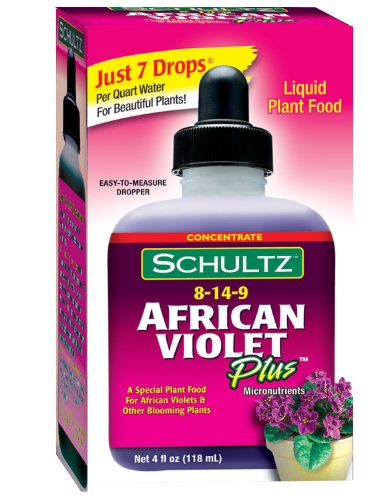
One of the top products on my list is the Schultz S-1061 Fertilizer, available in a 4-fluid-ounce bottle. Ideal for many blooming plants, particularly African violets and gesneriad, it is an effective fertilizer and can ensure the growth of fresh plants.
Product Highlights
Right off the bat, the Schultz Fertilizer has a high content of macronutrients, particularly phosphorus which helps in the flowering and development of roots. With an 8-14-9 formula, this liquid fertilizer provides all the necessary nutrients to the plant and ensures healthy foliage growth.
In addition to high phosphorus content, the fertilizer contains a host of micronutrients that stimulates the growth of flowers and delivers nourishment directly to the roots.
Since this product comes in a concentrated form, merely seven drops of it mixed with one quart of water is more than enough for the plants. Besides, it comes with a dropper for easy measuring, and if used regularly, you will end up with lush foliage and gorgeous purple buds.
That said, its use is not limited to African violets. You can use it on indoor and outdoor plants, such as regular violets, orchids, and other blooming plants.
What's There To Like About It?
I purchased three pots of African violets from a local gardening exhibition a couple of years ago. They were merely two inches tall, and I had little knowledge about this species. So, a friend recommended the Schultz Fertilizer, and there has been no going back since.
With regular use, my violets were blooming and grew up to 8 inches within the first month itself. I also used this fertilizer on other flowering plants in my orchard, and the results were delightful!
What's There Not To Like About It?
There are a few minor disadvantages that I found in this product. For starters, when used regularly, I noticed it leaving behind a residue on the plant leaves.
Besides, the buildup of the product may burn the roots; therefore, it is essential to leave out the fertilizer while watering the plant from time to time. This helps flush out the buildup and keep your violets in top shape.
Pros and Cons of Schultz S-1061 Fertilizer
Pros
Cons
- For African Violets and other blooming plants
- Promotes beautiful blooms
- Just 7 drops of water every time you water
2. Espoma 839301 Fertilizer
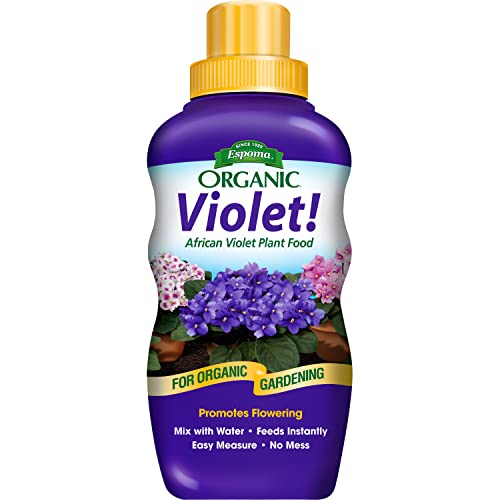
If you are looking for an efficient fertilizer for your indoor plant collection, look no further than this Espoma product. Available in an 8oz bottle, it can help your plants grow twice the original size in minimal time.
Product Highlights
African violets make excellent houseplants and add to the aesthetic value of your balcony. However, they are slow and sensitive growers, so good-quality fertilizer is of utmost importance, and this Espoma Fertilizer is precisely that.
It makes excellent food for the plant and provides all the necessary nutrients. In particular, it has a high phosphorus content, which aids in root development and leads to the growth of widespread flower buds. So, if you have given up on your African plants because they just won't grow, give this product a shot.
Besides, it is versatile and can provide all required nutrients and microbes to orchids, bromeliads, and other blooming indoor plants. Equipped with an easy measuring system, one drop of this pre-mixed liquid solution in a quart of water can efficiently feed your blooms and provide them with sufficient nutrients for 2 to 4 weeks.
What's There To Like About It?
I first heard about this Espoma Fertilizer on The Joe Gardener Show, and it has been my go-to pick for indoor violets and bromeliads ever since. You don't have to waste time measuring it, as it comes pre-mixed, with an easy measuring system. So, the chances of you overfeeding your plants or damaging their roots are minimal.
Moreover, it feeds the plants instantly and results in lush leaves and plentiful blooms. Besides, my orchids loved this fertilizer as well!
What's There Not To Like About It?
You have to be cautious while using this product as an overabundance of it in the plant can obliterate its root system and kill the flowers. So, I recommend going through the instructions carefully.
In addition, I found the fertilizer smell to be quite overbearing and intense, and so did my dog, but that's one sacrifice I'm willing to make for gorgeous purple blooms.
Pros and Cons of Espoma 839301 Fertilizer
Pros
Cons

- ORGANIC PLANT FOOD: This liquid fertilizer for Violets provides organic nutrients to ensure superior results and is safe to use around kids and pets.
- EASY: Simply add ½ cap of Violet! plant food liquid per quart of water and water your plants. Thoroughly drench the soil of the plant. For best results use every 2-4 weeks.
- CONTAINS: Essential plant nutrients to help Violets thrive. Liquid plant food is a vital part of plant care. See label for all ingredients.
3. Miracle-Gro VB300524 Fertilizer
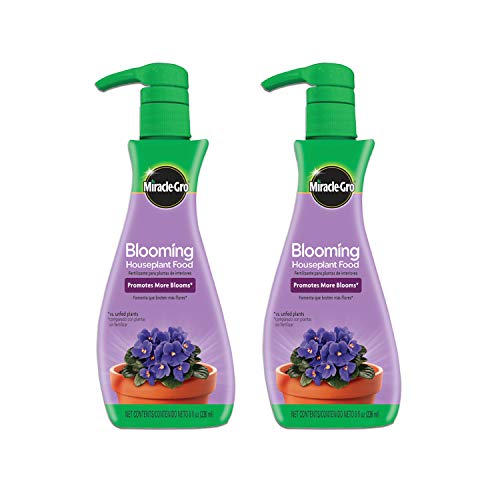
While I am talking of the best fertilizer for African violets, I cannot miss Miracle-Gro. As the name suggests, this 8-fluid-ounce bottle sufficiently feeds your plants and helps them thrive. It comes in a pack of two and is ideal for amateur gardeners.
Product Highlights
If you are stepping foot into the world of gardening with indoor plants, you will need a few tools and products, and a mild yet effective fertilizer is one of them. Although orchids, African violets, and other blooming plants are aesthetically stunning, they have specific maintenance requirements. These plants aren't time-consuming or hectic to maintain but need tending to regularly.
The Miracle-Gro Fertilizer comes with an in-built pump, and you can use it to apply the liquid directly onto plants or mix the solution with water. And the best part is you need only one application per week of this fertilizer to provide sufficient nutrients for your blooms.
Moreover, it is an economical purchase as you get two 8-fluid-oz bottles at a tough-to-beat price.
What's There To Like About It?
My friend Susan has been cultivating eight multi-color flowers for the last couple of months in her projecting balcony and called me for some easy-care tips. I recommended this Miracle-Gro Fertilizer to her, and she's pleased with the results.
It is easy to use, leads to the rapid blooming of flowers, and ample growth of lustrous leaves. In fact, she says, the results were noticeable from the second week itself. So, the product is absolutely worth the buck!
What's There Not To Like About It?
Although I found no problems with this product, Susan brought a few to my notice. For one, the pump bottle, although an excellent addition, gets clogged and needs rinsing after every application.
Moreover, there is very little information on the bottle about the plant varieties it works on. So, you'll have to rely on your discretion and learn through trial and error.
Pros and Cons of Miracle-Gro VB300524 Fertilizer
Pros
Cons
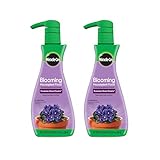
- For flowering plants, including African Violets
- Instantly feeds all blooming houseplants
- Able to apply directly to the soil or can mix with water
4. EarthPods Premium Fertilizer
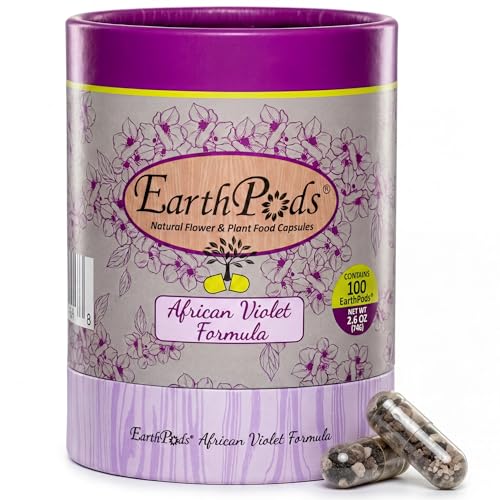
The next recommendation on my list is slightly different. Unlike most fertilizers that are liquid-based, the EarthPods Premium Fertilizer comes as capsules. One box contains 100 capsules, which can treat one plant for four years or several plants simultaneously.
Product Highlights
For starters, these capsules from EarthPods contain all macro and micronutrients needed by your plant. They work as slow-release fertilizers, and a single pill will last for two weeks or more.
Besides African violets, these capsules are your one-stop solution for several blooming houseplants, and they work wonders for primroses, jasmines, geraniums, and begonias.
The best part is that you need no measuring cup or mixing bucket. All you have to do is dig the soil and put one capsule in it before watering. Thus, it eliminates the need for measuring and doesn't have any unpleasant smell.
Moreover, it has an excellent composition of over 70 nutrients and minerals, including plant root organisms like fungi and bacteria. Thus, it helps proper root and leaf development and improves the vibrancy of your flowering plants.
Lastly, it is a 100% eco-friendly solution - right from the capsules to the cardboard packaging.
What's There To Like About It?
I remember reading an article in Country Gardens last week which spoke at length about slow-release fertilizers and their multiple benefits. Nutrient-rich and easy to apply, they have gained immense popularity among busy gardeners.
The EarthPods Fertilizer is vegan and doesn't contain any urea. Its eco-friendly formula makes it one of the best picks on my list, as does its high humus and organic bacteria content. Besides, it's highly versatile with clear-cut application instructions. Needless to say, it's a fantastic investment for your indoor plants.
What's There Not To Like About It?
Perhaps the only downside of this otherwise fantastic product is its high price point.
Usually, quick-release fertilizers are available at cost-effective prices and show immediate results. Therefore, most buyers prefer them over slow-release variants. But, that said, EarthPods fertilizers come in a pack of 100 capsules that will last for a long time.
Pros and Cons of EarthPods Premium Fertilizer
Pros
Cons

- PREMIUM INDOOR ORGANIC AFRICAN VIOLET & FLOWERING HOUSE PLANT FERTILIZER — Supports robust root growth, leaf development, rebloom & color vibrancy for all live African Violets, Amaryllis, Begonia, Geranium, Impatiens, Jasmine, Peace Lily, Poinsettia, Primrose, Violas
- NO MESSY LIQUIDS / NO CONFUSING MEASURING SPOONS / NO STINKY SMELL — 1 tube = 100 concentrated EarthPods (a 4-year supply for a single special potted flower or use on big collection of Violets & home flowers)
- FAST & EASY TO APPLY — Push 1 EarthPod all the way into potting soil mix near center of flowering plant, then just water! (EarthPods break down & slow release nutrients direct to root zone)
5. Jack's Classic 51208 Fertilizer
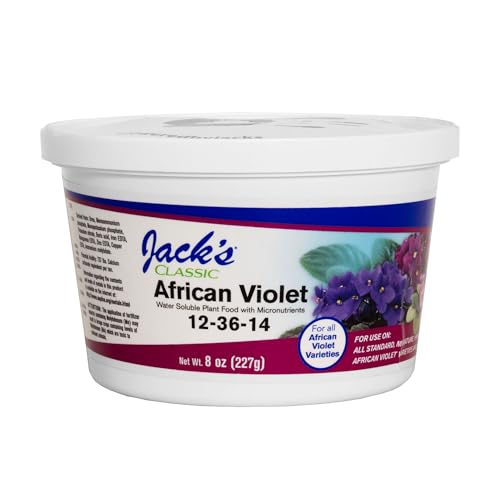
The Jack's Classic Fertilizer from JR Peters is another slow-release variant on my list. The brand is not a new name in the gardening world and is highly renowned among hobbyists and professional gardeners alike. Keep reading to know what makes this product a favorite.
Product Highlights
JR Peters is a family-owned brand that goes back to 1947. It is known for manufacturing high-quality, water-soluble fertilizers and this Jack's Classic variant is no different. Manufactured in a top-tier laboratory, it contains a host of nutrients that boost plant health.
Moreover, it comes with a measuring spoon and a detailed instruction pamphlet to ensure you mix the correct quantity in water to avoid overfertilization.
The best part is it contains all the required micro and macronutrients in proper ratios. In fact, the 12-36-14 NPK ratio provides your plant with the necessary phosphorus, nitrogen, and potassium content needed for abundant blooms, good foliage growth, and robust root health.
In addition, it contains zinc, iron, copper, manganese, and other minerals that aid in plant development and ensure colorful blooms. Besides, the product has a safe formula that prevents the burning of roots and releases nutrients for up to 4 months post-application.
What's There To Like About It?
I was eager to check out this product ever since it was launched since I am a massive fan of the products from JR Peters. A fortnight's getaway to my son's house presented the perfect opportunity, and I used this fertilizer on his rows of African violets and orchids.
He sent me pictures of the blooming flowers a couple of months later, and they were bursting with vibrant leaves and fresh blooms.
What's There Not To Like About It?
The phosphorus content of this product is 36% which is way more than the 12% nitrogen and 14% potassium content. Although phosphorus is excellent for foliage growth, overfertilization can produce an abundance of leaves but fewer flowers.
So, you have to be careful while measuring and mixing it.
Pros and Cons of Jack's Classic 51208 Fertilizer
Pros
Cons

- 12-36-14 Analysis - Produces deep green foliage, stocky stems, strong root and bud development and colorful blooms in all African violet varieties.
- Many Ways to Feed - African Violet can be used as a foliar or root feeding product. Great for spraying directly onto leaves, roots, or when used in a continuous feed system.
- Water-Soluble Powder – Powdered concentrates go further than liquid fertilizers. Simply mix your measured powder with water and you are ready to feed with multiple gallons of liquid fertilizer!
Buyers Guide
For African violets, proper fertilization is as important as light and water. This is because the soil mix does not have all the nutrients needed by the plant to grow. Whatever nutrients the soil has is diluted with frequent watering and absorbed by the plants. Therefore, proper fertilization is of utmost importance.
In addition to nutrition, a fertilizer helps the flowers acquire their bright hue and produce more blooms. There are several factors you need to take into account while purchasing an effective fertilizer for your African violets and other flowering plants.
To make things simpler for you, I’ve listed them all here. So, let’s take a look!
1. N-P-K Ratio
The foremost factor that you need to look into is the ratio of nitrogen, phosphorus, and potassium or N-P-K in the fertilizer. Any good fertilizer will need these three compounds (known as macronutrients) to function effectively and help the plant thrive.
Nitrogen aids in healthy foliage growth and helps in the production of chlorophyll. If nitrogen is deficient, you will notice yellowing of leaves, and if the content is high, the plant will produce sufficient foliage but barely any flowers.
Phosphorus helps the plant produce more blooms and aids in root development. Thus, if your plant isn't blooming - you have to increase its phosphorus content. Finally, potassium handles overall plant health. It promotes consistent flowering and keeps your plants dazzling by improving leaf and bud health.
Certain micronutrients like sulfur, magnesium, iron, and cobalt are also required by the plants and are provided by most high-quality fertilizers. The N-P-K ratio is displayed on the packaging of commercial fertilizers, and most horticulturists recommend opting for a well-balanced ratio.
For instance, I prefer an 8-14-9 formula as high phosphorus content produces more flowers. However, you can opt for a balanced ratio of 14-12-14 and change it during the blooming period, if needed.
2. Quick Release Versus Slow Release
Fertilizers for African violets are of two types: quick-release and slow-release. The slow-release variants come in spike or granular forms. These work slowly and break down to provide the required nutrients to the plants - right from the roots to the tip. You have to dig the soil, place them in, and water the plant.
On the other hand, quick-release fertilizers come in powder or liquid versions. You need to dilute them in water and spray them directly onto leaves and buds. They work in minimal time, and you will notice results within the first two weeks itself.
The instant supply of nutrients helps dazzle your plants, but the fertilizer needs to be administered regularly.
3. Form
Fertilizers for African violets come in different forms - from liquids to granules. Each of these forms has its advantages, and you can pick one as per your requirement.
A. Liquid
Most plant food specifically meant for African violets comes in liquid forms. It works quickly and aids the nutrients in getting to the roots. And since most of the liquid fertilizers are concentrated, they need to be mixed with water before application.
Some products from this variant work very well for other houseplants, too, particularly orchids. However, overfeeding can lead to root burn and cause damage to the plant.
B. Granules
You can use soluble powders or granules either alone or dissolved in water for a prompt supply of essential nutrients.
This fertilizer type is flexible, and you can adjust the dosage level as per your plant's performance. Moreover, these are easy to mix, and sometimes, you get pre-measured and pre-mixed pouches for hassle-free application.
C. Capsules
I am pretty fond of slow-release capsules since they are easier to store and use. Besides, they revitalize the soil, provide ample nutrients and microbes to the roots, and aid in plant and flower growth. In addition, they protect the soil against pesticide infestation.
However, they are more expensive than other fertilizer forms, and therefore, people with no prior knowledge of African violets are often skeptical about them.
That said, they are the safest fertilization option since you do not risk burning the plant roots by overfeeding. Besides, they release nutrients slowly, and your plant is unlikely to be deprived of nourishment.
Frequently Asked Questions
Most fertilizers specify the frequency with which you should administer them. For instance, most liquid fertilizers can be added to the plant when you water them once a week.
However, I recommend adding fertilizers biweekly or monthly.
While stunted growth is the most obvious sign of an undernourished plant, you can look for other signs, such as yellowing or browning leaves, weak stem growth, and discolored leaves or flowers.
Coffee grounds and Epsom salt can provide some nutrients required by blooming plants. However, none of the natural fertilizers contain sufficient macronutrients for efficient fertilization and proper growth.
This is why most gardeners opt for chemical fertilizers for their flowering plants.
My Final Recommendation
With that, I come to the end of my guide on the best fertilizer for African violets.
With the right tools and proper maintenance, African violets are a breeze to grow, and the vivid purple flowers add tremendously to the beauty of your indoor space. Based on my personal experience and extensive research, I’ve recommended five excellent fertilizers for your budding plants, and I hope choosing the right one will be a cakewalk now.
If you want to provide an instant boost of minerals to your violets, then the Schultz S-1061 Fertilizer will be a perfect choice. However, the EarthPods Premium Fertilizer is fantastic if you want a slow-release, sustainable fertilizer. For beginners, I recommend the mild and highly affordable Miracle-Gro Fertilizer.
That’s all for today. Do let me know your favorite fertilizers for African violets in the comments below.
Until next time, happy gardening!