
Do you own a Honda Civic? Then you must know about all the fantastic features it offers.
There’s no denying that it is a practical car that doesn’t demand much maintenance. It can go a long way if you just pay attention to the type and frequency of the oil used for the engine.
Even if you haven’t cared much about this aspect - no worries! You can start doing it now with a little help from me. Hello folks! I am Stacy Smith, and I am here with a guide to help you pick the best oil for Honda Civic.
Without further ado, let’s jump right in.
Best Oil For Honda Civic
1. Liqui Moly Leichtlauf High Tech

On top of my suggestions list, I have the Leichtlauf High Tech from the much-respected brand Liqui Moly. It is a German brand that has been voted the number one lubricant manufacturer by the AUTO ZEITUNG readers for the last 12 years.
Product Highlights
For starters, this oil has a 100% synthetic formulation with a viscosity of 5W-40, which is perfect for a Honda Civic. This allows it to provide rapid delivery even at low temperatures with high lubrication reliability. I know that for a fact because here in Texas, the temperature often drops below zero during the winter, but this oil doesn’t fall short on performance.
Next, it has a very long service life owing to its robust protection against wear and tear, meaning it won’t go bad even after sitting on your shelf for years. Its versatile mixability and compatibility with various other engine oils also make it a top pick for not only me but for millions of users across 150 different countries.
The good news for environment-conscious vehicle owners is that Leichtlauf High Tech reduces pollutant emissions by providing excellent engine cleanliness. But you don’t have to take my word for it, as it has been tested using catalytic converters and offers a performance proven with turbochargers.
What's There To Like About It?
I personally loved the optimum lubrication of the oil in both high and low temperatures. Worrying about the oil is a common thing among vehicle owners during seasonal changes, but thanks to Leichtlauf High Tech, I didn’t have to stress over that.
Adding to that is the high shear and aging stability of the oil, which enables it to sit on the shelf for an extended period. Meaning, if you don’t like making multiple trips to the hardware store, you can buy it in bulk and keep it in your garage.
What's There Not To Like About It?
My only complaint is that the bottle has a very small nozzle, which makes it a little difficult to pour it without spilling. But the simplest solution is using a funnel or transferring it to a bigger can for user convenience.
Pros and Cons of Liqui Moly Leichtlauf High Tech
Pros
Cons

- Rapid oil delivery at low temperatures, high lubrication reliability at high and low temperatures
- Long engine service life due to high level of protection against wear, mixable and compatible with commercially-available engine oils
- Outstanding engine cleanliness, tested with catalytic converters and performance proved with turbochargers
2. 8100 X-Cess Gen2
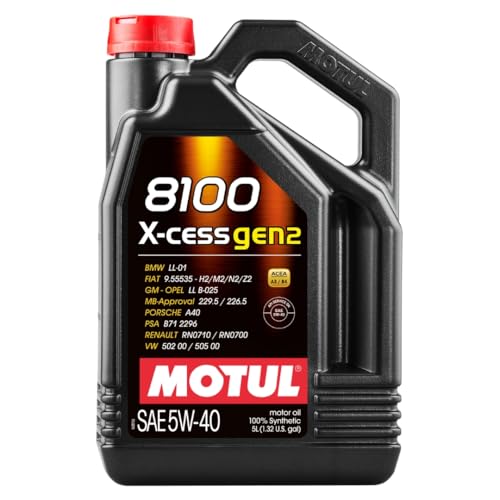
Next up, I have the 8100 X-Cess Gen2 for you, an oil that has simplified oil change for my Honda Civic by a great deal. Being from the house of Motul, which is a renowned name in the industry, this oil is one of the most trusted ones.
Product Highlights
The oil has an enhanced piston deposition control, ensuring there is no wear or deposition while preventing gas leakage. It also provides amazing turbocharger cleanliness and protects diesel particulate filter, gasoline particulate filter, and catalytic converters from damage.
On top of the Honda Civic, this oil is OEM (original equipment manufacturer) approved for all vehicles that require an LL-04 and backward. Meaning, it will come in handy for your other cars as well. And did I mention its enhanced oxidation stability? Though the Liqui Moly Leichtlauf High Tech offers better, 8100 X-Cess Gen2 is almost neck and neck for what it’s worth.
And the increased shear stability wraps it up in a nice bundle, making vehicle operation all around the year hassle-free. You’ll experience a smooth drive, owing to the improved viscosity stability of the oil even in extreme temperatures.
What's There To Like About It?
My absolute favorite feature of the 8100 X-Cess Gen2 is its versatility because not only does it maintain my Honda Civic in its prime, but it also is suitable for my BMW. Thanks to that, I don’t need to buy two separate oil cans for different cars. However, I do suggest that you check the specifications of all your car models before using the oil.
Secondly, it meets the standards put in place by the All European Car Alliance (A3/B4) and the American Petroleum Institute (SN/CF), ensuring maximum safety.
What's There Not To Like About It?
Maybe I’m just being nitpicky, but it doesn’t have a shelf life as long as that of Liqui Moly Leichtlauf High Tech. That’s the only reason I kept it at the second spot; other than that, it is a fantastic oil that is worth investing in.
Pros and Cons of 8100 X-Cess Gen2
Pros
Cons

- Formal OEM approvals across the European performance car landscape: Motul 8100 X-Cess Gen2 5W-40 carries BMW Longlife-01, Mercedes-Benz MB-Approval 229.5 and 226.5, Porsche A40, Volkswagen 502 00 and 505 00, Renault RN0710 and RN0700, FIAT 9.55535-H2 M2 N2 Z2, and GM-Opel LL B-025. One oil covers a multi-brand European garage. Fits out-of-warranty BMW M3 (E46, E92, F80), Porsche 911 (996, 997, 991), Mercedes-Benz AMG (W204 C63, W212 E63), and Audi S4 platforms.
- Thermal stability engineered for turbocharged and direct-injection engines: HTHS viscosity of 3.8 mPa.s at 150 degrees Celsius holds a robust oil film under extreme load. Viscosity index of 186 and flash point of 228 degrees Celsius (442 Fahrenheit) keep the formulation stable during track-day heat soak and sustained high-RPM highway operation. Built for the N54, N55, B58, M156, and 3.0T TFSI engine families.
- Extended drain interval support through high detergent and dispersant power: Total Base Number of 10.2 mg KOH per gram resists soot and sludge accumulation, supporting the longer oil change intervals recommended by European manufacturers. Catalytic converter compatibility is preserved, protecting the emissions system and preventing costly exhaust component failures over the life of the vehicle.
3. XPS Lubricants 4 Stroke

My next recommendation for you is from the house of XPS lubricants, another internationally famous brand that delivers top-quality products. Its 4 Stroke oil has been tested in the harshest condition and is formulated to sustain in the long haul.
Product Highlights
First and foremost, I’d like to commend its flashpoint of higher than 392° F (certified by the Cleveland Open Cup Tester), ensuring next-level safety while driving, even if you overspeed. Since it is ruggedly designed for high-performance on-road, off-road, and personal watercraft engines (4T), there’s no doubt that it’ll keep your Honda Civic running with buttery smoothness.
In terms of safety, it has received a green flag from the Globally Harmonized System of Classification and Labeling Chemicals (GHS). It is non-hazardous and contains 85-90% petroleum distillates, having a semi-synthetic formula. Even if you spill it while pouring, owing to its optimum 5W-40 viscosity, you’ll be able to clean it in a jiffy using an absorbent cloth.
Furthermore, it is an environmentally-conscious choice as it significantly reduces the emission of pollutants from the exhaust pipe and catalytic converter.
What's There To Like About It?
I’ve been a fan of this brand for a long time due to its quality and certified lubricants, as knowing that it complies with the GHS guidelines is very reassuring. Also, its amber appearance makes it easy to identify if it’s clean or dirty, simplifying assessment when a change is required.
Then there is the low pollutant release, high stability, and the perfect viscosity for a Honda Civic, which makes it an oil worth trying.
What's There Not To Like About It?
I have only one gripe - this oil provides excellent features like the 8100 X-Cess Gen2 but at a steeper price tag. So, considering the value for money, I couldn’t help but rank it lower than the previous option. But there’s no denying that it is as good (qualitatively) as my previous two recommendations.
Pros and Cons of XPS Lubricants 4 Stroke
Pros
Cons
- XPS synthetic 4-stroke oil is specifically engineered to meet the particular lubrication requirements of Can-Am, Spyder and Sea-Doo vehicles equipped with Rotax 4-TEC 4-stroke engines.
- Powersport formula with premium anti-wear and anti-corrosion additives
- Designed for high-performance off-road, on-road and PWC 4-stroke engines, including turbo or supercharged Powersports engines
4. Castrol EDGE
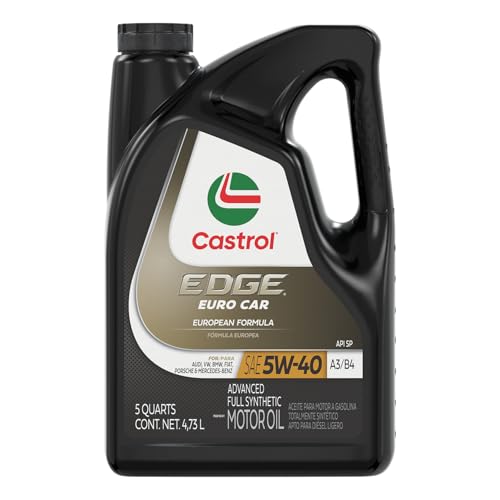
Of course, I couldn’t curate a guide on the best oils without mentioning a product from the OG brand Castrol. The Castrol EDGE claims to unlock the maximum engine performance with its fluid titanium technology.
Product Highlights
Providing a combination of high engine performance, wear protection, and sludge protection, this oil is the go-to choice of not only me but many Honda Civic drivers. It is tailor-made to withstand high engine stress and provide sustainable temperature performance.
As I mentioned before, the oil has a titanium fluid technology that transforms under pressure to increase the film strength and prevent oil breakdown. It reduces the friction in the engine and stands true to the ACEA standards, providing up to 40% better performance than its competitors.
Castrol EDGE is recommended by the World’s leading car manufacturers as it reduces the friction generated inside the engine and increases its overall efficiency. As a result, you might be able to save a few bucks while refilling the gas. It is also a fully synthetic oil and doesn’t contain any additives, so you can rely on its temperature stability.
What's There To Like About It?
The thing I liked the most about this oil is its multiple benefits; it makes the engine more efficient while protecting it from wear and sludge formation. My husband has been using it for the last two years, and he hasn’t encountered any trouble with his car since then.
These days engines are small-sized and generate extreme pressure due to high-temperature operation. But thanks to the Titanium fluid technology of this oil, the heat production is reduced by up to ten percent.
What's There Not To Like About It?
I advise against using this oil in a brand new vehicle because they need a little friction for the moving parts to break in. But Castrol eliminates the friction entirely, not allowing the components to break in properly. For this reason, XPS Lubricants 4 Stroke is a better choice than the Castrol EDGE, especially for new vehicles.
Pros and Cons of Castrol EDGE
Pros
Cons

- Recommended by world-leading car manufacturers
- Engine protection for the entire drain interval even under extreme pressure
- For use in both gasoline and light duty diesel applications
5. ZEPRO Eco Medalist

Finally, my last recommendation is the ZEPRO Eco Medalist, which is perfect for those on a tight budget. Economical and practical, this oil is optimized for cars having the start-stop technology and driving in severe city traffic. Do keep reading to know more of its features.
Product Highlights
The oil has one of the most advanced blends of low friction and SAE 0W-20 viscosity technologies. It was specially developed for Japanese engine technologies that are famous for their high efficiency and rigorous fuel standards.
Cars have to stop and start several times in city traffic, which puts a lot of stress on the engines. That’s why ZEPRO Eco Medalist has a chemistry that can deal with such pressure to ensure a balanced performance. It can also extend the engine life, keeping your car as good as new for a long time.
In addition to Honda Civic, you can use this oil for various high-performance SUVs and light-duty trucks (with specified use of API SN, SL, SM, and SJ). That’s because it has an advanced organometallic molybdenum compound, which robustly functions with its proprietary formulation to enhance wear control and oxidation.
What's There To Like About It?
I love its compatibility with yellow metals like bronze and copper, as it provides superior corrosion protection to the car components. It can keep the engine running for years on end without any problems, as long as you replace it every 5,000 miles.
Another commendable feature is its versatility because not only is it suitable for a Honda Civic, but it can also be used in several other cars with API SN requirements.
What's There Not To Like About It?
Although SAE 0W-20 is good, it isn’t as competent as the 5W-40 viscosity provided by other oils like Castrol EDGE. As a result, ZEPRO Eco Medalist holds the last spot on my list, but it’s surely worth giving a shot because of its optimized wear control and versatility.
Pros and Cons of ZEPRO Eco Medalist
Pros
Cons

- For best performance, follow the manufacturer's recommendations in your vehicle owner’s manual.
- One quart of ZEPRO Advanced Molybdenum 0W-20 engine oil - API SN, ILSAC GF-5
- Optimized for vehicles equipped with "stop start" technology and those operating in severe city driving conditions
Buyers Guide
Having discussed all my favorite oil brands, I will now move on to the second half of the guide. As you know, simply knowing the top picks isn’t enough, so if you want to buy the best oil for Honda Civic, there are a few factors that should be kept in mind.
Here are the features that you must look into before purchasing:
1. Oil Viscosity
You can compare oil to pancake syrup because on cool days it becomes highly viscous and thick, and on hot days it’s very thin. But that’s the case with cheap and low-quality oil. The good ones somewhat maintain their viscosity despite temperature fluctuations, and this feature should be the most important when you buy oil.
So, look for an option with high formula stability and viscosity optimum for your Honda Civic model. I prefer using 5W-40 engine oils because it is the most recommended for my model, and I haven’t had a single bad instance despite the temperature fluctuations in Texas.
2. Oil Type
There are several types of oil available on the market that add to the confusion while selecting the right one. To put things into perspective, I’ll describe the different kinds of car oils and their specialties so that you can choose the one that suits your car the most.
So, mainly motor oils are of the following types:
A. Conventional
This type is refined and blended with chemical additives, including detergents, to eliminate sludge in the engine, anti-foam particulates to avoid air bubbles, and antioxidants to stop metal degradation. It is a suitable option for those who have budget constraints or don’t want to spend much money.
B. High-Mileage
If your car has more than 70,000 miles on its odometer, this is the oil for you. It contains chemical enhancers and additives that lead to the swelling of O-rings (both internal and external) and gaskets to stop oil leakage in old engines.
However, it doesn’t deal with excessive wear or mechanical failures, so there’s no point in investing in high-mileage oil if you want to deal with friction and heat generation. Buy it only if your car is well-maintained and running well, as it can further increase the life of several essential engine parts.
High-mileage oil can be a variable mixture of conventional, synthetic-blend, and full synthetic oils and is priced according to its components.
C. Synthetic Blend
A combination of conventional and synthetic base oil - the synthetic blend is the best of both worlds. Being loaded with additives, it offers superior engine protection at a much lower price than full synthetics.
D. Full Synthetics
Full synthetic oils are mainly composed of base oils, but the majority of impurities are removed due to extensive refining. The high-performing additives and artificial compounds keep the engine clean and save it from any structural damage.
Although this oil is far better than all other types, it’s not recommended for all vehicles. It works well only with the new-gen engines that require extra temperature stability and whose parts have already been broken due to usage.
For Honda Civic, synthetic blend and full synthetics are the best options; just don’t choose the latter if your car is brand new.
3. Certifications And Classifications
Looking into the certifications and classification of the oil is also very important to ensure the safety and longevity of your vehicle. The oils are certified by several automotive bodies depending on their quality and user safety.
While API ranks motor oils according to their performance, the ACEA categorizes them based on the vehicles they can be used on. To pick the right one, go through the specifications of your car before buying.
4. Additives
You should also go through the additives included in the oil to make the best choice. Some of the brands keep their oils completely free from additives, while some include toxic ones in their formulas. As a rule of thumb, do look into the sulfur content before purchasing, as it can convert into sulfuric acid and damage the engine.
In contrast, pick the oil that contains detergents, polymers, seal conditioners, and molybdenum.
5. Environmental Impact
The engine oil plays a pivotal role in the pollutants released by your car, so go for the one that has the minimum pollutant release rate. Also, once used, the oil becomes a major contaminant; hence, using one with low toxins and heavy metals is your best bet.
Frequently Asked Questions
Lubricants that have a single-grade viscosity and do not have viscosity index improvers are classified as straight-weight oils. They were common in the old days, but now they have been replaced by multi-weight oils.
The viscosity number or the VI number is the measure of relative viscosity change over any temperature range. So, the higher this figure is, the lower will be the change in viscosity due to temperature fluctuation, and the better will be the oil stability.
Note that it doesn’t indicate the actual viscosity of the oil; it is simply a measure of viscosity change.
My Final Recommendation
All things said, I’ve now reached the end of my extensive review-based guide. Hope you got a fair idea of the best Honda Civic oil qualities. If you’re still in doubt, let me share my favorite oils in different categories to simplify it further.
Hands down, the Liqui Moly Leichtlauf High Tech is my top pick because of its all-around features. It has been ranked the number one lubricant by the users for over a decade, and rightly so!
Be it the hundred percent synthetic formulation or the perfect 5W-40 viscosity; the brand doesn’t cut corners on quality. It is thoroughly tested to meet the standards of AECA before coming on the market, so you need not worry about its safety.
For brand new vehicles, the XPS Lubricants 4 Stroke is the best choice, as it allows new parts to break in. And for a smooth drive with stable viscosity all-around the year, the 8100 X-Cess Gen2 is my top recommendation.
And I’ll leave you guys on that note. Until next time, take care and happy driving!