
Just how good do Lion’s Mane mushrooms taste!
Well, I had the wonderful opportunity of tasting them when my neighbor Mr.Cross invited us for his housewarming dinner party. Upon discovering that the mushrooms were homegrown by him, I wasted no time to ask him all about it.
When he came over for coffee the next evening to walk me through the details, I thought it’d be a good idea to document it and combine it with my research. Hi! I’m Stacy, and today, I’ve curated this guide on how to grow Lion’s Mane mushroom for beginners.
So, let’s start!
Guide To Growing Lion’s Mane Mushrooms
What Are Lion’s Mane Mushrooms?
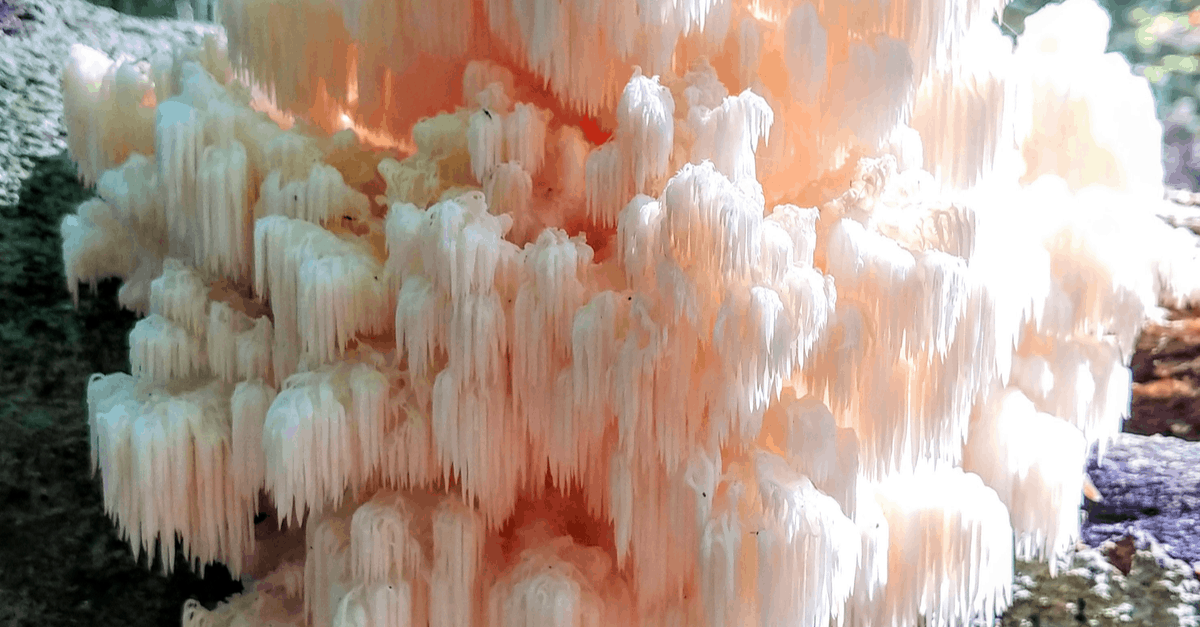
Scientifically known as Hericium Erinaceus, Lion’s Mane mushrooms typically grow as large white snowball-like formations covered in spines or “teeth.”
While these start out as small dot-like structures, they elongate to rice-grain-sized structures with time. And depending on their size, the larger mushrooms may grow to weigh as heavy as 1 pound. The overall texture of the mushroom is quite hollow and spongy, and they have a sensitive exterior prone to bruising during the growth stage.
How To Grow Lion's Mane Mushroom?
One of the biggest takeaways from my conversation with Mr.Cross was that there are multiple ways to go about the process of growing these mushrooms. Hence, users are free to choose the most viable and convenient option according to the available time, space and budget.
In the following sections, I will discuss three different techniques to help you make the right choice.
1. Use A Grow Kit
Like any other plant, mushroom growing kits are perhaps the best option for first-time gardeners or people who don’t want to get involved in the complexities of cultivating mushrooms.
These kits comprise colonized mushroom fruiting blocks, meaning most of the work is already done for you. It’s pretty easy to buy one online or at the local farmers’ market. And if you’re lucky, you may even find it in the local grocery store.
Once you have the bag, the immediate next step would be to place it in a relatively humid environment, and cut a couple of “X”s on the side. Now put the block on its opposite side so that the “X” cuts face the top.
To create the necessary humidity level, cover the block with a perforated plastic sheet while leaving enough space between them. The Lion’s Mane mushroom fruits will naturally start to grow through the holes in the bag and plastic covering.
Using a mister or spray bottle, water the fruiting block in the bag a few times a day. Also, don’t forget to fan in loads of natural air. For simplifying the task, you can build a shotgun fruiting chamber (SGFC) according to the size of the bag.
Depending on the kit and the environment, you can get 2 or 3 flushes without curating any special environment at all. These mushrooms can grow well in sub-par conditions, so you don’t have to be overly concerned about the conditions.
In fact, Mr.Cross told me of the time when he forgot a batch in his garage with more than 60% relative humidity, and how the blocks still fruited heavily with spines!
No products found.
2. Starting From Spawn
If you have some knowledge about mushroom cultivation, you’d mostly go for some Lion’s Mane spawn and add it to a suitable substrate. Mr. Cross vouched for hardwood sawdust amended with bran as one of the most effective options. In this regard, the usual fruiting block method does quite well to produce favorable results.
Growing them on Master’s Mix, a 50-50 hardwood sawdust and soy hulls dehydrated to 60% also produces great results. Apart from the high yield, the longer shelf life makes it a top choice among gardeners.
Straw is another effective substrate that accounts for high yield. But it’s important to note that it may only work for those strains that have been adapted to grow in it. That’s why it’s better to stick to a wood-based substrate for best results.
Talking about the process, the first step is to add about 10% or 15% spawn to a sterilized substrate in a clean environment. Although the spawn is reasonably resistant to contamination, you should take all the necessary precautions, especially during the initial growth stage. Once the spawn starts fruiting, it should be fully colonized within 2 weeks.
The mycelium can appear furry and thin in certain places, looking somewhat less meaty than other varieties like Reishi and Oyster, but that’s nothing to worry about. Since Lion’s Mane fruits quite easily, you may see small fruit development in the bag even before exposing it to suitable growing conditions.
In that case, make sure to cut small “X”s where the fruits have already formed before setting the bag for complete germination.
3. Growing From Scratch
As you may have already guessed, growing Lion’s Mane from scratch is a relatively complicated and time-consuming process. You’d want to begin with a culturing agar to make your own spawn. If you plan on using liquid culture, I’d suggest putting it on the agar for re-use and long-term storage.
Once the spawn appears, all you have to do is add it to a bulk substrate and allow it to fruit in favorable conditions. The quality of the culture is directly proportional to the yield, so this is something you need to take care about.
Moreover, a high-quality mycelium may even last as long as 3 years for anytime use. Just make sure to store it in the refrigerator. Otherwise, it may fruit on the agar plate, forming long spines that tend to grow out of the plate, leading to contamination.
Summing It Up
Hopefully, my guide has provided you with all the necessary details for growing healthy Lion’s Mane mushrooms.
Before wrapping up, I should mention that like any other cultivation, growing Lion’s Mane isn’t free from challenges like dehydration and mold formation. But with proper care and vigilance, you can easily avoid these shortcomings.
One last bit of advice before I leave. Make sure you harvest the mushrooms before they turn pink or brown, cutting them from the point where clear teeth have formed 4 to 7 days after the pin starts popping.
On that note, I’ll take your leave. See you another day!