
As a gardener, I’m constantly at the mercy of the weather gods, and doesn't everybody despise that? But, the good news is, I've got a fix!
While gardening outdoors has its share of fun, a dry spell or excessive rain can damage all the crops. Not just that, sometimes, you might not have enough outdoor space to grow all your favorite plants.
But what if you could replicate the ideal environmental conditions for the plants within the walls of your house? Yes, that's right; with indoor gardening, you become the chief temperature controller.
Now, I wanted to try my hand at indoor gardening ever since I first heard about it on The Joe Gardener Show and was waiting for the right opportunity. So, when my neighbor told me she was growing her plants in a grow tent, I knew I had to try it out.
I looked up all the details and ordered the tent online. Setting it up was a daunting task, even for an experienced gardener like me, and that's why I'm here to help you.
Hello, there! I'm Stacy Smith. And today, I will tell you all about how to set up a grow tent.
So, without any further delay, let's begin!
The Complete Guide To Setting Up A Grow Tent
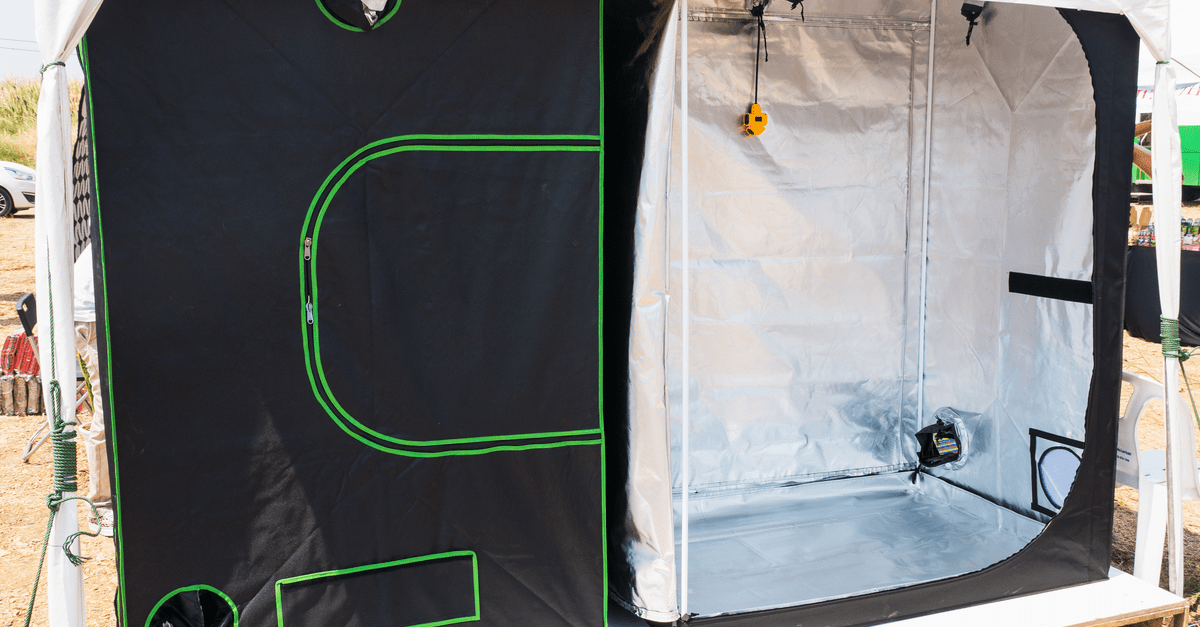
There are seven essential steps in setting up a grow tent, and in this guide, I've explained the detailed process. Keep reading to know more.
Step 1: Gather The Tools
Before I delve into details, remember that for any gardening task, you need the right tools. The grow tent will work well if you've got the correct tools for it inside the room.
The unit comes with most of the tools, but you might need certain extra things like screws, screwdrivers, scissors, duct tape, and wire cutters for the set-up.
Step 2: Assembly
Setting up a tent is not a tough job, as long as you follow the instruction manual that comes with it. Tents are usually rectangular or square and should properly fit into the designated space. Square tents have a longer vertical height to accommodate taller plants. For hassle-free assembly, I divided the task into two segments.
A. Construction Of The Frame
First and foremost, assemble the framework of the tent. My tent is significantly large, so my husband helped me in assembling the frame. So, if you can't manage the construction on your own, ask for help to avoid any mishaps later.
B. Covering With Cloth
After the frame has been set up and moved to the right spot, it's time to cover it with a cloth. Usually, the cloth is woven out of nylon or polyester and bonded with highly reflective silver fabric. Besides, they come with heavy-duty zippers that should work smoothly.
Step 3. Setup The Grow Lights
Artificial lighting is essential to provide nourishment and warmth to the plants. Carefully balance the amount of light you want to supply to the plants inside the tent. An inadequate supply will hinder the growth of the plants. Conversely, a surplus of lights will generate excess heat, which damages the crops. Thus, the amount of light supplied should be cautiously monitored and controlled.
For setting up the grow light, attach the holders to the crossbars of the tent at different heights.
Then secure the LED lighting hoods accordingly, making sure they discharge the light towards the plants, and remember to tuck the wiring out of the way. This negates the chances of any electrical hazards.
You may install timers in the tent to control the light system.
Step 4: Ventilation Setup
Adequate ventilation is essential for the plants to thrive as they supply fresh air and need carbon dioxide regularly. So, setting up the ventilation system is an important step and must be done carefully, and you'll need carbon filters, an exhaust fan, and an oscillating fan for it.
You have to place the fan and carbon filter indoors. Although carbon filters are optional, I highly recommend using them to eliminate odor from the tent. Use the hanging equipment to attach the carbon filter to the crossbars on the top of the tent.
Then, hang the exhaust fan in such a way that the exhaust faces the ventilation opening, and the intake is towards the carbon filter. Once this is done, connect the filter to the exhaust fan using ducting and connect the fan to the ventilation opening the same way.
Next, let’s talk about the oscillating fan that helps in the circulation of fresh air. I installed the oscillating fan on the sidebars so that the air can move in all directions instead of pointing directly at the plants.
Step 5: Temperature Monitor System
A temperature and humidity monitoring system helps provide an accurate reading of the same inside the grow tent. This way, you can gauge whether your plants are receiving favorable temperature and moisture conditions to flourish.
Step 6: Dialing In The Entire System
Now, your grow tent is nearly ready. To ensure that it's working well, turn on all the equipment inside and make sure all the devices are running efficiently and are correctly installed.
Step 7: Place The Plants Inside
The last step in setting up your grow tent is to place the plants inside. There are two ways of growing plants in a grow tent. First, you can take the traditional route and place moistened soil into containers before sowing seeds into it. Or else you can opt for the hydroponic system, as I did.
You may have to change your tent's settings from time to time, depending on the environment outside.
No products found.
Final Words
With that, I’ve come to the end of this guide on setting up a grow tent. It’s a simple process, as long as you’re patient and follow the instructions carefully. The grow tent has given me an abundance of lettuce and spinach this year, and my basil and cilantro are growing well.
Now, I don’t have to fret over uncertain weather, and seeing my plants thrive is deeply gratifying. I regularly adjust the humidity levels and the light to ensure that the plants remain in optimal conditions throughout.
All that being said, just setting it up is not enough; make sure to clean and maintain it properly.
I hope this guide has been helpful, and you’ll start working on your indoor garden very soon. If you have any queries, do let me know in the comments below.
Until next time, take care!