
Having used gardening equipment all my life, people think that I know everything. But that's not the case.
A couple of months back, I took my lawn mower out of the shed to clear shrubs and trim the grass. I hadn't used the particular power tool during the winter months, so it had been lying unused all this while.
Now, as any gardener will tell you, users should always drain out the gas before putting their outdoor tools into storage. Unfortunately, I forgot this part and opened the lid to find the fuel sticking to the sides. After considerable effort, I cleaned the tank, added fresh fuel, and got the lawn mower running.
It struck me suddenly that given my advanced age, I might forget to drain the fuel again. The natural solution was to use a fuel stabilizer to protect the engine, but I had never used one before.
Following a quick internet search, I narrowed down all the steps and added a suitable fuel stabilizer to the tool.
My lawn mower hasn't had any issues this far, making me confident about sharing my findings. Hi! I'm Stacy Smith, and today I'll tell you how to use fuel stabilizer in lawn mower.
How To Use A Fuel Stabilizer In A Lawn Mower?
Steps To Follow
Adding the precise amount of fuel stabilizer is all about measurement. If you get the ratio of fuel to stabilizer right, your engine will no longer encounter gumming or pitting. Hence, note the following steps as I explain the correct procedure of mixing fuel stabilizers with gasoline.
1. Knowing Your Lawn Mower
Start by gathering relevant information about your lawn mower, particularly the fuel tank capacity and type of gasoline that you can use. All models have different specifications, and this will help determine which stabilizer works best.
Additionally, the amount of stabilizer you need to add varies, depending on the choice of brand, so make sure you read the label properly. Mostly, one ounce of fuel stabilizer works well with 1-2.5 gallons of gasoline.
2. Clearing The Tank
It would be best if you add the fuel stabilizer prior to filling the tank. This will allow the formulas to mix freely, ensuring that the engine starts smoothly even after spending months in the shed. So, if there's fuel in the tank, it's important to get it out.
You'll need a jerry can, a couple of hoses, and a rag to remove the gasoline. Start by placing the jerry can on the ground, next to the fuel tank, to collect the gasoline as it travels through the hose. Furthermore, ensure that the hose is lower than the fuel level in the tank, allowing gravity to take over once you begin the process.
Place one end of a long hose in the fuel tank, submerging it so that it reaches the bottom, while making sure that you can blow into the other end to see if there are bubbles. When you're satisfied, place the other end of the hose into the jerry can followed by the short hose. For the latter, don't submerge it into the can but gently hold it near the opening.
Proceed to cover the opening with a wet rag, preventing air from escaping. Then blow into the short hose with an air compressor to increase the pressure in the gas tank. Slowly, the fuel from the tank will travel through the long hose and start collecting in the jerry can.
Continue this till the tank is empty before moving onto the next step.
3. Finding The Correct Ratio
I’d suggest that you use one ounce of fuel stabilizer, only after reading what's written on the bottle. Also, read the lawn mower’s user manual to determine the size of the gas tank.
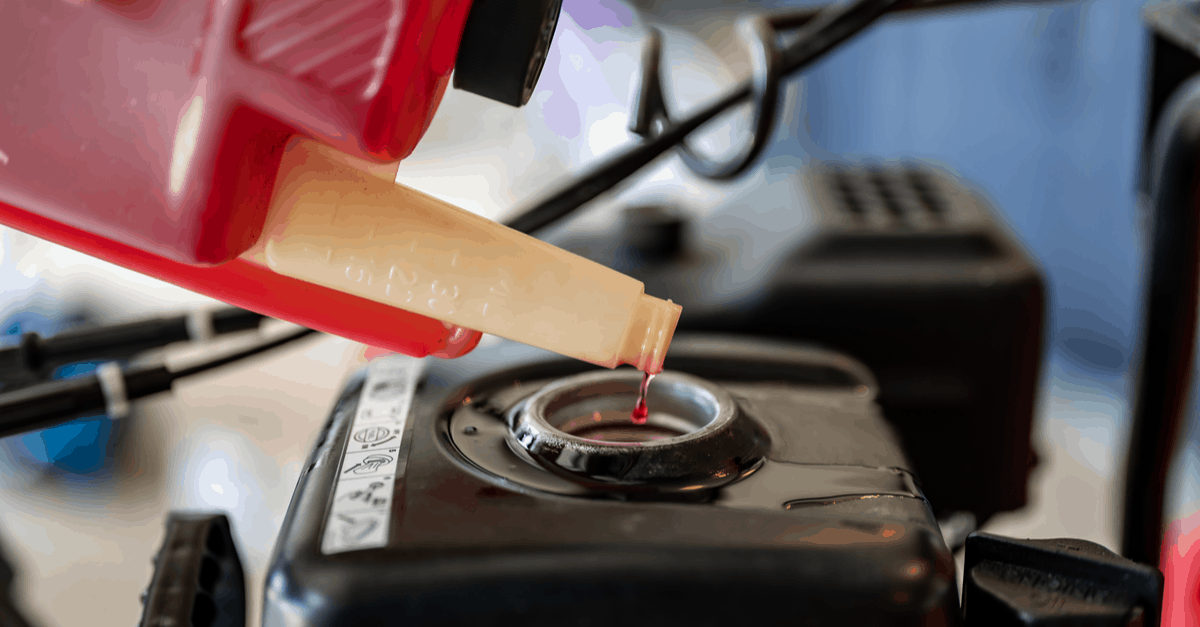
You'll find that the stabilizer bottle has two spouts: a long one and a skinny nozzle. The latter is the measurement spout, which helps users add the right amount of stabilizer. All you need to do is uncap it and squeeze the bottle until the liquid reaches the desired level.
Just remember to keep the large cap closed and pour one ounce of fuel stabilizer into the engine.
4. Start Your Engine
Fill the fuel tank with fresh gasoline, secure the cap tightly, and fire up the lawn mower. It would help if you kept the engine running for approximately ten minutes, ensuring that the stabilizer mixes well with the fuel.
The next time you start the lawn mower, the engine will respond immediately. Usually, the lifespan of the stabilizer is over 30 days, but it may vary depending on the brand.
No products found.
When To Use A Fuel Stabilizer?
I've discussed how to use a fuel stabilizer; now let me tell you when to use it. Apart from adding a fuel stabilizer to the tank, you can also pour the required amount into the gas can. This ensures that the fuel doesn't deteriorate, and the next time you fill-up the tank, there won’t be any need to add the stabilizer separately.
People usually use fuel stabilizers during the off-season when the lawn mower lies idle in the shed. However, if you have a small lawn that doesn't require much trimming, be sure to add the necessary stabilizer. Lawn mowers suited for small lawns don't experience much activity, and it may be weeks before you use it again.
So, it would be best to exercise caution and add a fuel stabilizer for longevity.
Final Words
Hopefully, you’ve enjoyed my guide; that’s all I’ve to say about adding a fuel stabilizer to your lawn mower.
Before signing off, I’ll leave you with this tip – don’t purchase the stabilizer that works for your neighbor. Every machine is different, meaning they have varying requirements. So, go to the store and ask for professional help to choose the fuel stabilizer most relevant to your needs.
That’s all for now. Take care and see you soon!