
Choosing the right power tool is never a cakewalk!
Although my neighbor John had immense clarity about the type of projects he wanted to undertake with a power saw, he couldn't choose between a radial arm and a table saw. And I can't really blame him. Given that either can do almost everything like the other, making a decision was bound to be time-consuming.
After struggling for several days, he finally came to ask for my help. But it wasn’t something I could explain verbally. So, I sent him back with the assurance that I’d soon assist him in making the right decision. On the same night after dinner, I sat down to document the comparison for him and all my readers who might be on the same boat.
Hi! I’m Stacy. And today, I’ve curated this guide on radial arm saw vs table saw. So, let’s start!
Comparing Radial Arm Saws And Table Saws
What Is A Radial Arm Saw?

A radial saw has a blade mounted on a hanging arm, which helps it move forward or backward atop the work surface. Simply put, pushing the arm will bring the blade forward, while pulling it will bring the blade backward.
This distinct design enables the equipment to achieve different cuts, from crosscuts, rabbets, miter cuts, slant cuts to dados and half-joints. The blade can cut in either direction, and you need clearance only on the left and right sides for both rip cuts (parallel to the grain) and crosscuts (across the grain).
Moreover, these saws are engineered with diverse settings and precisions to cater to various woodworking projects. With the proper attachment, your radial arm saw can double as a router, a planer, or even a sander. Undoubtedly, such multi-purpose utility is its biggest advantage.
What Is A Table Saw?
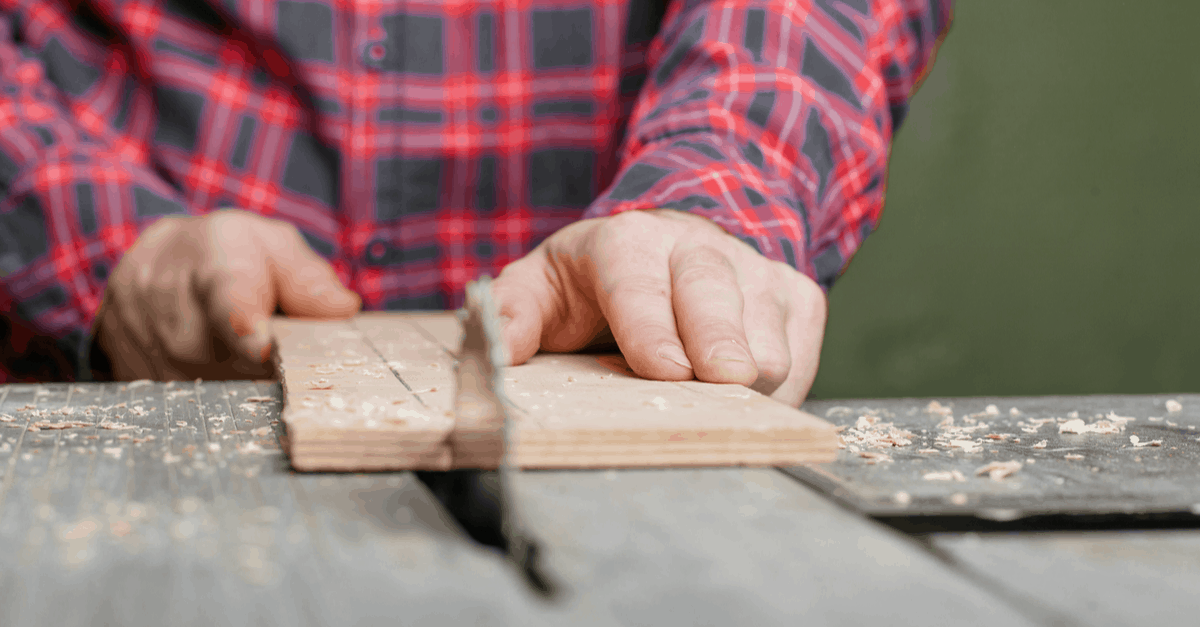
A table saw is a type of circular saw where the blade is mounted under a table-like structure, and a part of it protrudes above the surface. Users have to push the wood against the spinning blade to achieve the cut. These are popular for their ability to work with large workpieces (mainly wood).
The combination of a broad work surface and fence keep the wood in place for fast, easy, and precise cuts. Furthermore, this type of saw is primarily used for rip cuts and crosscuts, and the blade can be adjusted according to the thickness and height of the wooden board.
But with the right accessories and features, it can also perform other cuts like miter cuts, bevel cuts, etc. Depending on the space and use, you can opt for a portable or stationary saw. Complete with features like anti-kickback pawls and a riving knife, it facilitates a safe working experience.
Pros And Cons of Radial Arm Saws
Pros:
1. Good Accuracy In Compact Spaces
Since a radial arm saw performs both rip cuts and crosscuts without requiring clearance on the front and back, it’s suitable for compact spaces. It doesn’t need any additional attachment like miter or sled gauges, and once you get the hang of adjusting the blade, no cut is too difficult!
2. Value For Money
Owing to their multi-utility design, most radial arm saws come across as pretty cost-effective. So, if you’re skeptical about spending a lot of money on your first power tool, think of it as investing in multiple tools harbored in one.
3. Heavy Duty Use
With a radial arm saw, you can take on multiple wooden boards with different heights and widths. Unlike table saws, you don’t have to push the workpiece towards the blade. And moving the blade atop the workpiece puts less strain on your arms.
Cons:
1. Safety
One of the biggest concerns among potential customers is the lack of adequate safety features. The uncovered moving blade can lead to injuries or accidents, especially if you don’t have the experience of working with one. On top of that, the workpiece tends to lift as the blade operates, causing it to pinch your hands.
2. Less Precise Than A Miter Saw
Despite being versatile, a radial arm saw is less precise than some other saws for making angled cuts. The “free blade” mechanism is more complicated than operating the movable blade of something like a miter saw, especially for first-timers.
3. Expensive
For users who don’t indulge in heavy duty or frequent woodworking, a radial arm saw can be expensive, considering that you can get a portable (jobsite) table saw for a lower price.
No products found.
Pros And Cons of Table Saws
Pros:
1. Better For Ripping
When it comes to ripping wooden boards of different sizes, there’s hardly any match for a table saw. In tandem with the broad work surface, the fence and railing system makes it easier to work on larger workpieces, especially for novices or first-timers. Besides, it can perform different cuts.
2. Stability And Precision
With a fixed blade and wide metal work surface, table saws offer good precision without compromising stability. As long as you maintain a strong grip on the workpiece and adjust the railing and fences the right way, you won’t get pinched with the wood, like in case of a radial arm saw.
3. Enhanced Safety
As I have mentioned before, a table saw employs multiple safety features for seamless operation. Beyond that, the low exposure of the blade and the integrated cover makes it safe, even when not in operation.
Cons:
1. Push Stick Required For Bigger Boards
Bigger boards will invariably require a push stick for feeding to the blade to maintain precision. Radial saws don’t need any such accessory, provided you hold the blade at the right position.
2. Requires More Space
Compared to radial saws, stationary table saws will require much more space and aren't as portable. Moreover, they require clearance on all four sides for both ripping and crosscutting.
No products found.
Summing It Up
That’s all the time I have for today’s guide.
Hopefully, I could address the crucial points to be considered before making a decision. And although it’ll depend on the type of project, I’m slightly in favor of table saws, simply because they are easier to use for beginners. It’s better to start with the basics before dealing with the more complex power tools.
On that note, it’s time for me to wrap up. I’ll see you next time. Till then, take care!