
Scientific Name: (Camponotus pennsylvanicus)
Black Carpenter ants are Hymenopterans that belong to the family Formicidae and exist throughout the world. The Black Carpenter is the first North American ants species, and it was named in 1773. They are widely spread in landscapes, gardens, and make one of the greatest species that invades structural facilities. Their feeding outreach remains within 100 meters from the nesting location, whereas they return to their nests with the help of pheromone trails they establish while foraging. A nest may host thousands of workers, and only the workers could bite if agitated. They may inject or spray formic acid that irritates a bit. Black carpenter ants have a very close association with aphids and often feed on the honeydew that they secrete while, sucking sap from the plant tissues. Workers ants also feed on dead organic matter and suck from the soft tissues. Black carpenter ants also infest industrial and household infrastructures besides damaging the beauty of the home gardens.
Origin and Distribution
Black carpenter ants are native to North America, and they're extensively distributed throughout southeastern Canada and the eastern US. Black carpenter ants also remain the most communal species of these regions, and their range is practically ubiquitously east of the Rocky Mountains in coppices, forest boundaries, and residential settings. Often, the workers of the black carpenter ants infest homes in the northeastern US in search of food, whereas, in the outdoors, they speedily decompose dead insects and decaying plants. In a garden environment, they often nest under stumps, tree logs, and hollow trees. Black carpenter ants would forage on almost everything that humans eat like sweets and protein.
Black Carpenter Ant- Identification
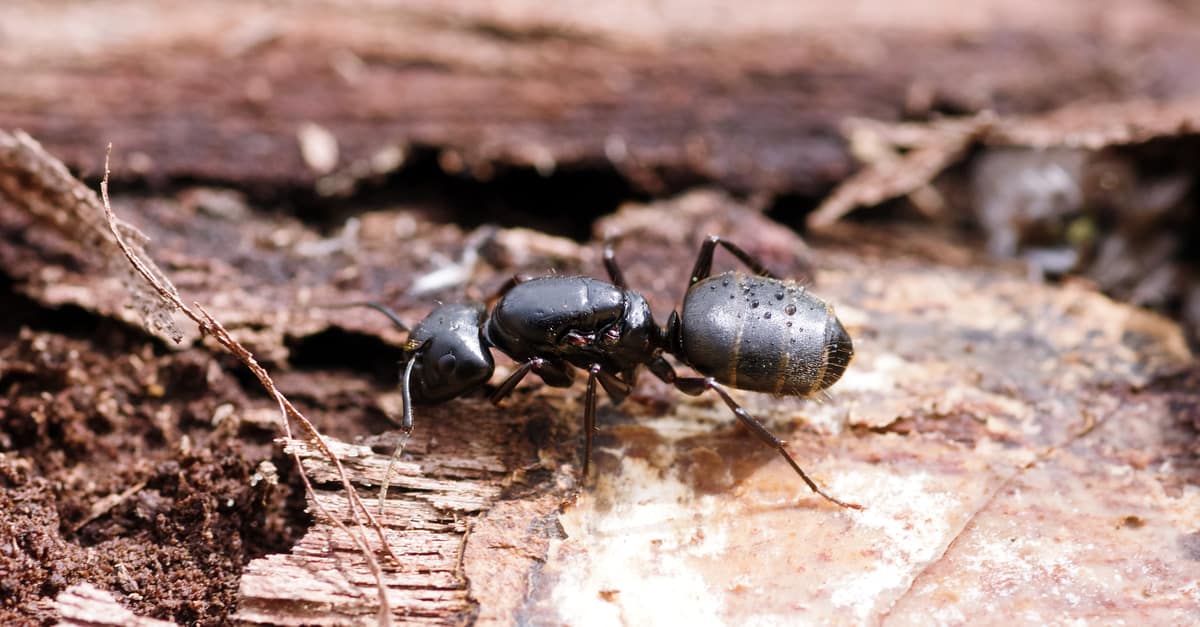
Black carpenter ants are dull black from the head and body with yellowish or white hairs over their abdomen. Each colony consists of 3 castes including, the minor and major workers, and one or more queens whereas, their colors remain uniformly black throughout all stages. Black carpenter ants exist in variable sizes, and the queens often measure about 21 mm long, and the supermajors sometimes reach up to 17 mm long. Overall, the black carpenter ants are the largest among all ant species in North America. Black carpenter ants have elbowed antennae which is 12 segmented. Alates have yellow wings, and workers hardly measure up to ½ inches in length. They can emit a strong odor when agitated.
Black Carpenter Ant- Lifecycle
Winged males and females conjugate in the air in spring or early summer. They also mate in midair, and the queens lose their wings after mating. The queens find cavities in the wood, enter there, and seal themselves until their first brood matures. Initially, a queen lays a smaller number of eggs that increase gradually. The queen feeds the small workers using her salivary glands until they can forage themselves. On maturity, these workers build and maintain the nest for developing a colony. A colony takes almost six years to reach its optimal size. The queen takes after only the first generation whereas, it's the responsibility of the workers to look after and forage the next generations. Workers are also responsible to expand a colony by cutting the galleries and creating extra space for the new members. Winged males and females take about three to four years to develop, and midair conjugation occurs again.
Symptoms and Types of Damages
Workers in the family are omnivorous, and they could invade live insects besides carrying the death proteins from insects, especially the arthropods. They collect honeydew from aphids and other plant materials from the garden through sucking habit and frequently visit flowers and fruits for this purpose. Workers also feed on household garbage, kitchen leftover, and piles of organic deposits. The US spends Millions of dollars to control black carpenter and other ant species annually. They also establish colonies in prevailing wood cavities, and damage to the new wood is often difficult. Their damage is also local, and they extend when they enlarge a colony. Otherwise, they're not habitual to feed on wood as termites do. The homeowners may find them under woodpiles in the garden and some congress on the walls, carpets, kitchen, and near the wood furniture indicates the presence of a colony in close vicinity.
Where Do the Black Carpenter Ants Come from?
The winged male and female workers emerge and take flights in late spring and early summer and mate in midair. Similarly, wingless workers also appear and forage in the garden or household infrastructures when the surface temperature reaches 52 °F in spring until it reaches 103 °F in summer. Look for them in the garden and indoors when these conditions arrive and take necessary measures to control them.
How to Prevent Black Carpenter Ants?
Besides all preventive measures if Black Carpenter Ants infest your garden or household infrastructure, here are the most proven ways to suppress their population using the natural, organic, and chemical methodologies;
Black Carpenter Ants- Control
Natural Control
Natural Distilled White Vinegar
Vinegar is not only the ant deterrent but kills them if, they receive it on the body. Moreover, it disrupts their pheromone trails and can't follow the return path to their nesting sites. Vinegar applications can be made on the kitchen walls, household furniture, door frames, and high moisture areas that harbor them. Vinegar is also applied to the nest if you can locate it. Otherwise, you may follow the trails and find the nesting site.
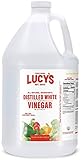
- LUCY’S NATURAL COMPOSITION - Lucy’s White Vinegar's reputation as a trusted product stems from its safety, effectiveness, versatility, and eco-friendliness. Made from fermented ethanol, it contains acetic acid, a naturally occurring compound. Its formulation allows it to be used around food and the home. Additionally, white vinegar is biodegradable and does not contribute to environmental pollution, offering a more sustainable cleaning option by reducing reliance from other cleaning agents.
- SPICING UP DIPPING SAUCES - Lucy’s White Vinegar can add a tangy kick to dipping sauces. Its acidity helps balance flavors and can enhance the overall taste. For instance, a splash of Lucy’s Vinegar can brighten up a mayonnaise-based dip or give a zesty edge to a mustard sauce.
- SUBSTITUTE FOR SALT OR BUTTERMILK - Lucy’s White Vinegar can be a useful alternative when you’re out of salt or buttermilk. For example, you can use vinegar to add acidity to dishes in place of salt or mix it with milk to create a buttermilk substitute for baking.
Add one-part vinegar in an equal quantity of water. Mix well and spray wherever you find black carpenter ants, indoors or outdoors.
Rubbing Alcohol, 16 Fluid Ounce
Although there are many natural ways to kill ants. Rubbing alcohol is one of the cheapest and fastest methods that directly interferes with their chitin. Mixing rubbing in water and spraying on the potential infestation sites is not speedy But, extremely effective as it dissolves their skin and Black Carpenter ants die of dehydration. Moreover, the rubbing alcohol derives from botanical sources, and there is no harm in spraying the solution in residential facilities and garden areas where you grow vegetables and microgreens.
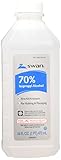
- Effective agent for cleaning minor cuts, abrasions and burns.
- For topical application only.
- For certain applications, alcohol may be used at full strength or diluted.
Mix one-part rubbing alcohol with 3 to 4 parts of water and thoroughly spray the infested areas besides direct spraying on the ants and their nest. Prefer rubbing alcohol over insecticides when you target black carpenter ants indoors.
Organic Control
Fertilome Come and Get It
Fertilome- Come and Get It is a specialized product for controlling black carpenter ants and other ant species that infest your property. It contains 0.015% Spinosad in a baited form. When applied on the nests or the areas of the higher infestation, eliminate the entire nest overnight. The ants would happily forage on the bait and carry it to the nests where the entire population will be killed. It's ready-to-use and only needs sprinkling around the infested areas, especially, the woodpiles, tree logs, and stems of the larger trees. This bait also remains safe for the bees and the environment. Come and Get It is also OMRI listed and can be used on all edible plants in the garden and indoors.

- Kills the Queen & the mound
- Easy to use
- This product is manufactured in China
Spread the powdered bait around wood logs, tree trunks, and garden plants. 1-pound product pack is for applying on 10000 square feet of garden area. Similarly, you can sprinkle the bait indoors, and target black carpenter ants, easily.
Pest Control Peppermint Oil
Mighty Mint contains 4% Peppermint Oil which is an insect deterrent. Peppermint is an excellent pest controller, and most creeping insects can’t survive with the scent and leave the site where it applies. It also disrupts the pheromone trails, and ants can't return home. The peppermint essential oil includes all ingredients from botanical sources such as vegetable oil, palm, and soybeans. Peppermint oil is applied outdoors and indoors without fearing any residual effects on the residents. It's an OMRI-listed product and applies to all edible plants in the garden.
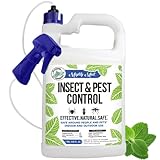
- PET-FRIENDLY & FAMILY-SAFE FORMULA – Mighty Mint is a top pick for pet parents looking for a natural, pest control solution. Safe to use around dogs, cats, and kids when applied as directed—no harsh fumes or dangerous chemicals, just powerful peppermint protection you can trust.
- POWERFUL PLANT-BASED PEST CONTROL – Formulated with extra-concentrated peppermint oil, this natural spray is a proven deterrent for spiders, ants, roaches, and more.
- EFFECTIVE INDOOR & OUTDOOR USE – Designed for versatile application on baseboards, entryways, patios, and other areas. Helps repel insects from kitchens, bathrooms, living spaces, and more—without staining surfaces.
Peppermint oil comes in a small bottle with an empty gallon. Pour the entire content in the measuring gallon and add water to fill and spray on the areas infested with black carpenter ants.
Chemical Control
Extinguish Plus Fire Ant Killer Bait
Be assured that the Extinguish Plus- Ant Killer Bait is for professional use only. Never handle this product on your own since it contains 0.365% of Hydramethylnon and 0.250% of Methoprene which are professional-grade insecticides used in this bait. The bait is a stomach poison and an Insect Growth Regulator together that could eliminate the entire colony overnight. However, you may order the product from an online marketplace and make it available to Exterminator once he arrives at your facility for Black Carpenter ants control.
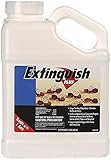
- Hydramethylnon 0.365%, Methoprene 0.250%
- Extinguish Fire Ant Bait is for use on residential property, commercial property, container or nursery stock, farms, commercial turf, pastures, and rangelands.
- For a mound treatment of Extinguish Plus Fire Ant Bait distribute 2 to 5 level tablespoons around the mound. Do not disturb the mound. For a broadcast application of Extinguish Plus for fire ants and harvester ants apply at a rate of 3 ounces per 5,000 square feet or 1.5 pounds per acre. For a broadcast application of Extinguish Plus for big-headed and argentine ants apply at a rate of 2 to 4 ounces per 5,000 square feet or 1 to 2 pounds per acre
Let an exterminator make the solution as per the product guide and follow the listed safety measures.
Due to the variable regulations around (de)registration of pesticides, your national list of registered pesticides or relevant authorities should be consulted to determine which products are legally allowed for use in your country when considering chemical control. Pesticides should always be used lawfully, consistent with the product's label.
Check out our other guides on common garden bugs.