
A Complete Guide into Mowing Your Own Grass
Introduction: Mowing Your Grass

One of the biggest status symbols in the world of gardening is a beautifully manicured, lush, green lawn. Achieving such a glorious lawn is something that takes effort though, and one of the most important aspects of lawn maintenance is mowing the grass.
Even if you’re not trying to inspire lawn-envy from your neighbors, mowing the grass is an essential maintenance job for anybody with a patch of lawn in their outdoor space.
However, there’s a little more to mowing your grass than you might think, It’s certainly not as simple as running a lawnmower over the surface once in a while! Seasons, ground undulations, and aftercare are just a few of the things you need to consider in order to keep your lawn looking healthy and well-maintained.
Below, you’ll find a complete guide to mowing your grass like a pro. We’ve put together all the advice and information you need to keep your lawn in top condition, along with some super useful tips to help make things as easy as possible.
So, keep reading and pretty soon you’ll know everything you need to know about keeping your lawn in great shape all year round.
Best Times To Mow Your Grass

Let’s get things started by taking a look at the best times to mow your grass. There are two things to consider here; the season and the time of day. That’s right, believe it or not, there is an optimal time of day for mowing your grass!
Early Morning
While you may be eager to get outdoors and mow your grass first thing in the morning, this is the worst time of day to do it. This is because there will likely be a covering of morning dew on your lawn, which means it will be wet.
Trying to mow the grass while it is wet puts more pressure on your lawn mower’s blade and, rather than cleanly slicing through each blade, it will tear at it. This leaves the grass more susceptible to fungus and disease, which can kill an entire lawn.
Mid Morning
By mid-morning, the dew that settled on the grass overnight will have evaporated away and your lawn should be dry. The temperatures are yet to soar and the sun will not be at its highest peak during this time either, and this is why most gardeners consider mid-morning to be the perfect time to mow.
Mowing your grass at this time also gives it time to heal before the evening comes and the dew settles again. However, it is still worth keeping an eye on the temperature. If you’re in the middle of summer and the mid-morning temperatures are particularly high, don’t mow your grass as it may become scorched.
Midday
Mowing your grass in the midday sun isn’t the best idea, and there are a couple of reasons why you should avoid doing it at this time of day. The first of these is the physical toll that it can take on you.
Pushing a heavy lawnmower around in the baking midday sun is a labor-intensive, tiresome task. So, if you can avoid doing it at this time, you’ll feel much more comfortable.
Secondly, mowing your grass during the hottest part of the day will cause a lot of stress to your lawn. The high temperatures and the sun’s UV rays can cause freshly mowed grass to burn. In turn, your grass will look brown and dry instead of lush and green.
Of course, we all have busy lives and your grass-mowing opportunities may only present themselves around midday. If this is the case, then your lawn should be able to withstand the heat of the midday sun as long as you’re not cutting below the top third.
Afternoon
If you’re not able to get outdoors and mow your grass in mid-morning, then the afternoon is the second-best time to give your lawn a trim. This is because you’re still a while away from dew settling overnight (particularly during the summer months), and the hottest part of the day has passed.
Evening
Beads of dew start to gather on your lawn as the evening sets in, so mowing your grass in the evening is just as bad a mowing it first thing in the morning. If you mow your lawn during the evening, your lawnmower will find it difficult to cut through the rapidly dampening grass and the same turf-tearing action will occur.
This leads to an increased risk of fungal infection and disease. This can be even worse than in the morning as the grass won’t be exposed to warmth after it has been cut. This means the cut blades of grass will stay wet overnight, increasing the chances of infection even more.
Now, let’s take a look at mowing your grass throughout the different seasons. It may surprise you to learn that, with the exception of January and December, your lawn needs some care and attention during every month of the year.
As we’ve mentioned before, mowing your grass is only one part of the picture. Putting some effort into feeding, watering, scarifying, and aerating your lawn throughout the year helps it grow healthier.
In turn, this gives it the strength it needs to survive the harsh winter months and start growing again once the weather starts to warm up.
Spring

It can be tempting to head outdoors with the lawnmower as soon as you see your spring bulbs bursting into flower.
But, just because there is some long overdue color beginning to pop up in your garden, it doesn’t necessarily mean that your grass is ready for its first trim of the year.
Take a moment to look at the height of your grass during spring.
It needs to be at least 2-inches tall before you consider cutting it. If you cut it back while it’s shorter than this, there is an increased risk of disease setting in as there is still a chance of frost.
If your grass isn’t tall enough to mow yet, there are some other things you can do in the meantime.
Spring is the perfect time to scatter some grass seed across your lawn and into bare patches. This is because the weather is still cold enough to allow the stratification process to begin, which in turn allows for a better chance of scarification.
If you get a lot of wild birds visiting your garden, you can still sow seeds directly onto your existing lawn or bare patches of earth. You just need to take the extra step of covering it with some breathable fabric, such as burlap. This will allow the seeds to germinate without any risk of them getting gobbled up by hungry birds!
You should also take some time to aerate your lawn during spring. This is as simple as inserting a garden fork into the earth, wiggling it around a bit, and pulling it straight out again. This stops the soil from getting compacted and allows the roots to stretch outwards more freely as the grass begins to grow.
Summer
By summer, the risk of frost will have passed and your grass will be growing at a rapid pace. To keep it looking good and to ensure that it grows a strong root system, you should now mow your grass regularly.
During the month of June, you should try to mow your lawn once a week. This is because the grass will be actively growing at its fastest pace. Adjust your lawnmower’s blades to around 4cm. This will keep the grass looking neat and encourage the roots to grow strong.
This height also leaves enough length on each blade for photosynthesis to occur. If you leave the grass to grow long, the blades will start to pile over one another and certain patches won’t get access to sunlight. This causes it to weaken and die, and this is one of the issues that leads to bare patches forming on your lawn.
By cutting weekly during June, you’re dramatically reducing the risk of this happening. However, there are some things that will dictate how regularly you mow your grass during the rest of the summer months.
During July and August, if the weather is particularly dry the rate that the grass grows will slow down. If this is the case, you’ll only want to mow your grass every two weeks. If the weather is both hot and dry, then raise your lawnmower’s blades another couple of centimeters.
If moisture levels remain good and there hasn’t been a dramatic change in dryness or temperature since May, then you should continue to mow your grass weekly at a height of 4cm.
You should also actively water and feed your grass during the summer months, just as you would with any other plant or vegetable that you’re growing. A weekly feed will encourage strong root growth.
The amount of watering you need to do will depend on the weather, but if you’ve had a spell of hot weather with no rain for a couple of days, give the grass a good soak.
This should either be done first thing in the morning or in the evening when the temperatures have cooled down, otherwise, the water may evaporate before it reaches the roots.
Fall
At the beginning of fall (end of August and September), the increased rainfall and slightly lower temperatures will encourage your grass to grow at a fast pace, just as it did towards the end of spring. With this in mind, you’ll need to continue to mow your lawn on a regular basis.
You will need to bring your lawnmower’s blade up a few centimeters during this time, though. This is because as the days begin to get shorter there is less time for the blades of grass to soak up as much sunshine as they did during the summer.
By leaving them slightly longer, you’re increasing their surface area and allowing them to photosynthesize more efficiently during shorter days.
As we enter October, your grass will be coming to the end of its growing season. The regularity of mowing will depend on the weather but, generally speaking, you’ll need to mow it in the second and fourth week of October. The last of these will be the last mow of the year for your lawn.
Winter

As you might expect, there is no need to mow your lawn during the winter months.
The grass won’t be actively growing and the roots will have gone dormant over winter.
However, there are still a couple of things you need to do to keep your grass well-maintained and ready to bounce back next spring.
From the end of October and all through November, you should aerate your grass on a weekly basis.
This is the same process as the spring aeration, where you simply insert a garden fork into the ground, give it some gentle movement, then remove it.
You should repeat this process at 6-inch intervals across the entire surface of your lawn.
But why do you need to do this during winter? Freezing temperatures, frost, and snow can lead to the earth becoming compacted. This takes its toll on the grass and on the roots, which can make it harder for the grass to recover from the winter freeze once the growing season starts again.
However, by aerating your lawn, you’re preventing the earth from becoming compacted from the onslaught of winter weather. You’re also creating better drainage right down the roots of the grass, so as the amount of rainfall increases, the chances of your lawn turning into a muddy field are reduced.
If you’re still a little unsure about whether or not you should be mowing your grass at certain times of the year, as well as what other lawn care you should be practicing, take a look at this useful lawn care table:
| BI-WEEKLY MOW | WEEKLY MOW | SCARIFY | AERATE | WATER & FEED | |
| JAN | |||||
| FEB | ✔ | ||||
| MAR | ✔ | ✔ | ✔ | ||
| APR | ✔ | ✔ | ✔ | ✔ | |
| MAY | ✔ | ✔ | ✔ | ||
| JUN | ✔ | ✔ | |||
| JUL | ✔ | ✔ | |||
| AUG | ✔ | ✔ | |||
| SEP | ✔ | ✔ | ✔ | ✔ | |
| OCT | ✔ | ✔ | ✔ | ||
| NOV | ✔ | ||||
| DEC |
Choosing the Best Mower For You
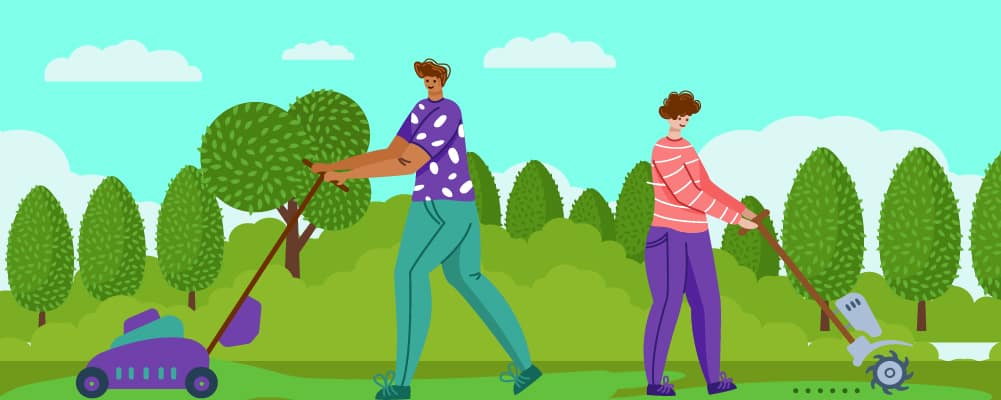
There are a huge variety of lawn mowers to choose from and, while you may be drawn to the look of a certain one, there are some things that you need to consider to ensure it performs for you as efficiently as possible.
You also need to consider the size of your lawn when you’re choosing the best mower for your grass. Mowing the lawn can be a fairly laborious task and, as with all household chores, finding the right tool for the job will help make it much more manageable.
Below, we’ll take an in-depth look at the different types of lawnmowers available. We’ll also explain what sort of space each of them would be most suitable for, as well as some other things to keep in mind when you’re making your decision.
Manual Reel Lawn Mowers
If you’ve got a very small amount of grass to mow, then a manual reel lawn mower would be a fantastic choice. This type of lawnmower works by cutting the grass using a rotating set of blades that spin as you push the mower in the direction you’re walking in.
As they don’t require any electricity or gas to power them, they are an eco-friendly choice too, and they are typically the cheapest type of lawnmower available.
However, there are a couple of things you need to consider before choosing a manual reel lawn mower. The first of these is that, since they require physical power to work, they are better suited for smaller areas. Try mowing a large expanse of grass with one of these and you’ll soon feel exhausted!
Secondly, they aren’t the best choice if your lawn has undulations. The force needed to push them and make the blades spin is likely to dip as you head up a steep slope, and this will result in an uneven cut.
They are also quite noisy when they’re in use. So, if you’re concerned about annoying your neighbors or you’d simply prefer something a little quieter, we’d recommend steering clear of a manual reel lawn mower.
Electric Push Mowers
An electric push mower would be a good choice for a small to medium-sized space. They are easy to use and, thanks to their electric-powered assistance, require much less physical input than a manual reel lawn mower.
Electric lawn mowers are fairly inexpensive too, so they’re a good choice for anybody looking for a good lawnmower on a tight budget.
One thing you will need to consider when looking at electric push mowers is the length of the cord, making sure that you can cover the entire expanse of your lawn without creating any tension.
It’s not a good idea to lay an extension cable across your grass while you’re mowing as you may accidentally run over it, which can cause a potentially fatal accident.
Gas Mowers
Gas mowers are cordless by design, so they are a good choice for larger areas and will allow you to mow without being restricted by cables or electrical supplies. They feature a tank that you fill with gas (just like you would with a vehicle) and are started by pulling on an ignition cord.
As with a manual reel lawn mower, you need to push them in the direction you want them to mow in. However, they require less physical effort since they are gas-powered. There are also self-propelled gas mowers available which only need to be gently guided while they mow the grass.
These aren’t the most environmentally-friendly mowers available, but they are a good choice for large lawns or for areas of grass that an electric lawn mower wouldn’t be able to stretch to.
Ride-On Mowers
If you’ve got acres of grass to mow, then a ride-on mower would be the best choice. They are certainly the most expensive option, but they are also the most effective way of covering bigger areas with ease.
As their name suggests, you sit on top of a ride-on mower and steer it around the lawn, much like riding a quad bike. Ride-on mowers are also a great choice for maintaining golf courses, football fields, and any other large expanse of grass.
One thing to keep in mind with a ride-on mower, however, is that they are not safe to use on a steep hillside.
Getting Your Grass Ready to Mow
Before you head outdoors with your chosen lawnmower, you need to spend a little bit of time getting your grass ready to mow. This doesn’t only apply to its first cut of the year but needs to be done each time you want to mow your lawn.
The first thing you need to do is make sure that your grass is actually ready to mow. Weather patterns and temperatures aren’t as predictable as they used to be and, as such, the rate of growth may be staggered.
Go by your grass’ schedule, not your own. If you mowed it last week and it hasn’t grown very much since, leave it for a few days, then take another look. Remember that you don’t want to take more than the top-third off throughout the growing season.
As we’ve mentioned previously, you also need to make sure that your lawn is dry before you mow it. A lawnmower that’s being run over wet grass will tear at it rather than creating a clean cut, and this leaves your grass more susceptible to fungal infection or disease.
You also run the risk of clogging your lawnmower’s blades with wet grass. This is difficult to clean and can even cause damage to the mower itself.
These are really the only two immediate things you need to do when it comes to getting your grass ready to mow during the growing season. Simply make sure it’s long enough to mow and make sure that it’s dry. You’ll also need to make sure that it’s the correct time of day, as we’ve spoken about above.
There is a bigger picture when it comes to getting your grass ready for mowing though, and there are some jobs that need to be done at certain times of the year.
Towards the end of spring and during early autumn, give your lawn a good scratch with a wire rake before mowing. This is known as ‘scarifying’, and it will pull up any moss or thatch that has grown amongst the blades. It also creates a little damage to the roots of the grass.
Although this may seem counterintuitive, by doing this you’re allowing more nutrients to be absorbed by the grass instead of feeding other plant life. You’re also encouraging the roots to grow stronger which, in turn, leads to healthier grass.
Feeding your lawn with a good-quality fertilizer throughout spring and summer will encourage the grass to grow and the roots to strengthen as well. This helps in getting your grass ready for mowing as it will aid it in growing back healthily following each cut.
Our Top 5 Tips For Getting the Best Results
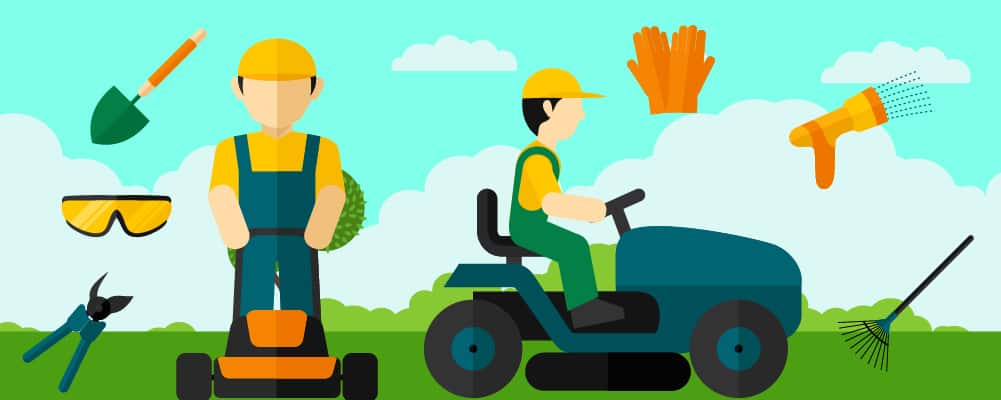
So, you know what time of day and what time of year you should be mowing your grass, and paying attention to these will make sure your grass is healthy and able to recover properly.
But how do you get those perfect, aesthetic results you’re looking for? And how can you help your grass recover after it’s been mowed?
Below, we’ve listed our top five tips for getting the best results every time you mow your grass. Following these won’t only keep your lawn in great shape, but will also leave it looking beautiful after each cut.
Keep Mower Blades Sharp and Free From Debris
The single most important tool in your grass mowing arsenal is your lawnmower.
And it’s the blades that do the lion’s share of the work, which is why they need to be properly cared for.
To keep your lawn looking good and to make sure your lawnmower is able to create a clean cut on each blade of grass, you need to keep your mower’s blade sharp.
Don’t worry, this isn’t a hard job and it’s fairly similar to sharpening a kitchen knife. Here’s what you need to do:
- Make sure there is no power being fed to the lawnmower.
- Turn the mower onto its back and locate the blade.
- Remove the blade using an appropriate tool (usually a screwdriver).
- Place the blade into a clamp and locate the sharpened edge.
- Begin sharpening the edge of the blade using either a sharpening file, a bench grinder, or a sharpening stone.
- Balance the blade to make sure that it’s evenly weighted.
- Reattach the blade to the lawnmower.
You also need to keep your mower’s blade free from debris. To do this, simply flip your mower onto its back once you’ve finished mowing. Then, take a small brush and clean off any clogged grass, leaves, or anything else that has gathered around the blade.
Mow Around The Perimeter and Obstacles First
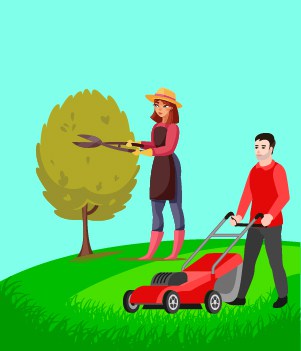
There’s nothing worse than noticing longer patches of grass on the perimeter of your lawn once you’ve packed your lawnmower away.
The easiest way to prevent this is to start by mowing around the perimeter.
This will also make mowing the main expanse of grass easier too, as you’ll have marked out beginning and endpoints.
The same principle applies to any obstacles on your lawn. Whether it’s raised beds or garden ornaments, mowing around these first will make it easier to blend them in with larger areas of grass.
If you’re struggling to get your lawnmower right up to the edge of the perimeter or around the curves of an obstacle, it’s a good idea to switch to a strimmer. This will give you more flexibility to move around shapes and get right into corners. You can then run your lawnmower up to the strimmed edges for a seamless blend.
Mow Side to Side on Sloped Ground

Lawns are rarely entirely flat, and you may find yourself facing some sloping ground while you’re mowing your grass. These can be difficult areas to try and mow for two reasons.
The first of these is that gravity is working against your mower, so as you push it uphill the blade will find it harder to cut. And, as you head downhill, you’ll feel yourself being quickly pulled downwards.
The second reason sloped ground is difficult to mow is that it takes more physical effort to get a heavy mower up a slope, and to prevent it from running away from you on the descent.
To make things easier and to ensure you get an even-cut, mow from side to side on sloped ground. This stops gravity from taking such an immediate effect on the mower and takes much less exertion as you’ll slowly work your way up the incline.
You also won’t have to worry about holding the mower back so much as you come back down the slope.
Throw Clippings Into Previously Cut Row
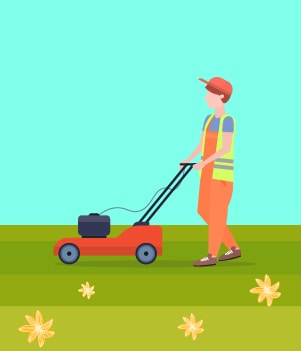
For many years, people have believed that leaving grass clippings on your lawn after mowing leads to a build-up of thatch.
However, this is completely untrue. In fact, throwing your grass clippings into a previously cut row returns moisture and nutrients to the earth.
This feeds the roots and allows the cut grass to grow back healthily.
There is an additional benefit to leaving your grass clippings in previously cut rows as well; it reduces the amount of time you have to spend raking them up and composting them.
You also won’t have to worry about bagging them up and disposing of them, so you’ll be reducing your carbon footprint and encouraging your grass to grow strong. It’s a win-win situation!
Nourish Grass
Keeping your grass nourished all year round is a guaranteed way of making sure it grows healthily and can handle being mowed regularly.
Feeding with a high-quality grass fertilizer and keeping your lawn well-watered throughout the growing season are a great way to keep it healthy. But there are also a few other things you can do.
As we’ve mentioned above, leaving your grass clippings on your lawn after mowing will feed your freshly-cut grass with moisture and nutrients.
Outside of the growing season, aerating and scarifying your grass will allow air, moisture, and light to get to the roots. This will allow the elements to nourish it during a time when using fertilizer isn’t recommended.
Change Direction of Mowing Regularly

Walking back and forth in the same direction while you’re mowing will feel natural, and you’ll probably not even realize that you’re doing it.
However, you should try and change direction while you’re mowing as often as you can.
By doing this, you prevent the grass from being pushed in just one direction, with one side getting damaged by the sun and the other side having no sunlight at all.
You’ll also stop the grass from growing in just one direction, so you’ll be able to achieve a more even-look across the lawn as the grass grows back.
How to Create Grass Stripes

A beautifully manicured, striped lawn is something that every gardener strives for. There is a misconception that creating grass stripes is time-consuming and difficult, but this really isn’t the case.
All you need to do is make sure that your chosen lawnmower has a rear-roller. These are typically found on rotary lawnmowers, and they work by bending and flattening the grass while you mow.
This changes the angle that the light reflects from each row, making it seem as though the grass is a different color to the neighboring row, and creating the illusion of stripes.
Of course, you’ll need to make sure that you’re walking in straight lines in order for the light-illusion to appear correctly. But that’s all there is to it! You can also create different types of stripes on your lawn depending on the direction you push your rollered-lawnmower in:
- For vertical stripes, walk up and down your lawn in straight lines.
- For horizontal, simply walk across the width of your grass in straight lines.
- To create amazing checkerboard stripes, push your mower in opposing diagonal lines.
It’s worth noting that the first step in achieving a striped lawn is to make sure you have strong, healthy grass. Keep it well fed and watered throughout the growing season, aerate and scarify it during spring and fall, and you’ll have strong grass that can withstand being cut and rolled into beautiful stripes.
Using a String Trimmer After Mowing

If your chosen mower doesn’t quite reach the edges of your lawn, or you have ornaments and obstacles dotted across your grass, you can cut these parts using a string trimmer after mowing.
A string trimmer will allow you to work around curves and angles, and will get right up to the edges of the perimeter and into corners. This is also a good way of going over any small patches that you’ve accidentally missed while mowing, without having to get the mower out again.
Since it uses a piece of thin, plastic-string to cut through the grass, you won’t have to worry about breaking any expensive blades while you strim the hard-to-reach parts of your garden. However, this string cannot be height-adjusted as a mower blade can, so you do need to take a little caution to not strim too low to the ground.
Grass Aftercare
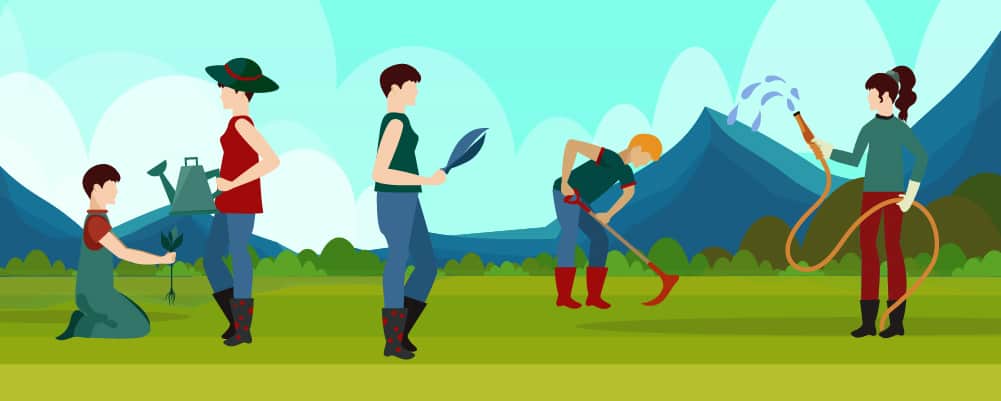
It’s easy to forget that grass is a living plant and that it needs as much care and attention as the rest of the plants in your garden. This is especially true when you keep cutting it back to a certain height, and not providing it with enough aftercare can stress your grass out to a point where it may die.
So, to prevent this from happening and to keep your grass looking healthy and growing strong, here are some grass aftercare tips:
- Leave some grass clippings on your lawn after you’ve mowed. This will feed the freshly-cut grass with moisture and nutrients, which the roots will use to produce healthy grass.
- If you’d prefer not to leave grass clippings on your lawn, feed your grass with a liquid fertilizer that’s high in Nitrogen, Phosphorus, and Potassium. This will be presented as N-P-K on the bottle. By doing this, you’ll be giving your grass an extra boost of nutrients that it can use to recover and grow back strong.
- Remove any weeds you come across while mowing by grabbing a small hand trowel and digging it out from the root. Certain weeds, such as dandelions, take away the nutrients that your grass needs to grow and survive over the winter months. If possible, try not to use a weed killer, as this can work its way into the soil and may end up killing the grass!
Conclusion – To Mow or Not To Mow?
Whether you’re going for showy-stripes or you simply need a well-maintained patch of grass for your pets and children to play on, everything you need to know about mowing your lawn and keeping it looking fantastic all year round can be found above.
The advice we’ve provided above is also great for ensuring your grass is able to recover from a mowing session. However, the best way to keep your lawn healthy is to make sure you’re cutting it at the correct time of day and in the correct season.
Don’t let the weather fully dictate when this time is, though. Your grass will tell you when it’s time to mow or not to mow!
Look at your lawn and take its current height and condition into consideration before you start mowing. Following this simple rule will ensure that your grass is ready for mowing and that it can grow back with vigor. It will also help to make sure your lawn stays looking perfectly manicured even when the winter months take hold.
The best time to start lawn mowing is in the mid-morning, or between the hours of 8 a.m. and 10 a.m. The sun is higher in the sky and at this time grass has dried out a bit from the early morning dew and any irrigation.
Thanks for reading. This is a great time of day to get out and cut the grass.