
Purchasing a car is a great achievement but maintaining it is equally important. And as with any vehicle, your Honda needs a quality transmission fluid.
For the last six decades, Honda has been the world’s greatest and largest vehicle manufacturer and is a trusted name amongst millions of customers. So, based on its reputation and the recommendations of many, my husband and I bought a Honda Civic last year and were delighted with the purchase.
With excellent fuel economy and glamorous looks, it’s one of the most popular compact cars around. And therefore, it needs the best transmission fluid to maintain its performance level.
Unfortunately, finding the best transmission fluid for Honda can be a daunting task, considering the plethora of options available.
Hi! I’m Stacy Smith, and I'm here to give you detailed reviews of the top five transmission fluids. Let’s dive in!
Top 5 Transmission Fluid For Honda
1. ATF-DW1 Automatic Transmission Fluid
No products found.
One of the top products on my list is the Honda automatic transmission fluid. After all, what's better and more dependable than getting the oil from the same company that makes these vehicles? So, let's take a look at what this oil offers.
Product Highlights
This Honda transmission fluid is one of the most commonly used products for Honda vehicles equipped with automatic transmissions. And it’s a recommended choice by the manufacturer itself. With an OEM (Original Equipment Manufacturer) certification, it’s designed to meet all required quality standards and allows smooth and superior shifting, irrespective of the temperature.
Apart from that, it protects the O-seals and rings from potential leakage and degradation. Essentially, engine oil lubricates the O-rings, preventing them from swelling and cracking and, as a result, leaking.
Moreover, this stuff has an extremely low oxidation rate, which has two benefits. One, you don’t need to change your engine oil very frequently, and secondly, it saves the engine from rusting. So, in terms of protecting the engine from damage, this is one of the best fluids you can get out there.
What’s There To Like About It?
You can always rely on an official OEM product that meets all quality standards. And with expert recommendations, I tried it in my Honda Civic car and wasn’t disappointed at all. Even at higher temperatures, I was able to make smooth shifting, which wasn’t the experience with the previous oils I used.
Aside from that, the higher lubrication ability of this oil ensured that there was no corrosion and, as a result, no wear and tear in the engine.
What's There Not To Like About It?
I am really impressed by its performance and the protection it offers to the engine. But as this engine oil is specially designed for Honda vehicles with automatic transmission, you can’t expect it to work well with manual transmission.
Pros and Cons of ATF-DW1 Automatic Transmission Fluid
Pros
Cons
No products found.
2. Castrol 03518 Transmax

I will now move on to my next product from the world's most well-known company, Castrol. Its 03518 Transmax transmission fluid is among the best for providing smoother engine protection and greater engine performance.
Product Highlights
Since 1899, Castrol has offered a wide range of premium quality products to keep vehicles in top shape, and this automatic transmission oil is yet another excellent offering. It is engineered to tackle the problems such as shifting and leaking, which are generally experienced by ATVs (Automatic Transmission Vehicles) that have run over 75,000 miles.
Thanks to its greater frictional durability, it delivers an excellent transmission performance for high-mileage vehicles. And its additional seal conditioners help stop or prevent leaks, thereby keeping the engine in top condition for long.
Furthermore, the fluid keeps the engine lubricated and minimizes wear and tear of critical parts. And lastly, this transmission fluid flows easily in temperatures ranging from minus 40 degrees Fahrenheit and 400 degrees Fahrenheit. This means that you can shift your car very smoothly, irrespective of the outside temperature.
What’s There To Like About It?
Sludge formation drastically affects the performance of an engine and can be a recurring problem if the engine oil you’re using is of poor quality.
One of the primary reasons I liked this product is that it contains extra cleaning agents to reduce sludge formation and varnish. As a result, my car is running smoothly and hasn’t had to go through any costly repairs over the years.
Besides, its affordable pricing makes it one of the most preferred engine oils on the market.
What's There Not To Like About It?
The engine oil didn’t disappoint in terms of performance and affordability. However, over time the oil starts turning milky. Now, this doesn’t affect the performance of the car per se, but it can become difficult to figure out if the oil needs changing, which was not the case with the Honda transmission fluid.
Pros and Cons of Castrol 03518 Transmax
Pros
Cons
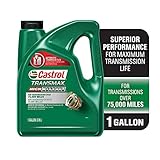
- Engineered to help alleviate typical problems experienced by transmissions with over 75,000 miles such as leaks and rough shifts
- Additional seal conditioners to prevent or help stop leaks
- Extra cleaning agents to reduce varnish and sludge formulation
3. Red Line Manual Transmission and Transaxle Lubricant
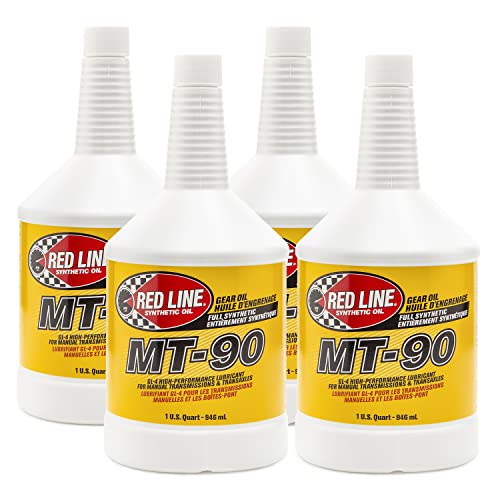
If you’re looking for a versatile and comprehensive fluid, the Red Line engine oil is an option worth going for. Apart from Honda, it’s compatible with seven other car brands, making it a versatile product. And it offers quicker shifts, perfect transmission, and less friction.
Product Highlights
Manual transmissions work differently than automatic ones, and therefore the transmission fluids also should be different.
That said, the Red Line manual transmission fluid is one of my preferred choices for manual transmission vehicles. It has low sulfur concentration and a less slippery formulation, which makes it compatible with brass synchronizers and fulfills the requirements of various motor oils. And you can use it in other vehicles like Nissan, Toyota, Mazda, etc.
This fluid delivers optimal performance stability at low temperatures and performs really well in older muscle cars and sporty Hondas, Acuras, and Dodges. And it’s known to improve the overall transmission glide for smooth shifting and solving third gear issues in certain vehicles.
What’s more, its viscosity rating is high, which means it doesn’t harden at lower temperatures.
What’s There To Like About It?
To deliver excellent performance in a manual transmission engine, the fluid needs to keep the gear protected from the constant shifting a driver makes while driving. And this oil excelled in this respect by eliminating notchy shifting, even when in the cold. So, brownie points awarded!
I had gifted this transmission fluid to my neighbor, who owns a Honda Amaze E, a manual transmission car. Even after using it for more than three years, he reported no noticeable performance fluctuations in his vehicle.
What's There Not To Like About It?
The only thing I didn’t like about this transmission fluid is the performance fluctuations that appear to act when the mercury rises higher. At higher temperatures, the oil dries up to make gear shifting difficult. This is the reason I have ranked it below the Castrol 03518 Transmax, which performs well in almost any temperature.
Pros and Cons of Red Line Manual Transmission and Transaxle Lubricant
Pros
Cons

- HIGH PERFORMANCE - gear protection and longer synchro life. Recommended for GL-1, GL-3, and GL-4 applications.
- QUICKER SHIFTS - perfect synchronizer coefficient of friction and eliminates notchy shifting, even when cold
- REQUIREMENTS - gear oil viscosity of 75W; 80W; SAE 40 10W40 and 15W40 motor oil
4. ACDelco DEXRON-VI Automatic Transmission Fluid
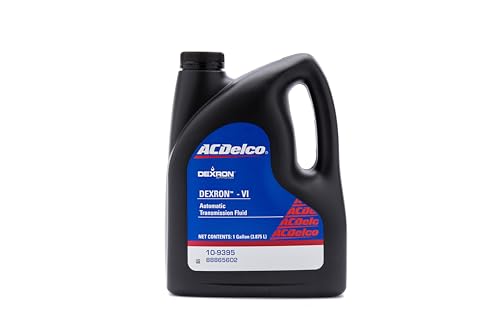
Before wrapping up the list, here’s another high-quality transmission fluid from a well-recognized and distinguished manufacturer, ACDelco. The company has been a known manufacturer of quality automotive parts, and its transmission fluid delivers top-notch performance and withstands the test of time.
Product Highlights
Companies like ACDelco are constantly tweaking and re-releasing their formulas for ATFs (Automatic Transmission Fluids). This transmission fluid, in particular, is integrated with DEXRON-VI, the sixth edition or implementation of the Dexron formula. Interestingly, it’s backward compatible with their previous formulas, going back to Dexron III. In other words, if you’ve used Dexron III, IV, and V till now, using the VI formula wouldn’t have any detrimental Impact.
Moreover, it’s a popular choice among users due to its affordability. But irrespective of the price, it doesn’t compromise on the performance. An increased viscosity and friction tolerance in Dexron VI makes for a smoother driving performance. Greater viscosity means it resists higher temperatures with ease.
All that and it doesn’t allow the formation of rust, thereby keeping the engine in good condition for long. So overall, it is a great budget choice to extend the life of the transmission.
What’s There To Like About It?
With time, you’ll find that this transmission fluid performs well due to its slower degradation. On average, you can expect this oil to last nearly 10-12 years, which is higher than the average lifetime of traditional transmission fluids.
Plus, its anti-oxidation property doesn’t allow rust to form in any parts of the engine. So, I can rest assured that my engine stays in top condition for a long time. Apart from that, it substantially boosted the overall fuel economy of my Honda civic.
What's There Not To Like About It?
The ACDelco DEXRON-VI Automatic Transmission Fluid is specially designed to perform well in automatic transmission engines and won’t work in manual ones. This makes the oil less versatile, unlike the Red Line GL-4 manual transmission, which is compatible with several car engines.
Pros and Cons of ACDelco DEXRON-VI Automatic Transmission Fluid
Pros
Cons

- Backward compatible with previous Dexron automatic transmission fluids and can be used as a much-improved replacement for older vehicles/transmissions originally using previous Dexron fluids
- Improved performance over previous Dexron fluids in: friction durability, viscosity stability, aeration and foam control, and oxidation resistance
- Potential to enable improved fuel economy and longer transmission life
5. Valvoline MaxLife Multi-Vehicle ATF

You may have heard about the Valvoline brand, which has been manufacturing and innovating engine oils for the last 150 years. With their vast experience, they’ve developed a full-synthetic transmission fluid that comes with anti-wear additives to deliver superior engine protection.
Product Highlights
Formulated with advanced additive technology and full-synthetic base stocks, this transmission fluid improves the gearbox life by preventing any major transmission breakdown issues. At the same time, it enhances the transmission life of the vehicle. Thanks to its high-performance seal conditioners, it prevents any potential leaks so that riders can enjoy the automatic transmission for a long time.
Additionally, it efficiently minimizes wear and maintains smooth gear shifting to deliver optimum engine performance. Being a versatile fluid, it’s a suitable option for Ford, GM, Honda, Toyota, and other models.
On the other hand, this multi-functional ATF eliminates slippage and shuddering as well as protects the clutch from any wear to improve durability. It also prevents friction between the critical engine parts, increasing their overall lifespan.
What’s There To Like About It?
Among many noteworthy features of the Valvoline automatic transmission fluid, I liked how well it delivered an optimal performance even at higher temperatures. Being a proprietary blend of base oil, it offers a better oil flow and higher film protection at higher temperatures.
Apart from that, its ability to keep the engine parts lubricated and prevent wear and tear of its parts meant that I didn't have to go through any costly repairs.
What's There Not To Like About It?
Like any other option on the market, this ATF has some notable drawbacks. Although it comes from a world-class brand, it doesn’t get the OEM license and is not a suitable option for DEXRON VI vehicles. Its compatibility issues have pushed the product to the bottom of my list, even below the ACDelco DEXRON-VI Automatic Transmission Fluid.
Pros and Cons of Valvoline MaxLife Multi-Vehicle ATF
Pros
Cons

- For use in 95% of vehicles including most CVTs in operation with US registered light duty applications
- High performance conditioning agents prolong seal elasticity to prevent leaks
- Improved durability & transmission life with anti-wear technology to avoid costly repairs
Buyers Guide
When searching for the best transmission fluid for Honda, I had to understand a wide range of factors that affect transmission fluid quality and performance. In this guide, I will discuss these factors in detail to help you understand what to look into, which will make it easier to select an ideal product for your vehicle from the list.
1. Synthetic Vs. Natural
Most brands offer transmission fluids in both natural and synthetic forms, but synthetic oil has a slightly upper hand compared to the natural ones.
With extra benefits like increased resistance to cold, heat, and oxidation in synthetic oils, many manufacturers have discontinued the manufacture of organic fluids. Apart from that, synthetic variants last longer and are the most preferred choice among the two.
2. Type Of Fluid
In order to determine which type of fuel you would need in your vehicle, check the instruction manual that comes along. It will clearly mention the type of transmission fluid that’s suitable for your vehicle so that you don’t end up buying the wrong one.
It’s worth noting that there are fundamentally three types of transmission fluids: mercon or dexron, multi-vehicle synthetic transmission fluid, and continuously variable transmission fluid.
Dexron or mercon ATF fluids are designed for modern cars integrated with new and advanced technologies. Plus, these fluids are used in many imported vehicles, so checking the owner’s manual is always essential.
The second type of transmission fluids, i.e., multi-vehicle synthetic transmission fluids have been on the rise in terms of usage in recent years. Oil brands manufacture these fuels for several automatic transmission categories. So, they can be deemed versatile. Also, the oil is formulated with the latest additive technology, whose efficiency is backed by extensive field testing.
Thanks to their unique formulation, CVT fluids are viable to use in both manual and automatic transmissions. These are mostly synthetic base oils and are known to deliver quality performance.
It is worth considering that most modern vehicles use either Mercon or Dexron, but some imported cars require brand-specific transmission fluid. And in the case of Honda cars, fundamentally H or H-plus type transmission fluids will be the best fit.
3. Transmission Type
As you may know, there are two kinds of transmission: automatic and manual transmission. And the transmission fluid for an automatic vehicle will be different from that used in manual transmission.
ATFs of Automatic Transmission Fluids are much more common on the market as most modern cars, including my Honda Civic, are automatic. That said, fluids for manual transmission cars are a bit tricky to find as their composition is very similar to motor oil.
So, here again, I’d suggest going through the owner’s manual to select the right fluid type for your Honda, as some of its models do come with a manual transmission.
4. Additives
Some naturally extracted and synthetic oil-based transmission fluids contain specific amounts of additives. While many of these help enhance the overall life and performance of both the fluid and the transmission, others can be harmful, in some ways or others. Monolec is one such beneficial additive that you should definitely look for in a fluid.
5. Age Of The Car
Most old cars run better on natural-based transmission fluids, and it may not be the best idea to introduce synthetic fluids in cars that have run more than 40,000 or 50,000 miles. This is because there’s a high possibility of rust formation in the engine and its potential breakdown.
If you own an old car, check which type of fluid it is running on and stick with it to ensure the best performance.
6. Quality
If you’re still confused about which oil to choose, make sure to go for big brands like Castrol, Valvoline, and other similar brands to ensure a high-quality product. Cheaper imports and knock-off products can be tempting, but they might cost you in the longer run, especially for transmission repair.
7. Bottle Size
On average, a vehicle needs nearly 6 or more quarts of transmission fluid for a complete replacement and change, but it varies from one vehicle to another. So, make sure to check the owner’s manual. You can also opt for combo packs to get a cost-effective deal.
Frequently Asked Questions (FAQs)
Like other fluids, the quality of transmission fluid deteriorates over time. The more miles your car runs, the faster the fluids will deteriorate. So, to keep the car running smoothly and avoid costly repairs, it's important to change the transmission oil.
Yes! And the process is pretty straightforward. Start your Honda and keep it running for at least 5 minutes and then pull out the transmission fluid dipstick. Clean the first sample using a cloth or a rag, then reinsert the dipstick and pull it out. This time inspect the color of the transmission fluid- if it’s black, it needs to be changed immediately.
The frequency of transmission fluid replacement is a bit of debate, as there are no clear guidelines as to what’s the best time to do it. Your car manual should make a recommendation, so make sure to follow that.
But the engine oil should be changed between 30,000 and 60,000 miles, on average. The more you drive a car, the more often you need to change the oil.
My Final Recommendation
Hopefully, you found the guide insightful and knowledgeable. And selecting the one among my recommended options shouldn’t be much of a task now. The only thing left is for me to share my personal favorites from the list.
Based on expert opinions and my experience, the No products found. automatic transmission fluid is my best pick. Being an OEM fluid, you can rest assured that it’s formulated to deliver excellent performance. Plus, it delivers similar performance levels at extremely hot or cold temperatures.
My next favorite would be the synthetic fluid Castrol. It keeps the engine lubricated and prevents buildup.
On that note, it’s time to wrap up. Until next time!