
Isn't it delightful to find blue flowers blossoming in the spring among other vegetation?
Well, it's a welcome surprise that can indeed make your mornings more colorful. For the longest time, my garden had a hue range of yellow to red, with roses and daffodils dominating the scene.
But this year, I found little blue spring flowers growing naturally in my plant bed. I was not sure about the plant variety, so I decided to do some digging online. And voila! I found a name. It's called Chionodoxa, commonly known as the Glory of the Snow, and they usually have upward-facing blooms.
Once I started looking up these flowers, I came across multiple other plants with blue blossoms. That's when I thought of creating an elaborate guide to help you identify and know more about them.
Hi! I'm Stacy Smith, your friendly garden care advisor. And today, I'll be sharing information on different blue flowers that sprout in spring.
Little Blue Flowers That Bloom In Spring
Scilla Vs. Chionodoxa
At first, I could not tell the difference between the two, but upon close inspection, I realized that the two plant varieties differ in the direction of the flower blooms. Scilla Siberica has eye-catching electric-blue flowers that are shaped like bells, with drooping downward faces. Meanwhile, Chionodoxa has soft blue petals with upright blooms that appear early in the spring.
Another difference between the two is that tepals of Chionodoxa are attached at the base, whereas Scilla's are separated. The latter features six petals that are not clustered, with filaments protruding from the buds.
These plants usually grow 4-6 inches high and have strap-like leaves that can sustain harsh winters. That said, Scilla can thrive in cold climate areas and repeats its growth cycle through self-seeding.
On the other hand, Chionodoxa, too, has six petals, but narrow leaves surround the individual buds at the base. These flowers are known for their winter-hardy characteristics and early-spring appearance, spreading a ripple of color with beautiful, full blooms.

Blue Flower Garden Ideas
Scilla or Chionodoxa are not the only flowers you can naturally find or plant in your garden. In fact, if you're fixated on blue blooms like I am, consider browsing through a host of options before choosing your favorite(s).
To make things easier on your part, I have created a list of brilliant, little blue flowers that you can expect to blossom in spring.
1. Morning Glory
Morning glories look nothing short of ethereal when they grow in clusters over trellis or lattices. These annual vines are easy to start from seeds, adding an attractive touch to your green space.
Once the flowers start fading, the dried seed heads self-sow and grow in the same location next year. So, if you're looking for low-maintenance flowers that imbibe a country-side charm, this works perfectly.
2. Amsonia
The next variety that comes to my mind is Amsonia, which looks like tiny clouds popping out from the ground. This perennial plant with dark green foliage and wispy, light blue flowers blossoms between late spring and mid-summer.
If you want dense vegetation with a hint of blue, this is the ideal option. That said, its bushy profile makes it suitable for filling empty spaces and borders.
3. Love In A Mist
This is one of my favorite blue flowers that just brightens up my garden with tufts of star-shaped blooms. It looks quite dainty and has a rustic vibe that transports you to seaside cottages. As spring advances, the floret hues deepen and look all the more charming. But the best part is you can dry and preserve the blue beauties for arrangements and framing.
4. False Indigo
This is an unconventional choice for home gardens, but not necessarily an unattractive one. Also called Baptista, False Indigo is purplish-blue with a unique shape that can indeed liven up your green zone.
These plants are sturdy perennials, and hence, relatively low-maintenance. Also, they attract different pollinators throughout the spring. So, if you want to turn your garden into a haven for butterflies and bees, I recommend this one.
5. Pincushion Flowers
This is another great idea for making your garden or lawn area more colorful and vibrant. The pretty, dome-shaped blooms of pincushion flowers look at home no matter where you plant them. You could arrange them in neat clusters among other vegetation or put them in a dedicated spot. Either way, the flowers look quite elegant, maturing from late spring to fall.
6. Fan Flowers
When it comes to flowering plants, I always look for ones that demand very little care and nurturing. As a busy homeowner, my gardening schedule can sometimes be all over the place, and hence, I prefer Fan flowers as my go-to blue variety.
These flowers are known for their elegant fan shape, and I won't be exaggerating when I say they're pretty as a picture. They bloom during spring and throughout summer until the first frost. If you want some arrangement inspiration, I'd suggest putting them on the edges of walkways or planters.
7. Torenia
If you're looking for little blue spring flowers that will attract different pollinators to your garden area, Torenia is one of the best options. Also known as wishbone flowers, these spritely annuals proliferate from early spring to fall.
These flowers' petals are darker towards the opening with white bases that further add to the charm. I would suggest letting them spill from hanging baskets or window boxes. However, they are suitable as ground cover as well.
8. Clematis
If you're a dedicated gardener with the patience of a saint, Clematis is the perfect blue flower plant. It takes several years to establish and reach maturity, but once the blooms appear, they look nothing short of regal.
It is a perennial with profuse blooms that grow in well-drained soils, so you must make sure that your garden area fulfills that requirement. Also, the flowers need full sun exposure while the roots demand partial shade. Therefore, I'd suggest opting for this only if you have enough experience with similar plants.
9. Petunia
Petunia is one of the most obvious choices, mainly for its long flowering cycle and minimal care needs. These showy, trumpet-shaped blooms will grace your garden throughout spring till late summer, making your green space more inviting and cheerful.
You can use these ornamental plants to rejuvenate your landscape or put them in planters or hanging baskets to enhance the exterior décor. Either way, these plants require little to no maintenance other than timely watering. Besides, you don't need to remove wilted blooms or dead heads to resume flowering. However, for the best results, I suggest putting them under direct sun.
10. Bachelor's Button
Also known as Cornflower, Bachelor's Button is indigenous to Europe but has naturalized in different parts of the United States over time. These small, periwinkle blue flowers look absolutely gorgeous when they grow in dense clusters, creating a sea of round blooms.
These flowers are bright, decorative, and fun. In short, everything you're looking for in blue flower plants. Like Love In A Mist, you can also use these beauties in dried arrangements.
11. Chaste Tree
If you live in a cold climate area, Chaste Tree is one of the most viable options. You may not have heard about this plant, but trust me, this ornamental shrub will not disappoint.
These plants sprout lavender-blue flowers in late spring and continue blooming till mid-summer. In the fall, the blooms die and scatter on the ground, which looks all the more lovely.
12. Salvia
I won't lie, but I do have a soft corner for Salvia, as they appear unique and easily stand out among other vegetation. However, the other thing that attracts me to these gorgeous blue spiked flowers is the fragrant foliage. In fact, Salvia is preferred by butterflies, bees, and hummingbirds, which further piqued my interest.
The purple-blue florets dominate the scene through all seasons, adding a vibrant touch to your garden. While it's generally considered a perennial, some Salvias are annuals, so make sure to get the right variety.

13. Mayflower
Mayflower, known by a few other names like liverleaf and blue anemone, is native to the Southeastern region of the US. It's a charming and dainty wildflower that grows pretty close to the ground in partially shady areas. This is a herbaceous variety that prefers well-drained soils, and as such, the flowers, stems, and leaves die at the end of the growing season.
The roots lie dormant underneath the soil during winters and resume the growth cycle once it starts to get warmer. You can plant these in small pots near doorways or arrange them in a neat bed on a window box. Regardless, they will just brighten up your space with a dash of vivid blue.
14. Virginia Dayflower
Virginia Dayflower is an excellent option for areas close to wetlands and river banks, as this herbaceous perennial thrives in moist soil. Therefore, it's no surprise that it's naturally found in the Eastern parts of the US.
This is another wildflower variety that I adore for its beautiful three-petaled shape, which looks delicate yet so alluring. The flower clusters bloom in the morning and close around noon, thereby lasting for just one day. However, they have an extended growing season, starting from late spring to almost summer-end.
For the best results, I'd suggest lightly trimming the foliage, as it not only gives it shape but also boosts the blooming cycle. As such, you can use these pretty blue flowers to liven up your entryway, kitchen window, or any place that could use a pop of color.
15. Iris
Now, I wouldn't recommend this unless you can spare enough water to grow these blue beauties. Irises are water-hungry, and as such, I'd suggest planting them close to a water resource like a fountain or sprinkler.
They bloom early in spring and then appear again in late summer, adding a burst of bright blue in your garden space.
16. Oxford Blue
This is another unusual choice that can really demonstrate your enthusiasm for offbeat garden ideas. Oxford blue flowers are typically deep-hued, surrounded by spiny bracts that lend them an exotic look.
They are both heat and frost-resistant, and hence, ideal for dry garden set-ups. Furthermore, you can expect them to flower in spring through late autumn, which is quite an extended cycle, that too with minimum care.
17. Blue Delphiniums
This is another of my top choices, mainly because you can make lovely bouquets out of these. Blue Delphiniums may look dainty and delicate, but they can reach a substantial height if you provide them with a support to lean on. That said, these eye-catching flowers grow on well-drained soil, under full sun or partial shade.
18. Forget-me-nots
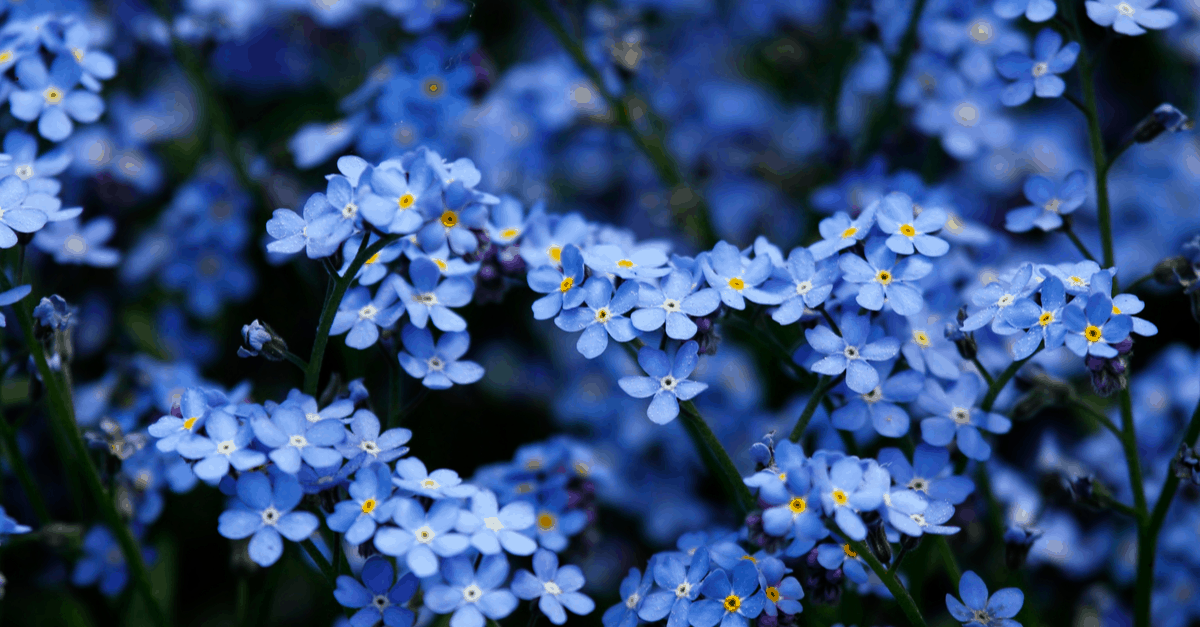
These might be too common, but Forget-me-nots have an appeal that's hard to resist. Besides, you hardly have to do a thing to get them started, as more often than not, they just grow and thrive in existing conditions. Besides, the flowers self-sow, meaning you can expect them to bloom throughout the year without putting in the least bit of effort.
Write in short paragraph about the high lights of the product.
Final Words
I hope this guide has provided enough information on little blue spring flowers for your garden. So, go ahead and pick what you like, but make sure that the flowers are suitable for the existing soil and climate conditions.
Also, make it a point to learn about necessary care and maintenance, so you can enjoy gorgeous blooms year after year. At the same time, it’s best to get plants that are easier to look after, especially if you’re new to the gardening scene.
As such, anything that requires a lot of effort and resources may seem a little too complicated for your skill level. On that note, I’d like to take your leave.
Till next time!