
Winters can get very cold, and you must always be searching for ways to stay warm and cozy, especially on days when it snows throughout.
I had the same issue, and that is when my friend told me about heated socks and insoles. These are the two different ways to keep the feet warm, and they will allow you to venture into the cold without freezing.
Moreover, when your foot is heated, you can sleep better even when keeping it out of the blanket (like my son). However, I was really confused about choosing between the said options, so I had her explain the differences to me.
Hi! I am Stacy Smith, and today I am here with my guide on heated insoles vs heated socks to help you make the right choice. I will also talk about their pros and cons so that you have a better understanding of both types.
Grab a cup of your favorite beverage and dive in!
Heated Insoles Vs. Heated Socks
It is best to be clear about what a heated sock and a heated insole look like and does before moving further.
Heated Insoles

- 【APP for Effortless Adjustments】Adjust your heated insoles effortlessly via phone app, switching between 4 temperature levels and knowing battery life in real-time. Scan the QR code and download the APP or Search for"DRCODC" to download without registration. Detailed user guide provided.
- 【Long-Lasting Battery with Quick Heat】these heated insoles for men and women provide up to 8 - 9 hours of warmth on low heat and 3–4 hours on high. Open the elastic battery strap, secure the battery against your calf, and fasten the Velcro. The 65cm charging cable allows easy movement. You can run, hike, or camp in winter with complete peace of mind.
- 【Full-Foot Bottom Heating for Warmth】Our heated insoles feature advanced heating elements that cover the entire sole of your foot. This strategic placement delivers targeted warmth to the areas that feel the cold first whether you’re skiing, hiking, hunting, fishing or working outdoors.
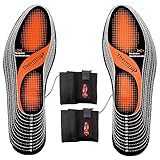
- Premium-quality heated insoles with rubber heating element, large heating area, deep and even heat distribution.The 18 cm long heating surface warms the foot from the heel to the toe.
- Designed and developed in Germany. Trusted by over 100,000 customers since 2015. Featuring durable rubber heating elements for long-lasting warmth and reliability. Unlike traditional insoles that use fragile heating wires, our design ensures consistent performance and comfort.
- Lithium-Ion Battery powered with 4-level heat regulator. Power: Li-Ion Battery 2500mAh, 7.4 V, 6W/DC.
If you are on the road hiking for long hours, then heated insoles may work out very well for you. These are inserts that can be put into any boot or shoe, and they will keep your feet warm while you indulge in outdoor activities.
In fact, one of my friends went trekking in the snowy mountains, and these inserts proved to be very helpful. Heated insoles are designed to be controlled by a remote, so users do not have to bend down every time to set the required temperature.
Pros
Cons
Heated Socks

- 【Soft & Moisture-Wicking Fabric】ZUOYI heated socks upgraded to use a breathable, elastic polyester mix fiber, this fabric dries faster than cotton and reducing the likelihood of moisture-related podiatric conditions like athlete’s foot . Perfect for men, women, and even as a thoughtful gift for mom and dad.
- 【Heating Elements Covers Whole Toes】These heated socks use advanced carbon fiber heating elements Which can be stimulate your blood circulation. In severe cold winter,select ZUOYI electric heated socks is very important for people to prevent frostbite. Especially these socks can protect your whole freezing toes to go outside in the winter snow and ski etc.
- 【Unisex Size & Machine Washable】The heated socks are designed for adult male or female, One Size Fits Most people in sizes 6-14.The heated socks can be hand-washed or machine washed in the provided laundry bag. Before washing the heated socks, remove the batteries and set them aside; the batteries should be kept dry at all times.

- Safe, Stable & Continuous Foot Warmth : 3D hidden loop heating wire warms in 60s and spreads across the toe/forefoot for consistent comfort during skiing, cycling, hunting, or hiking.Safe and stable heating technology ensures your feet won’t be burned by overheating
- 5000mAh Rechargeable Battery:Up to 4-5 hrs on High and 5–8 hrs on Normal (varies by temperature and use). Great for daily commutes, travel, and winter chores
- Easy Button Control:Heated socks for men and women with simple one-button operation on the battery compartment. Easily switch on/off and adjust temperature without any complicated setup. A clear user guide makes it beginner-friendly
My cousin has been using heated socks for some time now, especially while traveling to cold places. As the name already suggests, heated socks come with a foot-warming system and are designed to warm up your entire feet as well as to your ankles.
These are perfect for very cold winters, and they operate with the help of batteries. The batteries are attached to the socks, and you can easily change or optimize the temperature as and when needed.
Pros
Cons
Factors To Consider While Making A Decision
Let me now tell you about the differences between heated socks and insoles. I have divided them into separate points so that it is easier for you to understand.
1. Warmth
When it comes to warmth, both heated insoles and socks have adjustable temperature settings. However, the insoles will only be heating up the base of your feet, while the socks would provide warmth to the entire feet and the lower half of your leg.
This is a primary reason why, despite producing almost the same amount of heat, heated socks feel warmer than their insole counterparts.
2. Cleaning
All kinds of outdoor gears need to be cleaned more often than expected, and it can be a time-consuming process. However, in the case of insoles, you do not have to wash them after every use.
If your feet become sweaty, you can just take out the inserts to let them dry in natural air. I go a step ahead and spray a little perfume before putting them back in my shoes to prevent odors.
In the case of heated socks, the cleaning process is a little more difficult. You will have to take out the battery pack from inside the sock and then wash it. Heated socks cannot be washed in machines, so you will need to wash them by hand.
Once washed, set them out to dry like heated insoles, and the entire process can take upto a day.
3. Battery
Both the products operate with the help of batteries, and you can expect them to keep your feet warm for 5 to 10 hours at a stretch. Now the major difference here is that the weight of batteries in socks can often cause them to move down your legs and bunch up near your ankles.
I have not seen this happen when I am walking slowly, but it may well happen if you are running or walking uphill. On the other hand, soles have the batteries inside them, and they are unlikely to cause any major issues with the fit.
But as I have stated before, heated soles are more expensive than socks.
4. Fit
You will have to consider the amount of space offered by shoes while hiking, camping, or skiing. If the boots or shoes are tight fitted, then socks would work better as they take up less space. However, if there is some space to spare, then heated insoles will be a better choice. They will not move out of place and will warm your feet from the bottom up to the ankles.
Final Words
While both these products will make your feet warm, make sure to choose the one that best suits your needs. If you ask me, I’d recommend using insoles for strenuous activities like trekking or hiking, as they would provide better warmth throughout.
On the other hand, socks will work well if you need to keep your feet warm indoors or during a light stoll. They can also be used outdoors and you can use a hair tie on the cuff to keep them in place while brisk walking or jogging.
With that, I will now leave you to make the decision. And I hope my efforts have provided you with sufficient help in this regard.
See you again!