
Broadleaf Plantain (Plantago major)
Broadleaf plantain is placed in the family of Angiosperms “Plantaginaceae” and Genus “Plantago”. Broadleaf plantain is a perennial herbaceous plant which sometimes grows as an annual as well. Broadleaf Plantain extends leaves from the base of the plant and flowers heads are arranged in the cylinder like spikes on the stalk. Broadleaf Plantain successfully grows from the sea level to an altitude of 2200 meters.
Origin & Distribution
Originated from the Europe and Asia, Broadleaf Plantain has now become a pest of serious attention and included in the USDA invasive plants category. It’s now distributed throughout the US in tropical and humid subtropical climates other than deserts and snowcapped regions.
Identification of Broadleaf Plantain
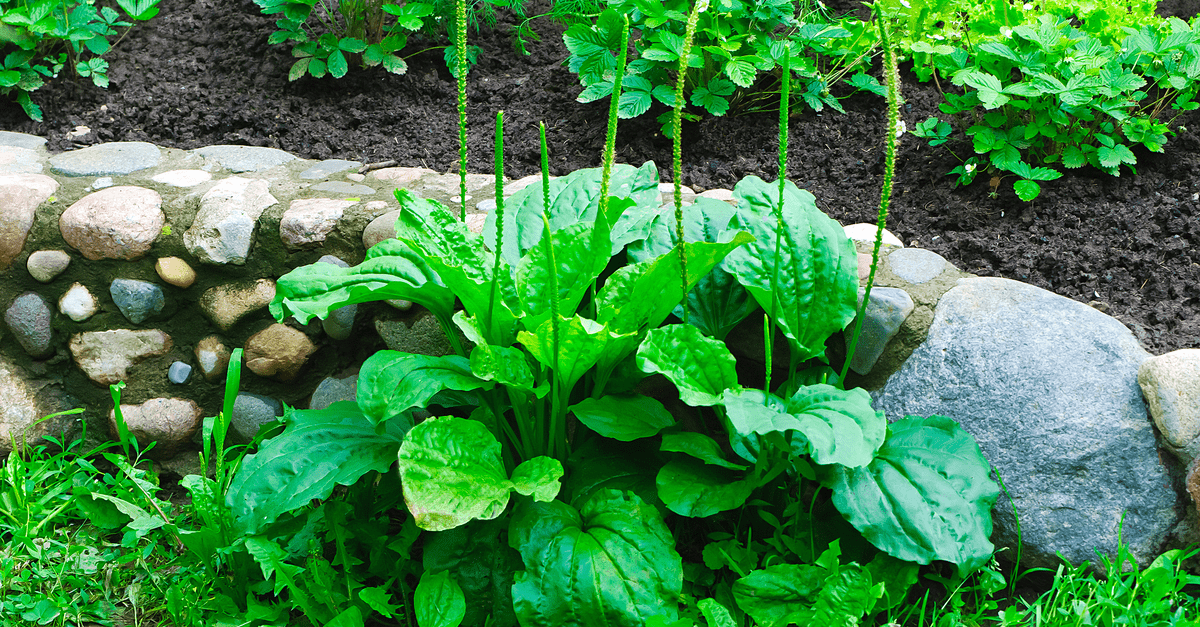
Broadleaf Plantain has no close resemblance with Plantain which is a type of Banana. Broadleaf Plantain is a perennial plant with ornamental leaves that measure up to 12 inches in diameter. Usually, the leaves are oval measuring up to 8 inches in length. The margins of the leaves are smooth with varying number of visible veins over the surface of the leaves. The flowers are arranged in dense spikes, showy in greenish-blue. The pollination takes place through wind and an individual plant produces nearly 20000 oval seeds. The seeds are bitter tasting which are utilized in herbal medicines.
Broadleaf Plantain Lifecycle
Broadleaf Plantain bears flowering in early spring that could continue till autumn. The reproduction takes place by the seeds which are ready to disburse in late summer. The seeds may be carried by the birds, rain, or wind to the remote areas where it could start establishing seedlings. Seedlings start sprouting in the middle of spring which continues till early fall. The seeds succeed germinating near the surfaces of the soil once they receive sufficient moisture and favorable temperature between 55-77°F. the seedling stages continue between 3 to 4 months until Broadleaf Plantain develops into a mature plant.
Reasons for Spread in the Turf grasses
Primary reason for its presence in turf grasses is seed size which mixes into the grasses seeds and tolerates moist soil conditions in shady and compact soils. A large number of seeds disperse through air or wind, and the rainwater while passing through turf grasses. Generally, the seeds dispersed through any means could survive up to five years and noted with the highest germination ratio from year 1 to 5. Any Broadleaf Plantain seed which contaminates your turf grasses seed, and is lying dormant, is a potential threat that it could germinate whenever conditions are favorable.
Fun Facts About Broadleaf Plantain
Broadleaf Plantain-Prevention & Control
Cultural Control
For established lawns, the health, vigor, and planting density could only deter it growth in turf grasses.
For orchards & Garden beds, the gardeners may spray hot water over the sprouted Broadleaf Plantain avoiding hot water exposure to the garden plants and beds. Selective hot water treatment could help controlling Broadleaf Plantain provided the water temperature remains 203°F or above, and 2-3 repeated applications are made.
Chemical Control
Control with Pre-Emergent Herbicides
Controlling Broadleaf Plantain using Pre-emergent herbicides is not as effective as controlling them while they’re vigorously growing during spring and summer. Plantains possess the maximum foliage during growth stage which enhanced their ability to absorb more herbicide over the surface of the leaves. A best pre-emergence herbicide must contain any of ingredients like mesotrione, atrazine, isoxaben, or indaziflam but, these are recommended for commercial farming.
Control with Post-Emergent Herbicides
The effective control of Broadleaf Plantain involves the combination of two or more active ingredients which possess different mode of action that checks weed growth at different stages. Let see what are the best combinations to use on turfgrasses to control Plantain;
Trimec Southern
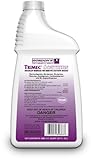
Trimec conbines Dimethylamine salt of Propionic Acid, Dimethylamine salt of Dicamba, and 2,4-D that actively control variety of weeds including Broadleaf Plantain and 50 other broad leaf weeds at even the higher temperatures. The only grass variety which can defoliate after its application is Floratan St. Augustinegrass. Kindly avoid that. Otherwise it can be applied on Bermuda, Zoysia, and Centipede turfgrasses. It gives brilliant knock down effect over Boradlead Plantain which is unmatchable. Mix 1-1.5 ounces of Trimec with ½ gallon of water to cover 25 square meters, approximately.
Weed Stop for Lawns Concentrate
Another excellent product chemistry that mixes Mecoprop-P instead of Propionic Acid that works great against more than 200 broad leaf weeds including Broadleaf Plantain. Ingredients contribution is 7.59%, 1.83%, and 0.84% for 2,4-D, Mecoprop, and Dicamba, respectively. It’s equally effective on hard to control weeds round the year. The majority of this product ingredients get absorbed by the Plantain roots and stop taking nutrients from the soil. A 1 ounce of product can treat between 40-45 square meters of lawn in 1 gallon of water. They also offer ready to use concentrate and the gardeners only need to attach a garden hose with the liquid dispenser to spray over the grasses.

WeedClear Lawn Weed Killer Ready to Use1 with Comfort Wand
Weedclear comes with an edge that it contains Carfentrazone other than the 3 ingredients listed in WeedStop above. Carfentrazone not only enhances the product efficacy while targeting majority of broad leaf weeds but, it also triggers the process of controlling them in the shortest possible time. It targets more than 200 weeds including a brilliant knock over Broadleaf Plantain. The only grass variety one can’t spray on is Floratan in St. Augustine. It also holds the features of spot targeting the weeds for which they provide a battery-powered Wand. Apply 2 ounces of concentrate in 1 gallon of water to target Braodleaf Plantain.

Learn How to control and get rid of other weeds in our complete Yard Weeding Guide.