
Scientific Name: (Crioceris asparagi & Crioceris duodecimpunctata)
Generally, the asparagus plants host two types of beetles. i.e., Common asparagus beetle (Crioceris asparagi) and Spotted asparagus beetle (Crioceris duodecimpunctata). Both species of beetles feed on asparagus foliage but, the common asparagus beetle is the most devastating asparagus pest in North America and Europe. Asparagus plants are the only host, and it rarely exists on other members of the family Asparagaceae. Both beetles belong to the family Chrysomelidae in the genus Crioceris. Adults and larvae of the Common Asparagus Beetle shred off the asparagus leaves. This challenges the plants' ability to photosynthesize, and they chew the lances and lay eggs on them. They turn asparagus bushels unmarketable and cause severe economic loss to the growers. The Common Asparagus beetles are found throughout North America wherever Asparagus grows as a garden or a commercial crop.
Origin and Distribution
Both asparagus beetles have been thought to be originated from the Mediterranean Sea region, the records also show their lineages from Russia, Rwanda, Argentina, and parts of the Burundi Republic. However, the asparagus beetle was accidentally in 1860 from Europe to New York in the US whereas, the spotted asparagus beetle arrived later in 1881 in Baltimore. Consequently, the beetles spread westward across the US and Canada, northward into Canada. Canada detected their first appearance in Queenston near Niagara Fall. Both beetles are now found wherever asparagus grows But, tend to be scarce in warmer climates like southern California. Both beetle species also share the same habitat and resources and coexist primarily on Asparagus plants wherever they're grown in North America.
Asparagus Beetles- Identification
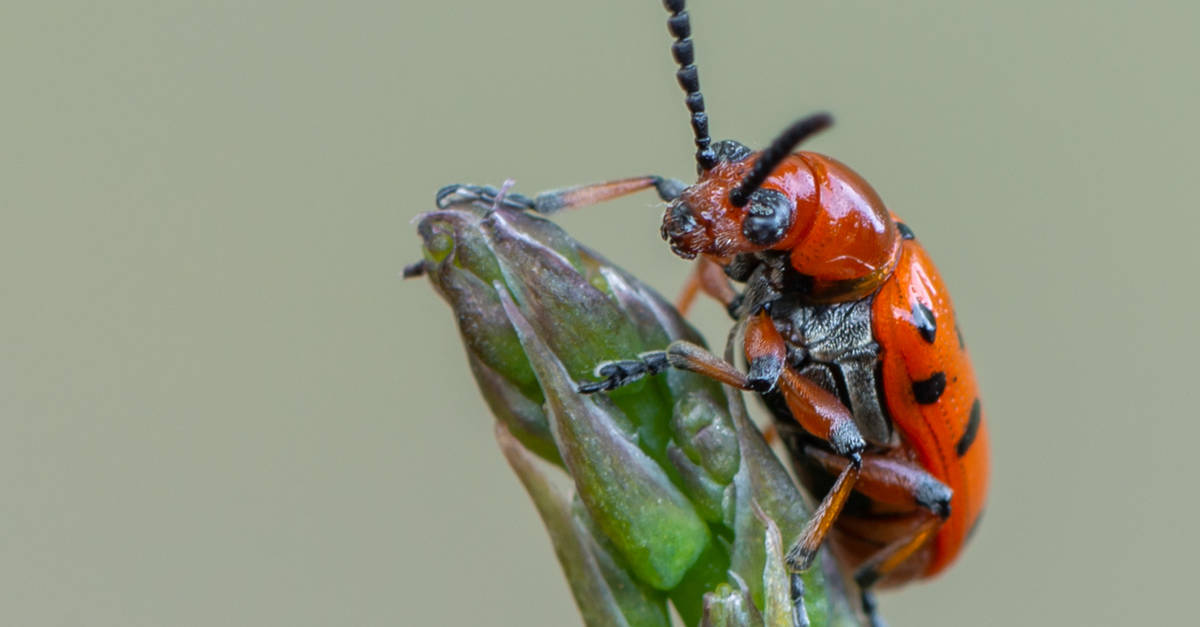
Both beetles lay eggs of similar sizes, and their color varies from brown in Asparagus beetle to olive green in spotted. The eggs remain attached to tender shoots with an adhesive secretion. Larvae of both beetle species have three pairs of legs, thorax, and muscular prolegs near the posterior end to grasp plant surfaces while feeding. Mature larvae can measure about 1/3rd of an inch. The pupae of the asparagus beetle resemble the adults but vary in color, and their wings remain flightless. The body is black, wings bluish-black having 3 white spots, and wing margins are orange. Adults seldom fly when disturbed. Whereas, the spotted beetle is orange with black spots on the body. Adults can fly when disturbed and whistle if caught.
Asparagus Beetles- Lifecycle
There may be 2 to 3 generations of asparagus beetle and only 2-generations of spotted beetle per year in the areas of their dominance. These beetle species overwinter in bark crevices, plant debris, hollow stems, and weed covers as adults. Asparagus beetles emerge earlier in spring than spotted beetles and damage plant surfaces in the top foliage. They feed, mate, and lay eggs on the asparagus ferns. Eggs hatch into larvae in about ten days in asparagus and spotted beetles. The larvae go through four instars in about 10-days in asparagus and 21 days in spotted beetles. The adults appear from the soil within the week in asparagus beetle whereas, spotted asparagus beetles' adults could emerge in two weeks from the berries to start next generation.
Symptoms and Types of Damages
The adults and larvae of both beetles can damage the leaf in the top foliage. Adults feed on leaves, weak lances, and stems together. Adults and the larvae of asparagus beetle damage the plants in early spring when the plants are weak and defenseless. The spotted beetle adults and larvae appear in the late spring or summer and feed on the berries only. Asparagus beetle is responsible for the severe damage that reduces the aesthetic value of asparagus bushels. Otherwise, the spotted asparagus beetle is not that damaging for the foliage as they feed on the berries and hardly reduce the yield. However, if the focus is an asparagus seed production, they can spoil their quality.
Where Do the Asparagus Beetles Come from?
The Common Asparagus beetle emerges after overwintering in the leaf litter and plant debris in spring. Whereas, the Spotted Asparagus beetles emerge from the berries somewhat later in late spring or early summer. The asparagus gardeners need to monitor their movement throughout the growing season. More attention may be required, while the asparagus plants are young in early spring as they're prone to Common Asparagus attack which, is highly devastating. The best time to locate beetles on the surfaces of the plants remains afternoon when the temperature is relatively higher.
How to Prevent Asparagus Beetles?
Besides following all preventions and cultural control practices if Asparagus Beetle damage remains prevalent on the garden asparagus, here are the most proven ways to suppress their population using the biological, organic, and chemical methodologies;
Asparagus Beetle- Control
Biological Control
Good Bugs - Ladybugs
Lady Bird Beetles offer essential biological control on mostly slow-moving insect pests whereas, only nymph gets targeted for flying insects like whiteflies. Ladybugs are fond of feeding on many species of beetles in the field, including both the larvae and adults of Asparagus beetles. Moreover, they are also good at controlling mites, thrips, aphids, and scale insects. Whenever eggs get disbursed in the garden, they hatch in 4 or 5 days and start feeding on asparagus beetles within the next 2 or 3 days. Adult ladybugs lay eggs on the surfaces of the leaves. The eggs hatch and, the beetle larva become ready to feed on beetles’ larvae within 7-days.
No products found.
About 1500 live bugs can effectively control pests of all categories in 1000 square feet area of both Common Asparagus Beetle and Spotted Asparagus beetle.
Combining Cry3Aa Toxin with Beauveria Bassiana
Monterey Bt contains 98.35% active strains of Kurstaki subspecies of Bacillus Thuringiensis, and Bt applications on Asparagus beetles produce a toxin called Cry3Aa within the bodies of infested beetles that provides a prolonged control over them. Cry3Aa protein from Bacillus Thuringiensis applied with Beauveria bassiana proves fatal for Asparagus beetles. This technique has already been tested in China that provides excellent control of garden asparagus beetles successfully. However, this combination is not available commercially, and the gardeners need to buy both products separately from the marketplace and apply them together. Here are links that could lead the growers to buy these products, conveniently.

- INSECT KILLER - Designed for use on caterpillars and worm type insects, such as cabbage looper, bagworm, gypsy moth, fall cankerworm, elm spanworm, and more. Has no effect on birds, earthworms, or beneficial insects such as honeybees or ladybugs.
- FOLIAGE PROTECTOR - Designed for use on a variety of plants, including broccoli, celery, cabbage, turnip greens, mustard greens, cauliflower, melons, lettuce, tomatoes, shade trees, ornamentals, and many more.
- FOR ORGANIC GARDENING - OMRI Listed for Organic Gardening. Organic Material Review Institute reviews products to ensure a product complies with all organic standards under the USDA’s National Organic Program (NOP).
Add 1 teaspoon of Monterey Bt per gallon of water and apply on Asparagus foliage in spring.
- BotaniGard 22WP Mycoinsecticide is an effective biological insecticide that is used to control whitefly, thrips, aphids, and many other insects. It is based on the highly successful fungus, Beauveria bassiana strain GHA, and controls the most troublesome crop pests – even resistant strains such as Q-biotype whitefly.
Add one tablespoon of BotaniGard per gallon of water and spray on asparagus plants.
Organic Control
Captain Jacks Dead Bug Brew Concentrate
Captain Jack's concentrate consists of 0.5% Spinosad which is adopted as a final resort when pest infestation goes out of control. It kills all stages of both the Common Asparagus beetle and Spotted Asparagus beetle. Spinosad causes restless muscle contraction by altering the functions of Gaba and nicotinic channels in beetles that initiate the tremors in the body, and beetles paralyze that leads to their death. Spinosad is excellent for controlling adults and larval stages of insect growth that could provide a prolonged and stable pest-free environment in your garden.

- Control common garden insects in your lawn and garden with Captain Jack's Deadbug Brew Concentrate from Bonide
- Protect a wide variety of plants including fruiting vegetables, cucurbits, cole crops, leafy vegetables, tuberous vegetables, stone fruits, bushberries, and pome fruits
- Product is intended for control of listed insects including moths, beetles, caterpillars and more; it does not significantly impact predatory beneficial insects, predatory mites, and spiders while controlling target pests
Add 1 to 2 ounces of the product concentrate per gallon of water and apply on asparagus foliage using a handheld mist sprayer.
Hi-Yield- Dormant Spray
It contains 98.8% mineral oil and can be applied to asparagus plants in autumn. The best application time against all species of Leaf Beetles remains late winter to early spring. Mineral oils often suffocate the insects preparing to hibernate or have gone under hibernation. It dehydrates asparagus beetles at the point of their pupation and can't emerge in the spring. The majority of beetles die under leaf litter and twigs, and lower infestation comes up in the spring. if you plan to apply dormant oil in spring, be assured, you apply it at bud break.

- Controls a number of insects including Mites, Leaf Rollers, Armyworms and more. See label for more.
- Perfect for ornamentals, shrubs and fruit and shade trees. May cause injury to some house plants.
- Compatible with other insecticides and fungicides except for those containing Sulfur.
Add 3 ounces of dormant oil per one gallon of water and spray on the foliage of all asparagus plants.
Chemical Control
Bonide- Systemic Insect Control
Bonide- Systemic Insect Control consists of 0.22% Imidacloprid, a highly toxic product with very long residual effects that affect honeybees, fish, pollinators, and beneficial insects. The gardeners are not advised to use it on Asparagus plants instead they can drench this product around garden beds where they grow non-edibles and ornamental plants. This product comes in a granular form and requires mixing in topsoil followed by watering. It is absorbed by the plant tissues, and the active leaf-feeding stops for the next 8-weeks.
- Protect plants from insect damage with Systemic Houseplant Insect Control Granules from Bonide; this product is a low odor ready-to-use solution for containerized plants
- Protection lasts for up to 8 weeks after application; the granular treatment is absorbed into the roots and continues to move through the plant to provide protection against listed insects; this protection will not be washed away with water
- Product kills insects such as mealybug, aphids, scale, and more through ingestion; this product will not harm insects that do not feed on plants
Imidacloprid is a highly toxic systemic product But effective against leaf beetles that feed on asparagus plants.
Check out our other guides on common garden bugs.