
Scientific Name: (Leptinotarsa decemlineata)
The Colorado potato beetle is Coleopteran in the family Chrysomelidae and is also called ten-striped spearman or Colorado beetle, the utmost potato defoliator throughout North America. Besides being a destructive pest on potatoes, it also invades many other plants in the genus Solanum particularly eggplant and tomatoes, and peppers in the genus capsicum. In 1994, Michigan state observed a $13.3 million loss due to the reduced yield and costs incurred on insecticides on potato crops, which is equivalent to 13.7% of the total crop value. Both the adults and larvae of the Colorado potato beetle feed on the foliage, while adults can eat about 1.55 square inches per day and an individual larva approximately 6 square inches during its whole larval stage. Their feeding often results in heavy defoliation before tuber formation and leads to severe economic losses in commercial and outdoor gardening facilities.
Origin and Distribution
The Colorado beetles have genesis from the areas between northern Mexico and Colorado which were initially noticed in the Rocky Mountains in 1824. However, being a destructive potato pest, the Colorado beetle showed its first connotation in 1859 in Nebraska, and it spread 140 km/annum eastward. Later it reached Atlantic Coast in 1874 and spread to most of Europe in 1877, including the United Kingdom. The Colorado potato beetle has strong footprints in most states except Alaska, Nevada, and Hawaii. The Colorado potato beetle is the most prevalent pest on potatoes, eggplants, and peppers on commercial and gardening facilities, and growers spend millions of dollars on its management every year.
Colorado Potato Beetle- Identification
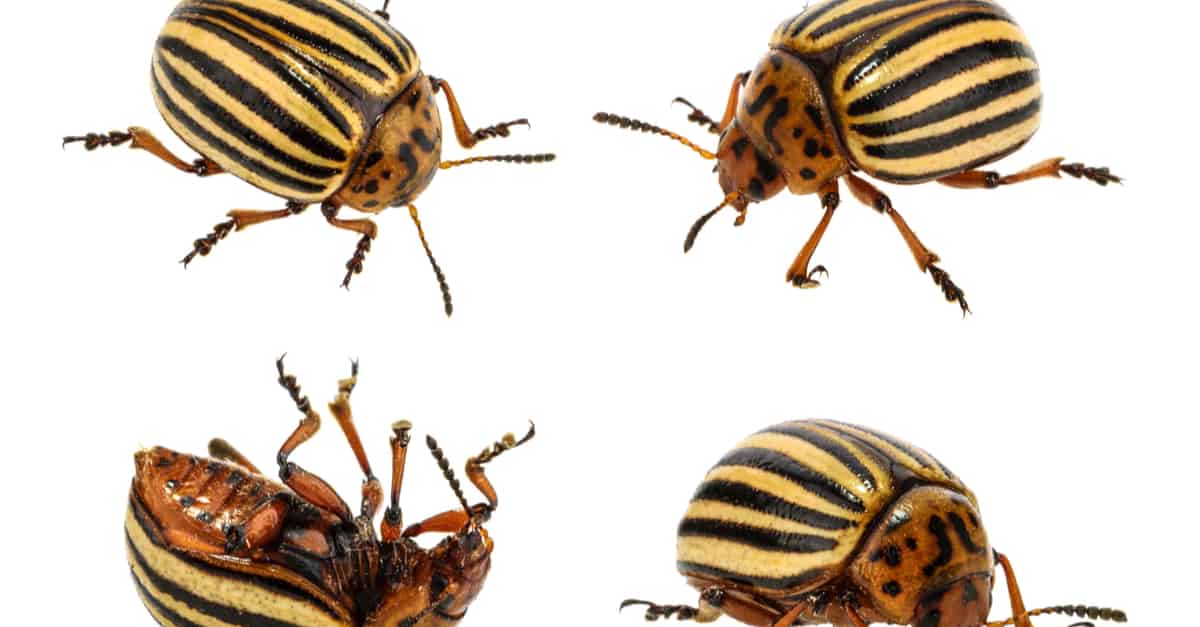
The eggs are oval and maybe light orange or yellow and laid in clusters of 12 to 28 that adhere on the undersides of the potato leaves from one end. The body of a larva is sturdily-curved with a large abdomen. The Head bears 6-ocelli behind the antenna and a pair of 5-dentate mandibles. Each thoracic segment contains each pair of legs and claws. Larva changes color with each molt, from cerise red in the first instar to light orange in the last instar. Also, they bear two rows of dots on both sides of the bodies. The body length of a fully mature larva remains about 15 mm long. The adult potato beetle measures 0.37 inches in length and remains yellowish-orange, and has 10-black stripes, 5-stripes per elytron. The Colorado potato beetles look tough and oval when viewed dorsally.
Colorado Potato Beetle- Lifecycle
The adults overwinter in the soil about 7.5 to 12.8 cm deep. The overwintered adults emerge during late spring or early summer and feed on newly emerged leaves and mate. Females oviposit beneath the surfaces of the leaves in clusters. A female lays about 300 eggs over five weeks that hatch within the next 10-days depending on the temperature and humidity. The larval stages continue another 3-weeks, meanwhile, they continue feeding on potato foliage. The larva drops from the foliage and builds an underground cell transforming himself into a pupa. The pupal stage could prolong up to 10-days in areas with cooler climates. There may be two generations a year in the North and three in the southern climates.
Symptoms and Types of Damages
The Colorado potato beetle feeding remains external on the leaves, stems, and growth organs. The adult larvae can drastically damage potato foliage that sometimes may go up to 75%. The potatoes can tolerate a maximum of 30% defoliation during vegetative growth and hardly 10% when tubers form. Although potatoes are their chosen host, the Colorado potato beetle can infest several other plants in the Solanaceae family, including eggplant, tomato, thorn apple, tobacco, and the buffalo-bur which, is considered their first host. The Colorado potato beetle rarely feeds on the plants out of the Solanaceae family. Otherwise, both adults and larvae damage potato foliage from the late spring to mid-summer in the regions of their higher infestation in the US.
Where does the Colorado Potato Beetle Come from?
The overwintered beetle adults emerge in late spring or early winter from the soil chambers and their feeding peaks when surface temperature touches 77°F. Egg-laying starts somewhat earlier when the temperature reaches 59°F and continues until 86°F. Whenever your garden temperature reaches the optimal ranges, they can emerge from the soil or hatch from the eggs adhered beneath the leaves.
How to Prevent Colorado Potato Beetle?
Despite all preventive measures if Potato Beetles’ infestation go beyond your control, here are the most tested ways to suppress their population using the biological, organic, and chemical methodologies;
Colorado Potato Beetle- Control
Biological Control
DiPel- Pro DF Biological Insecticide
DiPel offers a new Bacillus thuringiensis (Bt) formulation that makes its applications easier for gardeners. Bacillus thuringiensis proves effective when applied during early instars of larvae. BT is a bacterium that releases toxic proteins, and its ingestion kills larvae of the Colorado potato beetle within 5-days. Cry proteins are not toxins for humans as our bodies don't allow these proteins to activate. BT is used in commercial and garden potatoes, including tomatoes, peppers, and tobacco. The Dust Flowable formulation contains 54% of Bacillus thuringiensis (Bt) kurstaki strain, and each pound of the product consists of 14.5 billion spores. Bt is OMRI listed and strongly recommended for applying in biological pest control.

- DiPel PRO DF Biological Insecticide is the leading biological insecticide on the market today.
Mix 0.16 to 0.32 ounces per gallon of water and spray thoroughly on the foliage of the potato plants using a drop-down nozzle in early spring when the temperature exceeds 59°F.
BotaniGard MAXX
Beauveria bassiana Strain GHA is a Hyphomycetes fungus mixed with Pyrethrins that enables the product to hold two powerful modes of action. Pyrethrins are rapidly active and kill larvae and adults on exposure. Whereas, Beauveria bassiana is an entomopathogenic fungus that germinates on the beetles and weakens their chitin. Research proves Beauveria bassiana with Bacillus thuringiensis (Bt) s highly effective in controlling Colorado potato beetles of all stages. This combination consists of 0.75% Pyrethrins and 0.06% Beauveria bassiana.
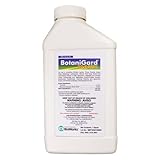
- Powerful combination of pyrethrins and Beauveria bassiana Strain GHA
- This potent biorational formulation provides a quick knock-down of insect and mite pests.
- The active ingredients work independently, yet in harmony, to provide multiple mechanisms to kill harmful insects.
The maximum application rate is 2.68 ounces per gallon of water on 1000 square feet of potato planted area.
Organic Control
Monterey- Horticultural Oil Concentrate
Monterey- Horticultural Concentrate contains 80% mineral oil. The mineral oil is not an insecticide, But it kills the targeted pests by suffocating. Horticultural oils are the best dormant sprays that stop eggs hatching and don't let molt larvae to the advanced growth stages. Dormant oils perform well before the onset of Colorado potato beetles. The best application times remain once in the fall and early spring. Wash the entire potato canopy using a handheld sprayer. It could help manage Colorado potato beetles' infestation throughout the potato growing season. There's no harm in repeating applications once a month.

- INSECT KILLER - This pest control is great for use on aphids, leaf miners, thrips, leafhoppers, spider mites, scales, whiteflies, mealy bugs and many more. It gives poor control for caterpillar & worms. However, it does control eggs of all insects.
- FOLIAGE PROTECTOR - Our insecticide is for use on a variety of trees & plants including apples, almonds, avocados, citrus, peaches, pecans, blackberries, figs, pineapple and more
- DORMANT AND GROWING SEASON SPRAY - This product is designed for safe use during both the dormant and growing season. Application during each season will increase the effectiveness of the product's insect control.
Add 1.5 to 2.5 ounces of the product concentrate per gallon of water and apply on potato foliage thoroughly.
Growel- Organic Neem Oil
Growel offers high Azadirachtin content from the cold-pressed neem oil that they extract from Azadirachta Indica seeds. Azadirachtin serves multiple crop protection purposes at a time. It kills the insect pests on contact, deters feeding, cures bacterial and fungal infections, and acts as an Insect Growth Regulator (IGR) together. Moreover, Azadirachtin is effective against the entire growth stages of Colorado potato beetles. Apply in the early morning or late afternoon to avoid sunburn. Moreover, Azadirachtin is safe for organic gardening, and few cold-pressed formulations are OMRI listed.

- 100% PURE & ORGANIC NEEM OIL: Growel Neem oil is 100% cold-pressed from the (Azadirachta indica) neem tree, completely natural, and free of any additives.
- HIGH AZADIRACHTIN CONTENT: Our cold-pressed organic Neem oil retains high levels of Azadirachtin content for maximum benefits. Our pure neem oil comes straight from sustainable, organic farms.
- NEEM OIL SPRAY FOR PLANTS: Effective spray for Indoor plant, outdoor plants, flowering plants, fruit trees, vegetable beds, and herb gardens. It helps protect your plants throughout all seasons.
Depending on the types of infestation, mix between ½ to 1-ounce per gallon of water and apply on potato foliage.
Chemical Control
Bug B Gon- Systemic Insect Killer
Bug B Gon is 0.5% acetamiprid, a highly systemic insecticide, kills many sap-sucking, boring, and chewing pests within 24-hours of application. The accurate structure of acetamiprid resembles the chloronicotinyl compound and is highly effective at the nicotinic acetylcholine receptors in beetles and many other pests that harm garden vegetables and fruits. However, acetamiprid residual effects are not as prolonged as many other synthetic insecticides have. Its half-life is less than half an hour and breaks down quickly on exposing it to rain and sunlight. Acetamiprid is toxic for bees, birds, and mammals, and care is needed for spraying on the potato foliage to control Colorado potato beetles.

- Bug B Gon systemic insect killer concentrate
- Works systemically from inside the plant to kill and prevent 100 plus listed insects
- Fast-acting, long-lasting protection for roses, flowers, shrubs, and listed fruits and vegetables
Mix 1.5 ounces of concentrate per gallon of water and apply using a handheld garden sprayer.
Check out our other guides on common garden bugs.