
Gray Garden Slug (Deroceras reticulatum)
Brown Garden Snail (Cornu aspersum)
Slugs and Snails both belong to the phylum Mollusca and class Gastropoda but, they differ in families. Most garden slugs belong to Onchidiacea and Soleolifera families whereas, Snails to the Muricidae. The most distinctive feature between slugs and snails is the hard exoskeleton in Snails. On the other hand, the slugs have an endoskeleton. The slugs can conceal their entire soft body into the shell when disturbed. In a broader term, Slugs are soft-bodied, while snails are hard-bodied mollusks. Both species are common in their feeding behavior and present themselves as voracious eaters that can eat up the entire garden seedling overnight. They are also nocturnal and keep themselves under the broadleaf foliage during the day. Sometimes, they may appear during the day when the weather is cloudy. Their silvery slime trail often annoys the gardeners. Heavy feeding often results in significant damage to the potted and nursery plants.
Origin and Distribution
Slugs and snails have diversified origins, and most of the snails and a few slug species are native to North America. About 731 species of snails and almost 45 species of slugs are reported in North America, whereas most are introduced from Europe and Africa. Historically, all slugs evolved from the snails with time, and the former lost their exoskeleton. This shell remains an endoskeleton or a vestigial organ in some slug species. Native slug and snail species are relatively less damaging than invasive species. The invasive slugs and snails are more damaging throughout North America in the regions where excessive moisture is available. Additionally, they rely on moderate temperature to live and feed extensively. Both slugs and snails have dominated garden, nursery, and potted plants throughout the US in early to late spring and autumn. Though, they may be active throughout the year in the southern coastal climate.
Slugs and Snails- Identification
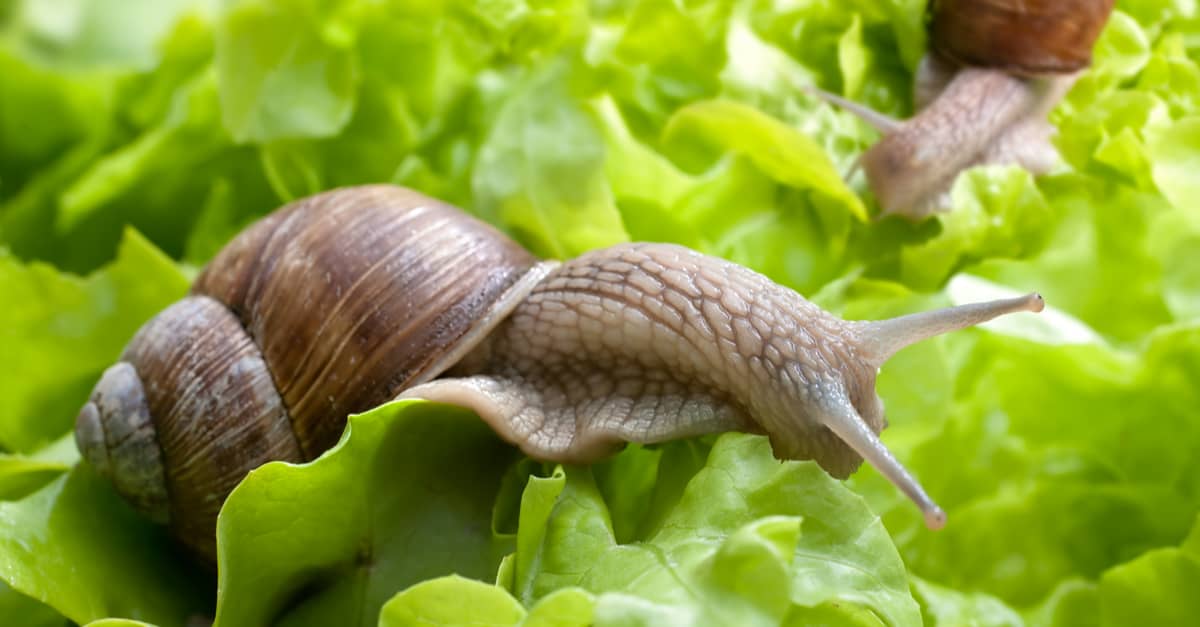
An adult Gray garden slug measures about 2 inches long with grey spotted to the brown spotted body. The mantle locates near the head and respires from behind the mantle. Whereas, an adult Brown Garden Snail has a diameter up to 1.5 inches. In North America, few slug species can grow up to 10 inches long. Recently, the Californian Coast harbored a 2 feet long slug that weighed 14 kg. Both slugs and snails have a muscular crawling feet. Both the eyes and head are prominent with varying tentacles in different species. Both slugs and snails carry an operculum to defend themselves and jump forward. The feeding is through radula enabled with tiny chitin teeth. Shells on snails protect their body's internal organs that originate from the mantle. Both mollusks move by gliding using their muscular foot that consistently secretes mucus that facilitates them to move swiftly. The similar mucus dries and forms a silvery slime trail that indicates their presence in any landscape, garden, or nursery.
Slugs and Snails- Lifecycle
Slugs and snails have both male and female sexual organs and can lay eggs by mating with each other. Adult brown garden snail lays about 80 white eggs into the pit in soil. After hatching, they take almost 2-years to mature. On average, slugs lay about 40 eggs in protected areas. Slugs mature in 6-months after hatching. Their hibernation is in the topsoil if a severe cold is observed. Some gastropod species may give birth to live young. In such cases, the eggs mature inside the body of gastropods, and they could go under prolonged hibernation.
Symptoms and Types of Damages
Snails and slugs feed on many plant species besides decaying debris, leaves, and similar plant materials. They feed on the creepers and seedlings, leaving scares using their rasp tongue. They can easily approach the potted plants and tendrils and often finish nursery seedlings overnight. They also feed on turf grasses, herbaceous, flowering, and fruits extensively after rain even or when the moisture is plentiful. Citrus nurseries are also prone to their feeding besides tomatoes and strawberry fruits. They can also feed on dead animal matter and fungi if the feeding source is scarce. Often, heavy feeding leaves behind a silvery mucous trial on the surfaces of the leaves and their feeding route.
Where Do the Slugs and Snails Come from?
Most probably, they arrived at your planting facility with the nursery stuff. Since slugs and snails hibernate under high temperatures, they could appear after a good rain provided the surface temperature ranges between 62 to 64°F. Moreover, they can't tolerate temperatures below 32°F and above 70°F. The gardeners may expect their emergence when the temperatures remain between 40 to 64°F.
How to Prevent Slugs and Snails?
Despite all preventive measures if slug and snails' infestation goes beyond your control, here are the most tested ways to suppress their population using the biological and organic control methodologies;
Slugs and Snails- Control
Biological Control
Bug Sales- Beneficial Nematodes (Hb)
Beneficial Nematodes are 5-million live Heterorhabditis bacteriophora. These beneficial nematodes parasitize Slugs when they are young. Good moisture is necessary for applying them in the garden. Hb Nematodes stick to bodies of slugs inducing an infection that kills them within 10-days of application. The nematodes are harmless to humans, pets, and bees. The gardeners frequently apply them on indoor cannabis and garden herbs including, vegetables, citruses, and leafy greens.

- Can be used around humans, pets, and plants
- Our Live Beneficial Nematodes are Guaranteed Fresh and Alive!
- Beneficial Nematodes are a natural and effective way to control soil pest
Listed beneficial nematodes perform well at a temperature above 40°F. Avoid releasing them in the garden if any bait was applied shortly. These nematodes even chase the slugs to their hibernation area and remain active for the next 6-weeks. A 5-million nematodes are enough in 20000 square feet of garden area.
BioLogic Scanmask- Steinernema Feltiae (Sf) Beneficial Nematodes
The product pack contains 10-million live nematodes with OMRI listed Diatomaceous Earth in aqueous solution whereas, potassium sorbate saves the nematodes from fungus, mold, and yeast. A juvenile stage Steinernema Feltiae can infest slugs and snails when they are also in the early stages of development. Steinernema Feltiae lives for a week and passes through four instars hence the application on the 4th or 5th day of emergence is necessary. It enters the body of slugs and snails and discharges the bacteria that kill them both. Late, Steinernema Feltiae feeds on these bacteria.

A 10-million nematodes are enough for applying on 400 square feet of the greenhouse and 1000 square feet of garden beds.
Organic Control
HARRIS- Diatomaceous Earth
Slugs and snails don't like dry surfaces, and such an environment is introduced by applying a Diatomaceous Earth barrier that they would never cross. HARRIS- DE is 85% Silicon Dioxide, and it can rupture gastropods if slugs and snails cross a DE strip. The gardeners can spread DE using an applicator making a 3-inches wide and 1-inches high strip around the perimeter of their precious plants, nursery, and potted plants. DE is the best deterrent for slugs, snails, and many other crawling pests that damage your garden plants. A fresh strip will be required if it rains over the stuff.
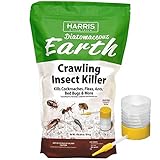
- POWERFUL CRAWLING INSECT KILLER : Effectively kills a wide range of crawling insects including ants, bed bugs, cockroaches, fleas, earwigs, silverfish, and spiders. A natural solution for indoor and outdoor pest control without harsh chemicals.
- 100% DIATOMACEOUS EARTH WITH NO ADDITIVES : Made from pure freshwater diatomaceous earth, this product is safe for use around kids and animals, when used as directed. A trusted choice for eco-conscious households.
- KILLS INSECTS MECHANICALLY, NOT CHEMICALLY : Works by dehydrating insects on contact through physical abrasion. Insects walk through the powder and the fine particles damage their exoskeleton, leading to rapid dehydration and death.
DE is safe for the environment, humans, and pets. If the slugs and snails ingest DE, they could die within 24-hours of application.
REMOPEST Copper Mesh - 5" X 100 Feet
Copper deters both slugs and snails, and a thin band-like REMOPEST Copper Mesh can stop them from feeding your garden plants and climbing the stems if applied as a band around them. Copper usually produces an electric shock when gastropods come into its contact. Copper is the best gastropods deterrent, and many products containing them are given priority for applying on them. REMOPEST- Copper Mesh is 5-inches wide that could make an effective barrier when used around the perimeter of the garden plants.

- The package contains 100 Ft copper mesh roll and 5 pcs stainless steel mesh.
- COPPER MESH – Copper mesh is 5 inches wide, 100 foot long, Made of 100% pure copper NOT copper alloy like some others in the market. With a knitted construction. It is much safer to use comparing with steel wool, as the wool easily to get fire. Copper mesh is not flammable.
- STAINLESS STEEL WIRE MESH – Stainless steel wire mesh is 10cm long, 6cm wide, totally 5pcs. Made of 304 stainless steel.
Chemical Control
Garden Safe- Slug & Snail Bait
This bait contains 1% of Iron phosphate, and its chemistry combines oxygen and phosphorus with iron. It becomes effective and kills slugs and snails only if ingested. The toxicity of different iron compounds varies depending on the amount of iron available to kill pests. Iron is also absorbed through plant cells and becomes part of their nutrition. Most slug and snail baits were formulated using an active ingredient Metaldehyde in the past, which is now replaced with either iron phosphate or Sulfur. New chemistries are least toxic that can be used around garden beds, flowering plants, nurseries, and greenhouses to control slugs and snails.

- KILLS SLUGS & SNAILS: Slugs and snails begin to die within three to six days after bait is ingested.
- FOR LAWNS, GARDENS & GREENHOUSES: Use on the lawn or on the soil around any outdoor ornamentals, vegetable gardens, fruits, berries, citrus and crop plants where slug or snail control is needed.
- CONTAINS IRON PHOSPHATE: This bait contains a combination of iron phosphate, which is a plant nutrient that occurs in soils, with slug and snail bait additives.
Check out our other guides on common garden bugs.