
Will Jerusalem sage add to the aesthetics of your garden, and can it be added to recipes and used as a herb? Read on to find out.
The Phlomis fruticosa or the Jerusalem sage is known to be very versatile and has been used as floral and texture accents all around the world. It can even be a part of your herb garden, or you can have small hedges around the house. Not only that, but this can also become a part of flower arrangements, and the yellow blooms are going to stand out for sure.
Now when I first looked it up online, there were scattered pieces of information all over the internet. So, with the knowledge that my friends shared and after spending hours researching, I have curated this detailed guide.
Hi! I am Stacy Smith, and today I will take you through my guide to this wondrous plant. After introducing it to you, I will discuss its benefits and then how to propagate and maintain it.
So, without further ado, let’s get started.
What Is Jerusalem Sage?
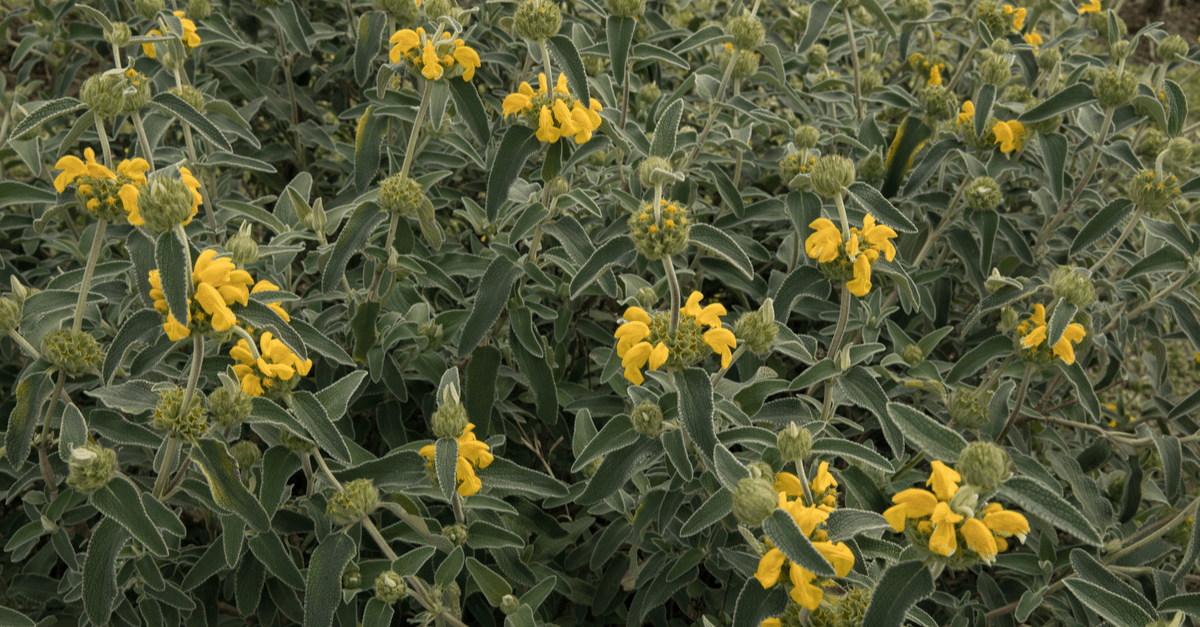
Being a gardening enthusiast, I do not miss any chance of visiting the flower market whenever it is set up. The last time I went there, my friend introduced me to this wonderful warm-season plant that is the Jerusalem sage. Having received the Royal Horticultural Society’s Award of Garden Merit (AGM), I was really excited to add this to my garden.
Now before I get into the details, I want to share an interesting fact with you regarding this plant. The genus name of this is Phylomis, which in Greek means flame. Perhaps this has roots in the fact that these leaves were used to make lamp wicks back in ancient times.
The plant originates from Mediterranean regions, especially Turkey and Syria, but is now very popular in the United States. I found that it remains deciduous when planted in USDA Zones 5-7, but it will remain evergreen when planted in Zones 8-10. Moreover, it can grow up to 3-4 feet tall and you can see quick growth.
My friend Josephine told me about how she uses it in her herb garden as an accent plant, and it sounded very nice. I then got these for my garden, and now they are all around the house. They look really good in a vegetable garden and can also be planted in elevated containers.
The flowers are very pretty, and you can dry and use them in flower arrangements. They are bright yellow in color and have grayish-green textured leaves. The flowers are arranged on top of one another and hence creates a unique effect. I also love the tall vertical stalk that ensures they stand out in a garden.
Benefits Of Using Jerusalem Sage
Sage has been known to be a staple in multiple cuisines all across the world. There are different varieties of sage, and Jerusalem sage is very similar to Salvia officinalis. It mostly belongs to the mint family and can be grown in your herb garden. I usually grow it with my Oregano, Basil, Rosemary, and Thyme. Read on to know all about the benefits that it comes with.
1. Full Of Antioxidants
Antioxidants are the warriors that help in neutralizing harmful free radicals enabling you to live better. These are molecules that will let your body fight diseases and will improve your overall health.
Now the Jerusalem sage contains almost 160 different types of polyphenols that refer to plant-based antioxidants. These are chemical compounds, which include rosmarinic acid, caffeic acid, chlorogenic acid, rutin, and ellagic acid. All of this even works in keeping cancer away.
Moving on, I had seen my friend add it to her kids’ meals numerous times in the past to improve their brain function. This will help in enhancing memory, and you can add it as a seasoning to your kids’ meals.
I have even been adding it to water and making sage tea. This reduces bad cholesterol and ensures that your good HDL cholesterol level rises.
2. Addition To Dishes
Sage has a strong flavor and can be added to dishes. It is normally dried and chopped, after which you can use it as a seasoning. But remember that it is very flavorful, and you will need to use it sparingly. I generally use dried sage in the following ways:
- As a rub for different types of meat
- To garnish soup and salads
- In combination with mashed potatoes to add an earthy flavor
- As an addition to roast vegetables
You can also use fresh sage with some recipes. My husband loves the earthy taste in chicken and turkey stuffings, and hence I mix it in. In such a case, add it to the stuffing mixture before you put it in your oven, and the flavors should blend well.
Further, I use it to flavor butter. Sage butter can be made and stored to add to dishes. Combine chopped leaves with melted butter and leave it in the fridge to get a perfectly flavored, melt-in-your-mouth sage butter.
Moving on, if you are a fan of sauces, create a unique tomato sauce with a hint of sage. Add chopped leaves with the sauce and let it boil together to get the appropriate flavors.
3. Health Benefits
There are multiple health benefits of this plant, and I especially appreciate how it helps in combating the aging of the skin. It also helps your skin glow while keeping it free from wrinkles. Now do not expect a sudden change, but if it is accompanied by a good diet, you will be seeing a significant difference over time.
Other than this, it also helps in fighting diarrhea. Fresh sage is known to help in fighting diarrhea by making your gut relax. This can be a natural and organic medicine that you can try out as a homemade remedy.
Finally, there is Vitamin K in sage, which benefits bone health a lot. This vitamin can prevent thinning of bones and keep them strong, especially if you are nearing old age.
4. Great For Oral Health
Sage shows great anti-microbial properties, which is essential for those who are prone to dental plaque. This helps in neutralizing microbes and hence reduces the growth of plaque. There are sage-based mouthwashes available in the market that are known to prevent dental cavities as well.
Not only that, but it is also known to work for throat infections and plays a part in curing them. If you are a victim of a dental abscess, mouth ulcers, and infected gums, sage might be of help. In case you are growing sage, then you can boil it and gargle with the concentrated formula and water. I found this to be an organic alternative to regular mouthwashes.
5. Helps With Menopause Symptoms
During the menopausal phase, there is a decline of estrogen in the body. That may lead to vaginal dryness, a lot of sweating, and hot flashes. A cup of hot sage tea can help you deal with it, and studies have shown that sage reduces the number of hot flashes over time. It can also reduce the intensity of flashes and ensure good health.
6. Contains A Lot Of Nutrients
Sage contains a mix of vitamins and minerals that are very good for health. It contains protein, carbs, vitamin K, fat, iron, Vitamin B6, calcium, and manganese. It also has traces of vitamin A, C, and E, along with magnesium, copper, and zinc.
But remember that sage is generally consumed in small amounts, and thus, it will not provide a lot of nutrients at one go. So, you can add it to your daily diet, and then you will be getting a constant supply of good minerals.
7. Used As A Ornamental Plant
Have you been looking for a pretty plant with which to surround your house walls? Then these yellow blooms will look extremely pretty when used as ornamental plants around the house. It is generally used in tropical and coastal areas where the plant surrounds cottages and makes them look beautiful.
Also, these tubular buttery yellow blooms will stay in place throughout the winter months, and that is exactly the quality that you look for when talking of ornamental plants. I have always wanted to create a warm and sunny ambiance in my garden, and these yellow flowers gave me an opportunity to do so.
8. Resistant To Pests
This plant sure comes with its set of benefits. Not only is it considered to be an evergreen plant in many zones, but it is also resistant to pests. Hence you need not be worried about maintaining it vigorously. Once they start blooming, all you need to do is water the plant, and it will stay well. It is not susceptible to diseases too, and you can grow any other plants around it.
Not only that, if you live next to a forest or a wildlife reserve, there are chances that a deer or an occasional rabbit will pop up. Now, these animals are generally not harmful, but they can eat up the plants. If you are going to surround the house with sage, then they run the risk of being eaten first. But it is resistant to deer and rabbits, and that proves to be of great benefit.
How To Propagate Jerusalem Sage?
Jerusalem sage can be grown easily and will self-seed at a conducive temperature. Angie, another of my fellow gardening-enthusiasts, taught me how to do this so as to grow more plants. To propagate, you will need a few tools and the right timing. And I am going to tell you the entire process in this section.
To begin with, it is best to start off in winter. Choose the late winter months and start with the seeds indoors. Sow all the seeds on a bed of sand and allow them to go. Ensure that they are covered with a thin layer of soil, and remember that the potting medium has to be slightly damp during this process.
Once the snow stops falling, and the frost has passed, you can take your seeds outdoors. Plant them in the designated spots and water well. Ensure that the soil is well-draining, and you should be good to go.
Here’s a small tip for you: in case you are unsure about the soil, it is best to get it tested. Take a small amount to your local nursery and ask them to help you out. They will help you figure out the kind of soil you have, and this might save you a lot of effort in case the soil isn’t suitable.
How To Maintain?
Remember that the plant is native to the Mediterranean region and hence requires well-draining soil to grow. The soil could be sandy or could consist of clay, and the plant would still grow very well.
It requires adequate irrigation and can grow in the sun or partial shade. One great factor is that it is drought tolerant, and you can plant it directly under the sun. The good thing is that it can grow in an area with a temperature of up to 23 degrees Fahrenheit.
Further, to ensure good growth, you need to apply ammonium phosphate to the base in spring, and that should suffice for a year. Also, remember to prune it well in winter to prevent overgrowth.
Final Words
If you are looking to pair the Jerusalem sage with other plants, I would suggest Salvia greggi, Salvia clevelandii, and Salvia leucantha. These can also be used in a flower arrangement if need be.
Moving on, I noticed that it is indeed a fast-growing plant, and hence you might need to prune it often. Make sure that you prune it well in the winter months, and you should have perfectly trimmed short bushes filled with yellow flowers.
On this note, I will be taking my leave. I hope this will add to creating that perfect garden of your dreams. Let me know if you have any further queries, and I would also love to hear about your gardening experience in the comment section below.
Until next time, happy gardening!